Psychologist on 'GTA VI' impact and how it can affect your loved ones
Published in Entertainment News
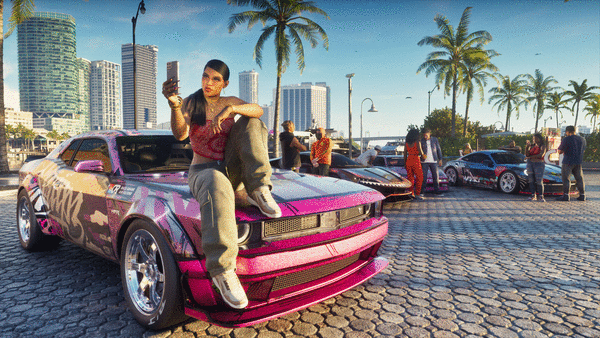
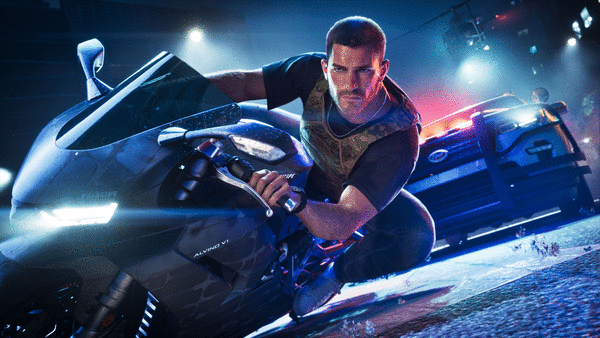


BALTIMORE — If your college student or coworker mysteriously stayed home “sick” Thursday, or had planned to do so all along, they may have been hard at work playing the newly released “Grand Theft Auto VI.”
The open-world crime game from Rockstar Games arrived 13 years after “GTA V,” one of the most popular video games of all time. The “Grand Theft Auto” franchise has sold nearly half a billion copies since the first game debuted in 1997, according to Business Cloud. Market research firm Sensor Tower estimates that the new release has already sold roughly 19 million copies.
The Baltimore Sun spoke with Kyle Nolla, a psychologist, gamer and assistant professor of psychology at Morgan State University, about the “GTA” series’ impact on the gaming world and the lives of those obsessed with it.
This interview has been lightly edited for length and clarity.
Q: How does someone get to study the psychology of video games?
A: I’m affiliated with the Center for Data Analytics and Sports Gaming Research, which studies the impacts of gambling on, you know, society, our students, policy, all of that. So my particular angle and the reason I was hired is specifically to study the overlap of video games and gambling because this is an emerging research area and societal issue.
Q: How does this game release affect fans and players?
A: “GTA VI” is extremely hyped. You should expect that most of the gamers in your life are probably playing this game or watching content about this game over the coming weeks.
“GTA VI” does not have any particular in-game gambling mechanics. However, one of the reasons that “GTA VI” is so anticipated is because people never stopped playing “GTA V.” Online mode is still getting millions of monthly players and thousands of daily viewers on video game streaming sites like Twitch.
Well, probably not today.
The online in-game casino was a big draw for a lot of people, and there are ways to [buy] a $10 game pass. That gets you in-game currency, and then you can sit down in the casino in “GTA” and play blackjack. You can run slots. You can do Lucky Wheels.
Typically, only about 5% of players actually engage in that, and, [maybe] put down five bucks every week to gamble in “GTA Online.” But those players who are doing it are creating a lot of profit for these companies.
Q: Have they ever published how much they’re making off gambling or microtransactions?
A: Rockstar is actually notorious for not publishing statistics, but there have been leaks. A quick search showed over $5 billion of “GTA Online” revenue since 2013.
They actually were planning on creating a bigger content update for this game that’s being released, but they shelved that in order to instead give more content to the online game sooner. So, this is profitable enough that they’re literally shelving new content in favor of keeping their online subscribers happy.
Q: How do you distinguish fan enthusiasm from harmful behavior?
A: One of the reasons people are willing to skip class for this and skip work for this even is that this game has been in the works for 10 years. People are excited to see this piece of genuinely good art and culture and to experience the game.
So, if somebody spends eight hours today playing “GTA” and six hours tomorrow playing “GTA,” I’m not worried about that person. That person can be a fan. Should they still be drinking water and eating and going outside occasionally? Yes, absolutely.
We really start worrying about this when it begins interfering with other aspects of your life. For example, if you end up with a whole week of work lost, or you get in trouble with your boss because you’re playing during your work hours, you get reprimanded, and then you still keep playing. If you can’t stop playing, that’s a bad sign, especially if there are negative consequences.
Q: That almost sounds like one of the definitions of addictive behavior.
A: Exactly. Well, there’s been a lot of debate whether video games can be addictive. Internet gaming disorder is a diagnosis in the International Diagnostic Manual, but not in the one we use in the United States.
A lot of the people who end up falling into the trap of playing too many video games or spending too much money on these in-game gambling mechanics have existing trauma and anxiety and depressive symptoms.
Q: How many gamers are we talking about?
A: I feel like every paper I read has a different estimate. Yeah, less than 10%, but more than 2%, and a lot of times it depends on the specific criteria you’re using to define that.
Q: What else should people look out for?
A: It’s very common for a game at release to not have any microtransactions, to just be about single-player mode, and that’s what we’re going to see with “GTA VI” right now. People are going to play and play the story.
But in the coming weeks and months, when sales start to drop off, that’s when the company is most likely to start implementing these microtransactions. It may be a year before we see another online casino in “GTA VI.” But I imagine there’s going to be one.
It’s just something to be aware of. Like, if your kids have access to your credit card, know where their in-game spending is going. Are they just going to buy a cool-looking car, or are they intending to, you know, play poker? Yeah, I hope parents are aware of the difference there.
Q: You seem like you might be a gamer. What kind of games do you enjoy the most?
A: Gosh, I feel like in different stages of my life, I’ve really enjoyed certain games more than others.
Lately, I’ve been playing a lot of rogue-like games. These are games where you basically start over. You play the same game again and again in a randomly generated world, but you get better; you get more skilled. That’s the kind of game I like, when you actually are learning something from play to play, and you get to feel mastery and feel skill.
©2026 Baltimore Sun. Visit baltimoresun.com. Distributed by Tribune Content Agency, LLC.











Comments