Filmmaker Dawn Porter on Baltimore's Harlem Park Three and new HBO doc
Published in Entertainment News
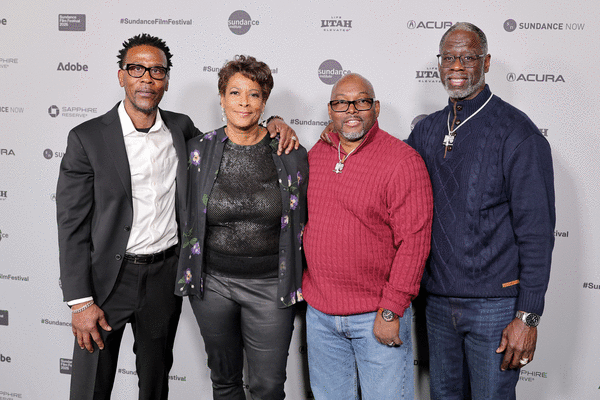
BALTIMORE — The decades of unjust horror experienced by three West Baltimore teenagers accused of murder have inspired a new HBO documentary.
Produced by the Baltimore-born writer Ta-Nehisi Coates and directed by award-winning filmmaker Dawn Porter, “When A Witness Recants” depicts the wrongful conviction and imprisonment of Alfred Chestnut, Andrew Stewart and Ransom Watkins — whose story of manufactured evidence and eventual exoneration has left them known as the “Harlem Park Three.”
The film, which has bounced between festivals for months before debuting on HBO Max this week, not only explores how the three men were wronged, but also how the case against them was forcefully shaped by police misconduct and pressure. After their release, Chestnut, Stewart and Watkins were awarded a $48 million settlement — although Baltimore officials said at the time that the city wasn’t admitting liability.
The Baltimore Sun sat down with Porter to discuss the power and relevance of the Harlem Park Three, as well as her approach to storytelling. This conversation has been edited for brevity and clarity.
Q: How did you first hear about the Harlem Park Three?
A: Ta-Nehisi Coates’ wife had read the New Yorker article, and he brought it to HBO. At the time, I had just finished the third installment of the civil rights series, “Eyes on the Prize,” and HBO sent me the article and asked if I would be interested.
I was so shocked by the story as a lawyer, as a human being, and really curious about working with Ta-Nehisi. But that article is where I first started to understand their story.
Q: What does their story have to show today’s audiences?
A: I think it’s hard for people who have not been connected with the legal system to believe that someone who has done nothing could be sentenced to life in prison — that there were so many opportunities to stop this from happening, but it didn’t. We think the prosecutor won’t indict. We think the judge will read all the documents. We think the judge will sentence fairly or that appeals will work. None of those things happened in this case. That’s even before you get to the misconduct of the police officer.
So it’s not one rogue actor that led to this travesty. It’s a number of different circumstances altogether, and I think that’s what we mean by a “system.” This is what the system is, and that’s what this story gave us the opportunity to show.
Q: The film contains many raw, powerful discussions and interviews. When it comes to interviewing these three people, the Harlem Park Three, as intimately as you did, how do you approach those conversations?
A: The first thing for any interview is establishing some kind of trust. These are people who had no reason to trust anybody ever again. And because I had experience interviewing people who’ve been impacted by the criminal legal system before, I knew the most important thing was to give them some power in the process.
I think that’s particularly true when your subject has been in prison, where every single move is ordered, where they have a number instead of a name. As a director, you have so much power over people, and letting the subjects control the time can help. We also did this over about two years, so it’s not so extractive. You actually are building some kind of relationship with people.
And that continues. Like now, we travel to the festivals and they are extraordinary. They love going and they watch the movie every single time. What each of them has said to me is that the act of watching the movie is helping them heal and come back into society. People are upset when they see what happened to them and it’s restoring their faith in humanity.
Q: One of the big creative decisions you’ve made is the use of hand drawings, similar to a graphic novel. How did you decide on that look and what were you hoping the effect would be?
A: One is that it solved a production problem. We didn’t have footage or pictures. Making a movie with no footage is like making a house with no bricks and no straw. So we had to figure out how we were going to tell this story. The animation really solved that creative problem.
But the other thing is if you look at the courtroom sketches of the guys, they’re drawn as if they were 30- or 40-year-old men, and not 16. The graphic depictions were of teenagers, and it’s a reminder that these were older children. They were not grown people and they were sent to adult prison — a very violent prison that was eventually closed.
Q: You have Ta-Nehisi Coates, a renowned, world-class writer, here as a producer, but also a witness who remembered this story in real time. What does he add to the film?
A: Ta-Nehisi, in so many ways, was a moral touchstone for the film.
The first thing he asked that we do is to go and meet the guys before we picked up the camera. I couldn’t go in person but he did, and we told them who we were and why we’re interested in their story. But Ta-Nehisi started the meeting saying, “I am so sorry.” It changed the whole approach to the meeting. A lot of people have asked them to tell their story and I think Ta-Nehisi, being from Baltimore, going, paying respect, listening more than talking, set the tone for how we would interact.
He also is a witness. And he has also recanted. He says this in the documentary but I think it’s such an important thing to think: society is part of why violations happen if we don’t insist on better systems. He doesn’t excuse any of us, and I think his call to have us think about our role in an unjust system is one of the most important things about the film.
©2026 Baltimore Sun. Visit baltimoresun.com. Distributed by Tribune Content Agency, LLC.






Comments