Supreme Court declines to hear Maryland gun law challenge. What does it mean for gun owners?
Published in News & Features
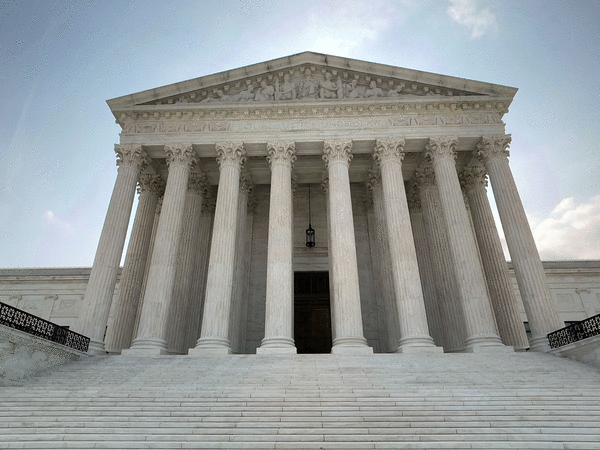
The U.S. Supreme Court on Monday declined to hear a challenge to Maryland’s restrictions on carrying firearms in public, preserving restrictions on where nearly 200,000 handgun permit holders can carry guns and clearing the way for the state to enforce bans at public demonstrations and establishments serving alcohol.
The decision marks a significant legal victory for Maryland’s Attorney General’s Office, which defended the state’s restrictions in a yearslong constitutional fight over how far states can limit firearms after a landmark 2022 Supreme Court ruling expanded gun rights in public.
Justice Clarence Thomas, who wrote the Supreme Court’s 2022 opinion strengthening the right to carry firearms outside the home, agreed that the justices should not hear Maryland’s case because the challenge encompassed too many different restrictions. But he questioned whether many of those restrictions are constitutional.
“I harbor serious doubts that our Nation’s historical tradition of firearm regulation supports many of these sweeping restrictions,” Thomas wrote in a separate statement accompanying the court’s decision.
“In an appropriate case, this Court should consider whether particular sensitive-place laws are consistent with the right to public carry.”
The high court’s refusal is not a ruling on the law’s constitutionality. It leaves intact a Jan. 20 decision by the 4th U.S. Circuit Court of Appeals upholding nearly all the challenged restrictions.
The legal battle stems from Maryland’s Gun Safety Act of 2023, enacted after the Supreme Court’s decision in New York State Rifle & Pistol Association v. Bruen. That ruling required governments defending restrictions on carrying firearms to demonstrate that they are consistent with the nation’s historical tradition of gun regulation.
Maryland responded by expanding the locations where firearms are prohibited, even for people who have undergone background checks and training to obtain permits. Gun rights advocates challenged those restrictions, arguing that the state had gone too far in limiting a constitutional right.
What changes in Maryland
Maryland State Police reported 198,857 active handgun wear and carry permits Monday. Although most of the state’s restrictions remained in effect during the legal battle, enforcement of two provisions has been on hold.
Those provisions prohibit carrying firearms at establishments serving alcohol for consumption on the premises and at certain public demonstrations. The appeals court stayed its mandate in March while the Supreme Court considered the challenge. With that review concluded, the appeals court is generally required to issue its mandate without further delay, although State Police had not confirmed Monday when enforcement would resume.
The demonstration law is narrower than a blanket ban on guns near protests: It applies at a public demonstration or in a vehicle within 1,000 feet after a police officer notifies the armed person of the demonstration and orders the person to leave until the firearm is disposed of.
Willfully violating certain sensitive-place restrictions is a misdemeanor punishable by up to a year in jail, a $1,000 fine or both.
One provision remains blocked: Maryland cannot require gun owners to obtain affirmative permission before bringing firearms onto private property open to the public. Property owners can still prohibit firearms.
The offices of Maryland Attorney General Anthony Brown and Gov. Wes Moore did not respond to requests for comment Monday.
A constitutional question far from settled
For gun rights advocates, Thomas’ statement offered encouragement despite Monday’s defeat.
“But that doesn’t mean that this issue is over,” said Mark Pennak, president of Maryland Shall Issue.
He pointed to other cases that could eventually alter Maryland’s law.
“I think Maryland’s law will eventually be cut way back by a Supreme Court decision affecting these issues in the future,” he said.
The Second Amendment Foundation also opposed the decision.
“We’re certainly disappointed that the Court decided not to hear our Novotny case, challenging multiple categories of so-called sensitive places in which Maryland has extinguished the Second Amendment rights of its residents,” said Bill Sack, the organization’s senior director of legal operations.
Sack said the group was encouraged by Thomas’ skepticism and pointed to Christian v. James, a pending Supreme Court petition challenging New York’s prohibition on carrying firearms in public parks.
The court is scheduled to hear arguments Dec. 2 in challenges to state bans on AR-15s and similar semiautomatic rifles, a separate fight that could affect Maryland’s assault-weapons restrictions.
But the justices’ willingness to hear that case offers no guarantee they will revisit Maryland’s restrictions on carrying firearms in public.
Mark Graber, a professor at the University of Maryland’s Carey School of Law, cautioned against assuming the justices will take another case.
“The justices have said ‘no, we’re not interested,'” he said. “To get a different response, you need four justices (to change their mind).”
_____
©2026 Baltimore Sun. Visit baltimoresun.com. Distributed by Tribune Content Agency, LLC.




Comments