Maryland approves first-in-the-nation payment limits for Ozempic, Jardiance
Published in News & Features
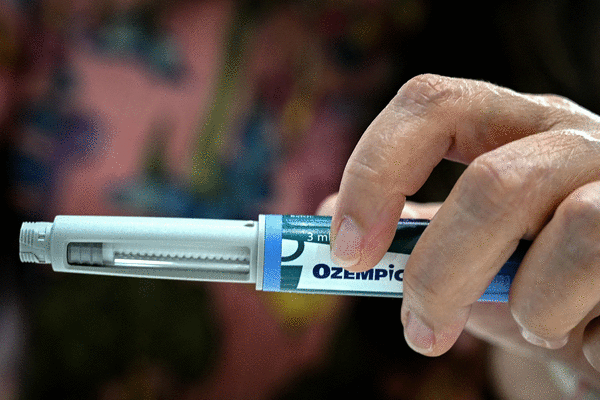
BALTIMORE — The Maryland Prescription Drug Affordability Board voted unanimously Monday to approve final regulations setting the state’s first upper payment limits on two prescription drugs, Jardiance and Ozempic, in a first-in-the-nation effort to reduce what state and local governments pay for some prescription drugs.
But the projected savings are not expected to directly lower most patients’ out-of-pocket costs, and pharmacy and industry representatives have warned the limits could create new challenges for medication access.
The limits are projected to save government health plans $6.1 million annually, according to the board. But the savings are expected to flow primarily to those plans, not to patients through lower copays — raising questions about how much immediate relief consumers will see from the state’s new approach.
The board approved separate regulations establishing upper payment limits for Jardiance, a diabetes and heart-disease medication manufactured by Boehringer Ingelheim, and Ozempic, the blockbuster diabetes drug from Novo Nordisk. During the public-comment process, drug manufacturers and industry groups argued the limits could disrupt patient access, increase utilization-management requirements and create reimbursement challenges for pharmacies and providers. They also pointed to ongoing litigation over similar efforts in Colorado.
Andrew York, the board’s executive director, said the $6.1 million savings projection is based on estimated net costs after discounts and rebates. The savings are expected to flow primarily to government health plans, rather than employees through lower out-of-pocket costs, because most participating plans charge members flat copays and already offer relatively generous coverage.
He added that the savings should be relatively easy to track. Under the regulations, participating health plans will receive supplemental rebates if their net spending on the drugs exceeds the state-set limits.
“It’s literally a check that they’ll get,” York said, describing how plans would receive the difference between their net spending and the upper payment limit.
Who benefits from the savings?
Supporters hailed the votes as a landmark step toward lowering prescription drug spending. Vincent DeMarco, president of the Maryland Health Care for All Coalition, urged the board to finalize both limits, saying they would save state and local governments millions of dollars and could serve as a model for broader affordability efforts.
The limits are scheduled to take effect Jan. 1, 2027, with eligible state and local government entities able to participate voluntarily during the first year, subject to implementation requirements. Participation becomes mandatory for entities that opt in beginning Jan. 1, 2028.
The rising cost of GLP-1 medications has already forced some government health plans to restrict coverage. Ben Schmitt, a member of the Maryland State Education Association in Howard County, said the county school system projected a roughly $7 million increase in health care spending tied largely to the drugs, prompting officials to limit coverage for some uses.
Schmitt said those changes affected his family, too. His wife had been prescribed Wegovy and experienced significant health improvements, but the couple now pays hundreds of dollars a month to continue the treatment.
“I’m hopeful that this will start kind of reversing some of the bad decisions that we had to make for reasons of money and access, and we can start offering these medications again,” Schmitt said.
Wegovy and Ozempic contain the same active ingredient, semaglutide, but are different products with different approved uses. The limits don’t apply to Wegovy.
Pharmacy and industry concerns
Jen Laws, CEO of the national health care nonprofit Community Access National Network, warned that the limits could put additional pressure on community pharmacies, particularly smaller, independent businesses. She said government purchasers could pay pharmacies less even if those pharmacies continue paying the same prices to wholesalers and manufacturers.
“Is this going to increase my copay or decrease my pharmacist’s ability to carry my medication?” Laws asked.
Ranier Simons, patient access and drug pricing policy director at the Community Access National Network, criticized the board for approving the limits without establishing baseline data. “What this means for patient access went without a meaningful answer,” Simons said, adding the vote was “not a Board serving patient interests.”
Will May, a spokesperson for the pharmaceutical industry trade group PhRMA, said Maryland policymakers should focus on insurer and pharmacy benefit manager practices that can drive patients’ out-of-pocket costs, rather than setting government payment limits. “Government price-setting does not address insurer and PBM practices that can lead to delays, denials and other barriers between patients and the medicines they need,” May said in a statement. “Medicines may not be available if a pharmacy, hospital or physician cannot purchase them at the capped price.”
York said the board designed the limits to avoid interfering with the pharmaceutical supply chain and retains the authority to revisit or rescind them if problems emerge. “We specifically designed ours not to touch the supply chain,” York said. “The board at any point can reconsider or rescind an upper payment limit if they find out that something’s happening that they didn’t intend.”
Spokespeople for Novo Nordisk and Boehringer Ingelheim did not immediately respond to requests for comment.
Maryland created its prescription drug affordability board in 2019 and is among a handful of states with authority to establish upper payment limits for prescription drugs.
_____
©2026 Baltimore Sun. Visit baltimoresun.com. Distributed by Tribune Content Agency, LLC.



Comments