European Union imposes sanctions on 4 Haiti gangs, citing killing, rape of children
Published in News & Features
The European Union has imposed sanctions on four deadly Haitian gangs accused of widespread human rights violations, including the killing, maiming, abduction and recruitment of children, as well as committing rape and attacking health facilities and humanitarian services.
The latest sanctions by the European Union, a long-standing political and development partner of Haiti, come as Haitian security forces intensify operations against armed groups, with support from Salvadoran troops, a United Nations-authorized Gang Suppression Force backed by Washington and a separate task force using explosive drones. The latter operates out of the prime minister’s office and works with the Haiti National Police under the guidance of private security contractors.
The sanctions, imposed under the European Union Global Human Rights Sanction Regime, also come after the U.N. Security Council failed to impose new sanctions in September, despite findings by its Panel of Experts on Haiti accusing several former Haitian elected officials of ties to armed groups and providing them with support.
Amid Haiti’s escalating gang violence and deepening humanitarian crisis, its bilateral partners — the EU, Canada and the United States — have all increasingly turned to sanctions in hopes of loosening gangs’ tightening grip. But the effectiveness of the policy has been questioned, particularly amid the Haitian government’s lack of enforced restrictions against those sanctioned and its failure to investigate criminal networks.
Critics also note that most of the people who have been sanctioned are gang members operating largely outside the formal banking system, despite racking up millions of dollars in extortions and kidnapping ransoms. The sanctions, along with the State Department designating the country’s most powerful gangs as Foreign Terrorist Organizations, have also done little to curb the serious human rights violations and abuses that continue to be committed across the Port-au-Prince metropolitan area, as well as in the Artibonite and Southeast department.
The sanctions also appear to have done little to dissuade people’s political ambitions. A number of sanctioned individuals are among the individuals who have registered as candidates in Haiti’s long-delayed presidential and legislative elections, now postponed from Dec. 13 to July of next year.
The new groups listed by the European Union include the 5 Segond armed group based in Village de Dieu in Port-au-Prince. The group is accused of killings, rape and other forms of sexual- and gender-based violence and violence against children. Its leader Johnson Andre, aka “Izo,” is the subject of a U.S. criminal complaint for his alleged role in the March 2023 armed hostage-taking of a U.S. citizen who was held for ransom by the gang.
“Like other listed entities, 5 Segond is also responsible for several attacks affecting health infrastructure and humanitarian services,” the EU said in a press release.
Similarly, the EU council listed the criminal armed group Gran Ravine. Under the leadership of Renel Destina, alias ‘Ti Lapli’, Gran Ravine has carried out attacks resulting in civilian deaths, displacement and the disruption of essential services, the statement said. “The group is also responsible for committing murder, rape, kidnapping and other serious crimes,” they added.
The council also announced sanctions against two deadly criminal gangs that control the eastern parts of metropolitan Port-au-Prince, 400 Mawozo and Krazé Baryè. The gangs, led by Lanmò San Jou, also known as Wilson Joseph, and Vitel’homme Innocent, were designated over their recruitment of children to armed groups, their exposure to armed violence and further crimes such as forms of sexual gender-based violence and killings. Innocent, who is wanted by the Federal Bureau of Investigation, was recently indicted as part of the U.S. federal conspiracy investigation stemming from the July 7, 2021, assassination of Haitian President Jovenel Moïse.
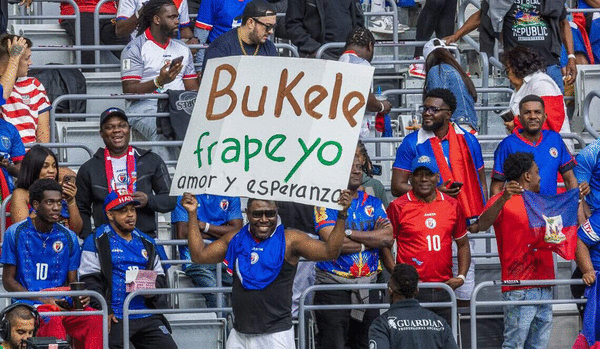
Joseph, meanwhile, has been targeted by security forces and El Salvador President Nayib Bukele, who has warned Haitian gang leaders that he is coming for them after four of his aviation technicians were ambushed east of Port-au-Prince and have been unaccounted for since.
Under the sanctions, those designated are subject to asset freeze and travel bans that prevent them from entering or transiting through EU member states. EU citizens and companies are also forbidden from making funds available to them either directly or indirectly.
_____
©2026 Miami Herald. Visit miamiherald.com. Distributed by Tribune Content Agency, LLC.




Comments