Michigan Gov. Gretchen Whitmer's energy emergency order may curb summer gas price hikes
Published in News & Features
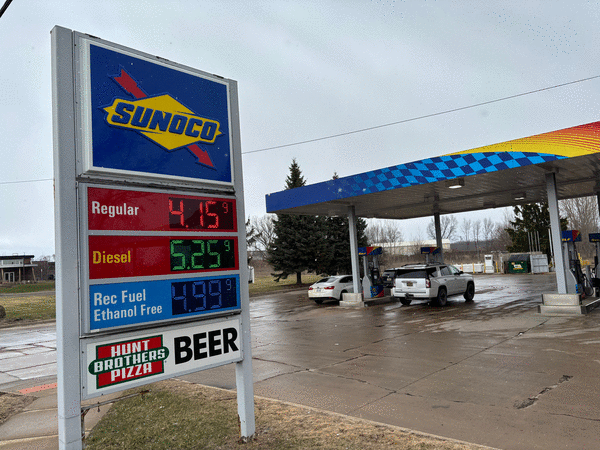
LANSING, Mich. — Gov. Gretchen Whitmer declared an energy emergency Thursday in response to high gas prices — a move that will allow gas stations in certain southeast Michigan communities to continue delivering lower-cost motor fuel blends in the coming months.
The emergency declaration, implemented through an executive order on Thursday, will allow gas stations in several Metro Detroit counties to continue using high-vapor-pressure gasoline, a blend usually prohibited in the summer. High vapor pressure fuel is usually 10 to 20 cents cheaper than low vapor pressure gas used during the summer, the governor said.
The order, Whitmer said, is in response to increasing fuel prices in Michigan and elsewhere in the nation since the start of the U.S. and Israel's war with Iran. She also blamed tariffs for the increased costs.
“As governor, I can’t end a war overseas or undo bad policies at the federal level that led to higher gas prices, but I will do what I can to try to give families a break," Whitmer said in a statement Thursday.
The price of regular this time last year in the Great Lakes state averaged at around $3.28 a gallon; as of yesterday, the average was $3.89, according to AAA Michigan. A month ago, at the start of the Iran conflict, regular gasoline averaged $2.98, the auto insurance firm reported.
Under state law, gas blends across the state are supposed to begin reducing vapor pressure this month to comply with the lower-vapor-pressure blends used during the summer.
In southeast Michigan, in particular, state law requires Wayne, Oakland, Macomb, Washtenaw, Livingston, Monroe, St. Clair and Lenawee counties to switch over to a 7 pounds per square inch lower vapor pressure gasoline from June 1 through Sept. 15, a blend that is often more expensive and that is lower pressure than the rest of the state. The blend is believed to reduce pollution and is intended to address the history of poor air quality in southeast Michigan.
But Whitmer's order Thursday suspends that required switchover in Metro Detroit, so those counties can continue using lower cost fuel blends until the circumstances giving rise to the energy emergency end or, at the latest, on July 1.
"This is a temporary and targeted step. It does not reflect a change in Michigan’s commitment to clean air or fuel standards," Whitmer's executive order said. "It is a short-term measure to address rising fuel costs and supply constraints caused by the Iran war."
Whitmer noted that the eight counties covered by the executive order have about 5 million residents, or half of the state's population. The suspension of fuel blend requirements there "will translate into savings for nearly half of all drivers in the state."
Separately, the U.S. Environmental Protection Agency last week, in light of rising gas prices, announced it would temporarily waive its federal vapor pressure requirements throughout the nation starting May 1. The governor's order, she said, will bring the state in line with the EPA waiver.
Mark Griffin, president of the Michigan Petroleum Association, noted that the state's unique fuel blend requirements for southeast Michigan were put in place in 1993, when the region had more factories, more pollution-prone power plants, and fewer environmentally-friendly vehicles.
The lower-vapor-pressure gas was needed at that time but is much less relevant today, he said. Gasoline, Griffin added, would likely be cheaper in the long term if the region were on the same playing field in terms of blends.
"What we’re looking for is consistency," Griffin said. "If we all had the same gas, everybody across the Midwest, it would be cheaper to provide that to everybody at the same amount.”
State lawmakers, if interested in lowering fuel costs, could also suspend the state's 52.4-cent per gallon gas tax, but they have yet to express serious interest in doing so. Such a suspension would halt the flow of millions of dollars in tax revenue meant to fund road projects.
During a similar gas price spike in April 2022, state lawmakers attempted to suspend the gas tax for six months, but Whitmer vetoed the measure, noting that it didn't have enough support in the Legislature to take effect immediately.
In June 2022, Michigan recorded its highest recorded average price of $5.22 per gallon of regular unleaded, according to AAA.
Two months later, in August 2022, after an Indiana refinery fire, Whitmer issued an executive order similar to the one issued Thursday, allowing gas stations to begin transitioning to less expensive winter fuels earlier than the typical Sept. 15 deadline.
__________
(Staff Writer Craig Mauger contributed.)
©2026 www.detroitnews.com. Visit at detroitnews.com. Distributed by Tribune Content Agency, LLC.






Comments