Alaska Gov. Dunleavy vetoes sweeping election reform bill
Published in News & Features
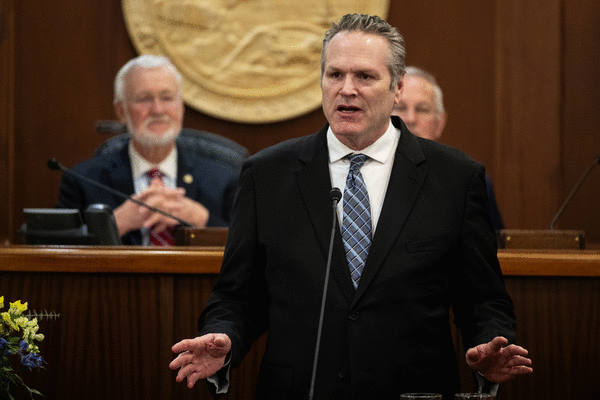
Alaska Gov. Mike Dunleavy on Thursday vetoed a sweeping election reform bill passed by the Legislature in March, the result of years of negotiations between factions in the House and Senate.
The bill seeks to make numerous changes to Alaska’s election laws sought by both Democrats and Republicans.
The Alaska Constitution calls on lawmakers to meet in a joint session immediately after a veto to vote on whether to override it. In a statement Thursday, the Senate majority said the Legislature would attempt to override the veto during a joint session next week.
Dunleavy said in a letter to Senate President Gary Stevens, R-Kodiak, that he supports the bill’s moves to clear inactive voters from the rolls and provide notices of breaches of confidential election data, and called it “a starting point.”
But Dunleavy said in the letter that implementing its provisions requiring ballot tracking and curing of minor mistakes on ballots would place “significant operational burdens” on Alaska’s Division of Elections months before a high-profile state and national election set for later this year.
In a separate letter to Stevens and Speaker of the House Bryce Edgmon, I-Dillingham, said he wanted to change the bill to more closely align with an election bill he unsuccessfully pitched in 2022.
“It is essential that Alaska’s electoral process remains accessible and secure, backed by a commitment to careful management,” Dunleavy wrote in the letter to Stevens. “This bill would make significant election changes during an active election cycle, raising material operational and legal concerns that are contrary to the best interests of Alaskans.”
Leaders in the House and Senate majorities swiftly condemned the veto.
“Governor Dunleavy has turned his back on military voters, rural communities, and the election integrity reforms he once said Alaskans deserved,” the Alaska Senate majority said in its statement.
The legislation would create a ballot curing process that allows voters to fix minor mistakes on their ballots that would otherwise cause them to be disqualified. It would allow the Division of Elections to more easily remove inactive voters from the state’s rolls. It would also add a rural liaison to the Division of Elections in an effort to address barriers to voting in rural Alaska, including repeated failures to open polling places on Election Day.
The legislation spurred tension among Republicans. Rep. Sarah Vance, a Homer Republican who helped craft the bill, sparred online with conservative political writer Suzanne Downing, who denigrated the legislation and claimed it would reduce the likelihood of repealing ranked choice voting and open primaries, a top priority for the Alaska GOP.
The bill makes no changes to Alaska’s open primary and top-four ranked-choice general election system. A separate ballot measure is seeking to revert Alaska to a partisan primary system and pick-one general elections, along with repealing new campaign finance reporting requirements adopted by ballot measure in 2020.
_____
©2026 Anchorage Daily News. Visit at adn.com. Distributed by Tribune Content Agency, LLC.





Comments