Huawei found guilty of US criminal charges in landmark case
Published in Business News
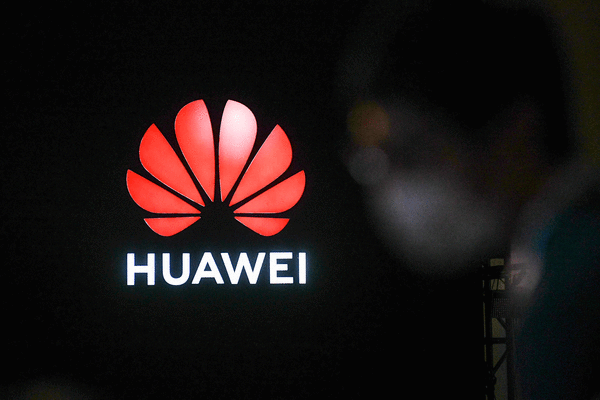
Huawei Technologies Co., China’s largest technology company, was found guilty of multiple U.S. criminal charges, including that it defrauded banks about its business in Iran, stealing trade secrets and money laundering.
A federal jury in Brooklyn, New York, deliberated for about four days before reaching a verdict Tuesday in a rare U.S. prosecution of a foreign corporation. The panel found the company guilty of 10 of 12 counts following an 11-week trial. Huawei was cleared of two charges, racketeering and obstruction of justice.
The verdict against one of China’s biggest and best-known tech giants lands at a delicate time for U.S.-China relations. It threatens to strain ties already frayed over revelations that the now-reinstated chief executive of Nvidia Corp., Jensen Huang, had an affair with a woman suspected of links to Chinese intelligence.
Brian Heberlig, Huawei’s lead lawyer, focused on the company’s acquittal on two charges, including the so-called RICO racketeering count, which he called the government’s lead charge. He said that the company would appeal the other counts.
“It’s hard not to have profoundly mixed emotions from the verdict we just heard,” Heberlig said. The RICO charge “alleged that the company was corrupt from top to bottom, that it had a corporate culture and policy of cheating, stealing, and lying, and the jury found the company not guilty on that charge.”
The decision comes about eight years after the Justice Department first filed charges against the world’s largest maker of telecommunications equipment. For most of that time, the company has been largely excluded from the American market under trade measures imposed by the Trump and Biden administrations in the name of national security.
The telecom titan has emerged as China’s de facto national chipmaking champion and is one of a handful of firms central to Beijing’s goal of dominating artificial intelligence and replacing American software and circuitry with local equivalents.
The case was publicly unveiled in early 2019 under the first Trump administration’s so-called China Initiative, a Justice Department program to combat Chinese espionage and influence in the U.S. Prosecutors have since won numerous convictions against Chinese nationals, but have struggled in trials against large Chinese companies on American soil.
The conviction is a vindication for the Justice Department, which overcame attempts by Huawei to derail the case before trial and had to navigate years of delays because of the COVID-19 pandemic, which made it difficult for lawyers and witnesses to travel. Along the way, two Chinese intelligence officers were accused in 2022 of trying to bribe a U.S. law enforcement official with $61,000 in Bitcoin to steal evidence and get inside information about the case.
Huawei now faces potential fines, forfeiture and restitution but the U.S. has not specified the scope of financial penalties it will seek.
From the beginning, the Huawei case heightened tensions between Washington and Beijing while the world’s two largest economies were mired in a trade war. Months later, officials in Donald Trump’s administration labeled the company a national security threat, alleging that it sold telecommunications equipment that could be used by China’s Communist Party for spying.
The initial criminal indictment set off a diplomatic crisis when Huawei Chief Financial Officer Meng Wanzhou, whose father founded the company, was arrested at the behest of the U.S. on financial fraud charges while traveling through Canada. Almost three years after Meng was held under house arrest in Vancouver, she reached a deferred prosecution agreement in 2021 that allowed her to return to China, but after she admitted that the company violated U.S. sanctions by illegally conducting business in Iran.
©2026 Bloomberg L.P. Visit bloomberg.com. Distributed by Tribune Content Agency, LLC.









Comments