General Mills confident in turnaround despite falling profits
Published in Business News
General Mills’ profits are dropping, but a turnaround plan is already in motion and executives said Wednesday they believe it’s off to an encouraging start.
The Golden Valley-based food company’s adjusted profit — which ignores irregular financial gains and losses — tumbled 13% from a year ago as the company seeks to manage inflationary pressures. The cost of doing business is increasing across food companies globally in part due to global conflicts in the Middle East and Ukraine.
But executives signaled confidence in their ongoing plans to boost famous brands. Take Pillsbury dough: After eight quarters of falling sales, Chief Operating Officer Dana McNabb said Wednesday the marquee business stabilized during the quarter that ended Aug. 30.
The company has renovated most of its canned dough products “with more cinnamon, more icing, and more flakiness,” she said, and the company launched a brand campaign to advertise the changes. It also launched new Grands! biscuits in hot honey and maple varieties.
“Our full focus this year is on accelerating our pace of product innovation and renovation to deliver more of the lasting benefits that consumers are looking for today,” said McNabb, who may be the heir for the company’s CEO job. “This includes more protein and fiber, clean labels, bold flavors, fun and indulgence, and pet humanization” in the company’s animal-food division.
Like many food companies, General Mills has grappled with decreasing sales in recent years after consumers pulled back spending because of inflation. After lowering some prices through sales last year, the Golden Valley-based company’s turnaround plan is now banking on innovation such as new protein and fiber-packed products to boost sales.
The company posted net sales of $4.4 billion for the quarter, down 3% compared with last year. But after adjusting the figures for the one-time impact of divesting its U.S. yogurt business, sales were flat. The company said its top priority is to grow sales in the long term.
Comparable sales in the company’s foodservice segment serving schools, restaurants and institutions, as well as its international segment, buoyed the company. Both increased by 4% in the quarter.
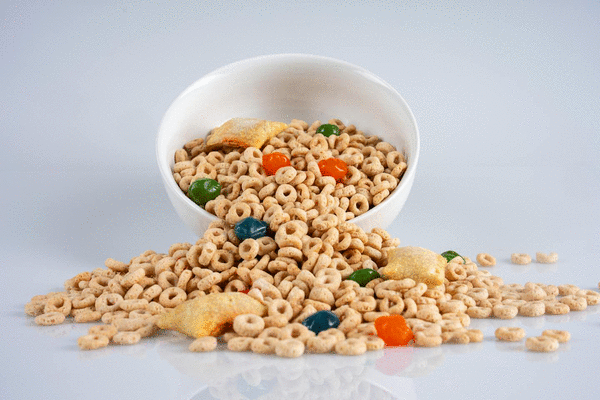
McNabb said changes like adding new desserts and removing artificial colors from the company’s cereal portfolio allowed its foodservice segment to hold or grow market share in all of its priority businesses during the quarter. Revamped Häagen-Dazs ice cream varieties aided the international segment, she added.
But comparable retail sales in North America were down 3% in the quarter. McNabb said on a call with investors that insurgent brands are challenging the company’s fruit snack business, which is part of the segment.
“We need to up our game there,” McNabb said.
The company said higher input costs dinged the retail segment’s operating profit. Chief Financial Officer Kofi Bruce said the rising costs of wheat, freight and fuel are creating inflationary pressure.
Financial analysts at Evercore, led by David Palmer, recently lowered their estimate of General Mills’ profit through the 2028 fiscal year because of this “higher input cost inflation,” they said in a research note.
Analysts at J.P. Morgan, led by Thomas Palmer said in a note, “The bigger questions for (General Mills) would seem to come later this year, when yet another wave of inflationary pressure takes hold” and the company may need to consider raising prices to preserve its profit and dividend.
©2026 The Minnesota Star Tribune. Visit at startribune.com. Distributed by Tribune Content Agency, LLC.










Comments