Why theater owners are balking at Hollywood's latest mega deal
Published in Business News
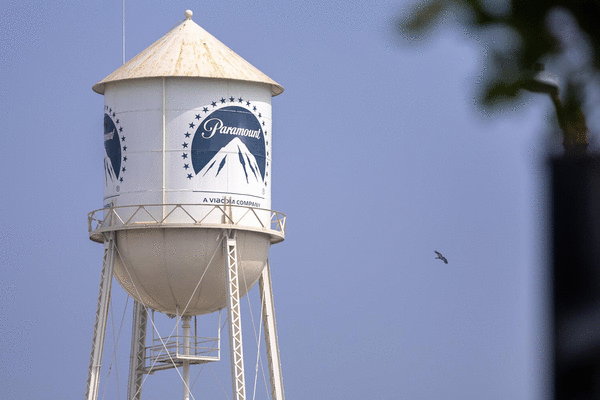
Industry consolidation and the exodus of film production work overseas took center stage Tuesday at the CinemaCon trade convention in Las Vegas.
Head theater lobbyist Michael O'Leary said his trade group will continue to oppose the proposed merger between Paramount Skydance and Warner Bros. Discovery, arguing the combination of two studios would be "harmful to exhibition, consumers and the entire entertainment ecosystem."
O'Leary, who serves as president and chief executive of Cinema United, said the theater owner trade group will continue to press the issue at the state and federal level.
"Unfortunately, history shows us that consolidation results in fewer films being produced for movie theaters," he said during a speech about the state of the industry . "Further concentrating marketplace power in the hands of a smaller group of distributors that dictate the terms, windows, scheduling, screen-placement of movies, and access to historic film catalogs will have a real and lasting impact on Main Street and millions of movie fans around the world."
The Paramount-Warner merger is a major topic at this year's convention. White buttons emblazoned with "#Block the merger" in red font have shown up at events throughout CinemaCon. Already, nearly 1,000 artists and movie creators have signed a letter opposing the deal.
Paramount Chief Executive David Ellison has said the combined company will produce 30 films a year — 15 each from Warner Bros. and Paramount — but exhibitors question how realistic that goal is, given the expected cost cuts from the deal and the $79 billion in debt with which the newly combined company would be saddled.
If the merger cannot be stopped, Cinema United intends to secure commitments from Paramount about items like film marketing spending and number of films produced to add some guardrails to the transaction, O'Leary said at a press breakfast Tuesday morning before his speech.
He also said Cinema United's board met with Netflix co-Chief Executive Ted Sarandos earlier this week in Las Vegas, a meeting that was scheduled back when the streaming giant was still in the mix for Warner — which prompted similar concerns about theatrical releases at the time. The meeting centered on whether there could be a way forward for the two entities to work together, said O'Leary, who described the discussion as productive and constructive.
On the policy front, Motion Picture Assn. Chief Executive and Chairman Charles Rivkin said the studio lobbying group was working with Hollywood stakeholders, congressional leaders and President Trump's appointed "Hollywood ambassadors" on a federal film tax incentive that could lure more film work back to the U.S.
"We are fighting daily to reach that goal," he said during a speech Tuesday morning. "And we will keep fighting to make America a more competitive place to make movies."
Though states like California have bolstered their own film and TV tax credit programs, there is widespread belief throughout Hollywood that a federal credit that could stack on top of state credits would make the U.S. a more attractive place for production.
©2026 Los Angeles Times. Visit at latimes.com. Distributed by Tribune Content Agency, LLC.








Comments