New Michigan one-buck rule raises worries about hurting deer hunting
Published in Outdoors
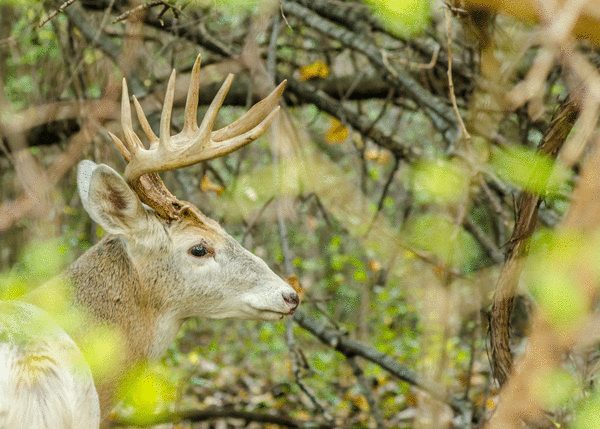
DETROIT — The new limits Michigan hunters will face on harvesting antlered deer next year could hurt the Michigan Department of Natural Resources' bottom line, causing further problems for a department already dealing with declining license sales and increasing costs.
The new rules are intended to reverse deer population trends in Michigan, where some southeast Michigan communities have taken the controversial step of culling their abundant herds and where does often outnumber bucks.
DNR officials projected their initial recommendation for enacting a so-called "one buck rule" would lead to an annual loss of at least $1 million in license sales revenue, according to a memo department officials sent to the Natural Resources Commission in March. In May, a commissioner speculated that potential losses could range upwards of $6 million, a sizable chunk of the $27.6 million in revenue the DNR receives from selling single, combination and universal antlerless deer hunting licenses.
"It won't be disastrous, but certainly this level will still be painful to absorb while we have to contend with the responsibility we have to try and manage our resources appropriately as well," said Brent Rudolph, DNR deer, elk and moose management specialist, in an interview with The Detroit News.
This is the last year when hunters in the Lower Peninsula can take two bucks by buying a combination license, which Rudolph said is the state's most popular deer hunting license. Hunters also can buy a single tag license, which allows them to take one antlered or one antlerless deer.
Starting in March 2027, hunters in the Lower Peninsula will have the option to buy a combination license that allows them to take one antlered deer, with the second tag valid only for an antlerless deer. They could buy a single deer license that would allow them to shoot a buck with three or more antler points. There are no changes in the Upper Peninsula.
The NRC in May adopted a one-buck rule that was less restrictive than the DNR's recommendation, adding provisions that would allow for hunters to take certain bucks with a single deer tag and applying the restrictions only in the Lower Peninsula. Those changes likely will lead to a worse revenue decline, Rudolph said, although analysts haven't made additional projections on the expected losses.
The NRC's May decision to limit hunters' ability to harvest antlered deer followed intense debate among hunters early this year. They turned out in droves to address commissioners at their monthly meetings. Some hope limits on harvesting bucks will improve hunting in Michigan by allowing bucks to grow older and gain more antlers, while others say they'll protest the new restriction by choosing not to shoot does, or female deer.
DNR officials are uncertain how the final rule will affect the revenue the department earns from selling deer hunting licenses, a crucial source of funding for the department charged with managing the state's natural resources. Hunting and fishing license sales and excise taxes on firearms and other hunting equipment fund most of the DNR wildlife division's work.
"It's not, I would say, a devastating change to overall department revenue, but department revenue is already also on a downward trend, and costs are on an upward trend," Rudolph said. "It's not like a 25 percent loss in revenue, but it still hurts at a time we're already having challenges maintaining revenue, services, positions and other things."
Will the one-buck rule work?
The so-called "one buck rule" that kicks in next year is designed to encourage hunters to harvest more does and curb the state's deer population. That's a primary concern in southern Michigan, where the animals are so populous that some suburban communities have hired sharpshooters to cull their local herds.
When they have more leeway to shoot a second buck, hunters pass on the chance to shoot an antlerless deer, Rudolph said. That means the state's overall deer harvest isn't as high as it could be and leaves drivers, gardeners and farmers to contend with the impacts of having an abundance of deer roving their communities.
Dean Beckman, a deer hunter in the Oakland County community of Highland Township, said he is concerned the state's one buck plan will backfire.
Without conducting a robust survey of hunters to understand how they will respond to the limits on harvesting antlered deer, Beckman worries the rule will inadvertently lead to a smaller total deer harvest in 2027 and even fewer people shooting does. He said some hunters writing on online forums said they will not harvest does as a protest against the one-buck rule.
"There's the opportunity people will go out and harvest a buck, and then they'll be done harvesting for the year," he said. "They won't harvest more antlerless (deer)."
Beckman, 58, said he believes the NRC's decision to impose the one-buck rule was not based on science, citing some hunters' disapproval of the regulation and their talk of protest.
"I'm not opposed to the one-buck rule," he said. "It's the reason they made it that's bothersome to me."
Legions of hunters attended NRC meetings early this year when commissioners deliberated on their options for restricting some antlered deer harvest. The May meeting in which commissioners approved their one buck rule lasted more than nine hours because of extensive public comment.
"The hunting public made their voices very well known and very well heard, and it was very controversial, as we have certainly witnessed," said Commissioner John Walters of Indian River in the Upper Peninsula.
"I talked with countless people literally for months," Walters continued, saying he read more than 6,000 emails from people weighing in with their opinions in addition to fielding phone calls and comments at NRC meetings.
Having significantly more does than bucks causes lots of problems, Walters stressed. He said that's the case in the U.P. as well as southern Michigan areas not battling an outbreak of epizootic hemorrhagic disease, which can be fatal.
Even in the U.P., where deer aren't nearly as abundant as they are in some Metro Detroit communities, the buck-to-doe ratio is out of balance, he said. That leads bucks to "fight like crazy" for their shot to breed during a long rut, Walters said, sometimes exhausting themselves so much they don't make it through the winter.
Commissioners believe their one buck rule will improve the ratio of bucks and does in Michigan, Walters said. He said he thinks it should apply in the U.P. as well as lower Michigan.
"We're hoping it changes the needle and the expectation is that it does," Walters said. "How effective? I don't know the answer to that. What that might do to the deer population? We're hoping that it moves the needle and the expectation is that it does."
How one buck rule could hurt DNR budget
The Natural Resources Commissioners also agreed to pilot a "Earn a Second Buck" program in some counties that will allow hunters to shoot a second buck if they shoot an antlerless deer.
Under the current rules, many hunters who buy a combination license pass on shooting does while they wait for another buck to pass through their scope, the DNR's Rudolph said.
"Even though very few hunters in the grand scheme of things actually take two bucks, they buy the (combination) license. It gives them that opportunity," Rudolph said. "We strongly believe that's a hangup for them taking additional (antlerless deer)."
DNR and NRC officials hope the new one-buck rule will help change that attitude and encourage hunters to shoot a doe once they get a buck.
In contrast, it could lead some hunters to downgrade their license purchase from a $40 combination license to a $20 single license if their only intention is to shoot a buck. That would hurt license sale revenue.
"Many of them are not all that keen on taking antlerless deer," Rudolph said. "They'd probably just buy the single deer license that allows them to take one antlered buck. It's only $20, so you lose $20 for every person who decides to buy a single deer license instead of the combo license."
The DNR initially recommended the NRC enact a statewide one-buck limit and make the single deer license valid only for an antlerless deer. That way, people who wanted a buck would have had to buy the combination license, Rudolph said.
"We'd still lose some revenue on antlerless license sales because people wouldn't need to buy a separate standalone license if they just wanted one license for an antlerless deer, but we wouldn't have many people 'downgrading' to the single deer license," he said.
In their March 31 memo to the NRC , DNR officials estimated there could be a "significant" economic impact if the limitation caused some hunters to drop out altogether. In addition, hunters who typically buy both a combination and single deer tag likely could reduce their spending by buying just a combination tag, DNR officials said.
"Should this option be approved, a decline in antlerless deer license sales is expected," the DNR said in March. "While impact is unknown, it would be surprising if loss did not exceed one million dollars. The Department does not know how license buying behavior will change with this regulation."
The NRC instead adopted a looser policy that will allow hunters to shoot a buck with a single deer license, provided that buck has three or more antler points.
Rudolph said the adopted policy will likely lead to a more drastic decline in license sales revenue because it's common to see a buck with three or more antler points in southern Michigan, where he said the need to harvest does is most severe. Hunters may be willing to take a bet on buying a cheaper, single deer tag because they're likely to find a buck that meets the three-point quota, he said.
DNR faces tight budget
The DNR is facing budgetary shortfalls as a key source of revenue — hunting and fishing license sales — is decreasing as costs of running the department rise.
DNR leaders have made a series of presentations to the NRC this year outlining the financial difficulties facing their divisions. Assistant DNR wildlife division chief Keith Kintigh in January said the division has lost $12.5 million in purchasing power over the last seven years and is "functioning on duct tape and a dream."
Politicians, including Gov. Gretchen Whitmer, have floated increasing license fees to generate more DNR revenue, but the proposals are controversial and have not been enacted.
That's another thing that has Beckman concerned. If the one buck rule hurts license sales, he's afraid the price of licenses will increase in response.
Walters said his main concern is with the state's natural resources, not the dollars flowing into the department. Still, he said he believes the NRC's new limits on shooting antlered deer will eventually improve deer hunting prospects in Michigan and lead to more license sales.
"If we go to a one buck rule and it is effective — which we expect, that's why we passed it — the (number) of folks that would come back to Michigan would be greater because the quality of deer will then change," Walters said, describing a future when bucks in Michigan have a better chance at maturing and growing antler points because of the one buck rule.
©2026 The Detroit News. Visit detroitnews.com. Distributed by Tribune Content Agency, LLC.






Comments