Nolan Finley: Save a life, kill a deer
Published in Outdoors
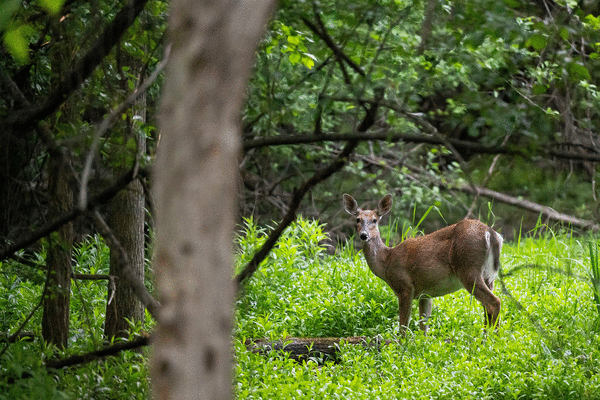
DETROIT — Every civic-minded Michiganian who is able and eligible should grab a rifle and head to the woods to combat a growing menace to the state.
Sunday marked the start of Michigan's annual firearms deer season. The next two weeks are our best opportunity to thin a deer herd that is dangerously exploding, particularly in the densely populated southern tier of the state.
And yes, I know they are beautiful creatures, and I enjoy watching them in the wild as much as anyone else. But there are just too many of them in the wrong places, and they're killing us.
An estimated two million deer roam Michigan's fields, forests, and, increasingly, neighborhoods. We have the second-largest deer population in the country, behind only Texas.
Keeping them off the highways is impossible. In 2023, the last year for which full statistics are available, Michigan saw more than 58,000 car/deer collisions, resulting in 1,725 injuries and 19 deaths. The financial costs of such wrecks are pegged at $30 million annually.
The terrifying sensation of seeing a 200-pound animal in your headlights is becoming increasingly common. Dead deer can be found rotting on the side of roadways even in suburban Detroit. I nearly hit one crossing Farmington Road in Livonia that had apparently wandered out of Edward Hines Park. Motorists must be constantly on guard.
The danger goes beyond collisions. Deer play host to parasites and bacteria that can be fatal to humans.
The best-known is Lyme Disease, transmitted by blacklegged ticks. It has been linked to a variety of ailments, including heart disease and a weakened immune system.
The Lone Star tick, also found on deer, can transmit a potentially life-threatening Alpha-gal Syndrome, a food allergy that causes severe reactions to consuming red meat. How tender will you feel about Bambi if she prevents you from ever eating a hamburger or pork chop again?
The smaller the deer herd, the less the risk from these two nasty diseases. The most efficient way to reduce the deer population is to increase the number of deer hunters.
Controlling the herd requires harvesting 40% to 50% of the herd every year. Michigan doesn't have nearly enough hunters to do that. Hunters took only 373,000 deer last season. That was up 7.6% over the previous year. The long-term trend, however, is a steadily shrinking corps of hunters. This year, 525,000 deer licenses are expected to be sold. That's down more than 200,000 since the mid-1990s.
Michigan has enacted several incentives, including loosening rules on ammunition and firearms, extending seasons, encouraging the harvesting of more does and lifting the Lower Peninsula ban on baiting.
Hunters are also eligible for a tax break if they donate a processed deer to an anti-hunger program.
The biggest incentive should be self-preservation. Kill them before they kill you.
©2026 The Detroit News. Visit detroitnews.com. Distributed by Tribune Content Agency, LLC.





Comments