Dennis Anderson: Ducks are fewer, but good times roll on at this Minnesota hunting camp
Published in Outdoors

BENSON, Minn. — The year Phil Iverslie was born, 1934, the worst drought in history pockmarked Swift County.
Crops withered, topsoil swirled into the air and the two lakes that bracket Phil’s west-central Minnesota hunting shack dried up.
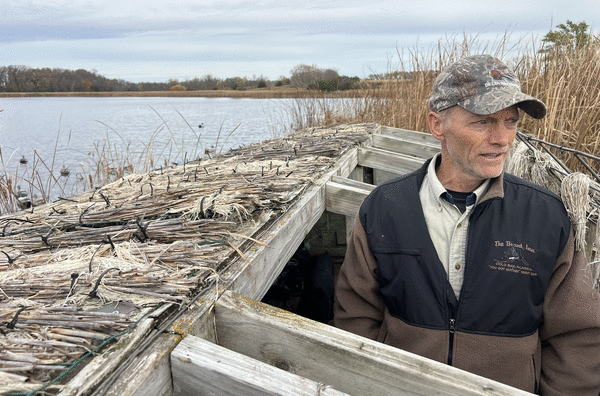
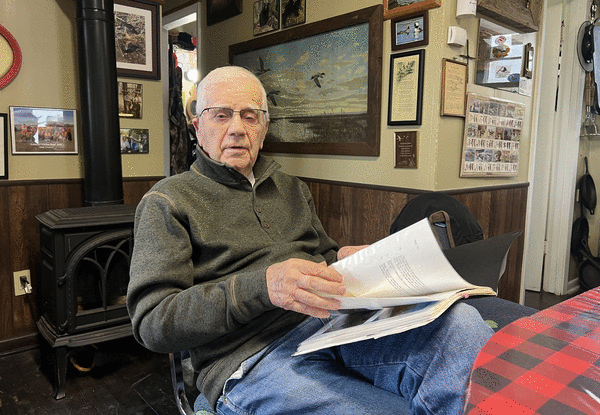
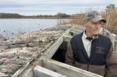
Now 92 years old, Phil walks unsteadily. His duck hunting days are over. But they live on in his memory — mornings when rafts of redheads, canvasbacks and ringnecks wheeled and pitched over the point that divides Lake Moore and Lake Hazel, about six miles from Benson.
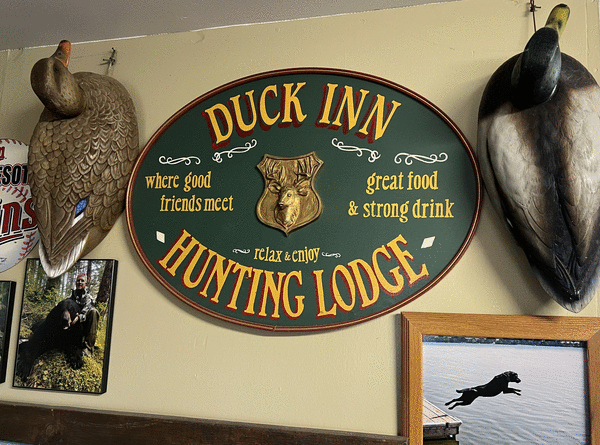
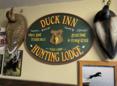
Amid a canopy of oaks and maples not far from that point sits the Duck Inn, as Phil calls his hunting camp.
Visiting it, as he did on a recent Sunday, Phil can relive the big duck days of the past, when shots echoed from his 12 gauge on October and November mornings — boom, boom, boom — and reports also rang out from shotguns shouldered by his sons, Karl, Scott and Peter.
On these visits, in his mind’s eye, Phil also can see his golden retriever, Hana, disappearing among foam-topped waves, making long retrieves. And see, too, after the hunt, on a table outside the shack, ducks that were shot laid neatly alongside one another, redhead to redhead, canvasback to canvasback, and so forth. Then Phil, his boys and any friends who were in camp would gather inside for breakfast.
“Throughout most of my life, I considered duck season as important as any holiday, including Christmas,” Phil said.
Part hovel, part museum and part shrine, the Duck Inn is also a kind of church, and the hunters’ meals are a type of communion.
Even without the big duck flocks of yesteryear — whose flights now are seen only rarely — the outfit’s rituals live on, as they do at a few thousand other Minnesota duck camps.
“No one ever turned down an invitation to our camp because the hunting isn’t what it once was,” Phil said.
Popularized first by Minnesota’s wealthiest sportsmen, and soon thereafter by regular folks, duck camps have been a Minnesota fixture nearly since statehood.
From Lake of the Woods’ rice-filled bays to the backwaters of the Mississippi River and every pothole in between, Minnesota bore the water and food that attracted ducks and, ultimately, duck hunters and duck hunting lore.
Old-time decoys were part of this, also boats and calls fashioned from wood by carpenters, whittlers and other craftsmen, some of whom plied their trade in sheds on the shores of Leech Lake, others near Christina or Swan or Heron lakes, or elsewhere.
Such were born the kinds of waterfowling knick-knacks, or memorabilia, that cover the walls of any good duck shack, as they do those of the Duck Inn.
Sipping coffee while seated at the camp’s kitchen table, Phil considered a plate of scrambled eggs and blueberry pancakes while Karl, 66, was perched alongside him, and Peter, 59, manned the cook stove.
On another day, their brother Scott, 64, might be in camp, as would their sister, Ann — Phil’s favorite — age 56.
Recalling how as a young man duck hunting grabbed him and wouldn’t let go, Phil said: “When I was a student at St. Olaf, I had a class that met every Saturday. One year, on the opening of duck season, I skipped that class to hunt. The professor caught me and told me I had better get my priorities straight.
“Well, I did have my priorities straight.”
A retired Willmar, Minn., family physician, Phil bought the Duck Inn in 1977. Founded in 1924, the camp had been owned by Minneapolis big wigs whose Black cook was a curiosity to local farmers.
“When I bought the place, we had pretty darn good hunting,” Phil said.
Born in Mankato, Phil first hunted ducks with his dad on Swan Lake. Enamored of dank marshes, muddy boots and promising sunrises, Phil dreamed of someday having his own place to hunt, and to share with his family and friends.
When Phil bought the Duck Inn, his kids were teenagers and younger. The lessons they learned while hunting with their dad, and while watching how he respected the waterfowl they pursued and cared for the lands and waters that ducks and other wildlife need, went a long way toward defining their life choices and lifestyles.
A West Point graduate, Karl is retired and lives on a lake not far from Willmar. Also retired, Scott lives in South Dakota, but he spent his work life in Alaska as a manager of the North Slope pipeline. Peter, a pharmacist, also lives near Willmar, but for many years he owned a nuclear pharmacy in Alaska, where he still keeps a duck and fishing camp. And Ann, a teacher, lives in southeast Minnesota.
Finishing his breakfast, Phil said, “Let’s go to the pass.”
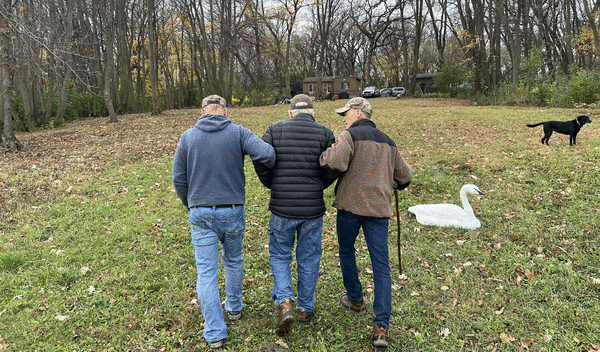
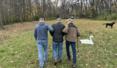
Not many years ago, he walked briskly to his hunting blind, a shotgun in hand. Now, on the same short walk, Phil needed help.
Holding onto their dad, Peter and Karl locked arms, theirs in his.
In 2020, Florine, Phil’s wife of more than 60 years, died of Alzheimer’s disease. Now he resides in a senior living facility in Willmar. He has a companion, Willow, a black Labrador. But he misses Florine in ways that often overcome him.
“She was a great wife and mother,” Phil said, adding, “I wouldn’t count her shoes, and she wouldn’t count my decoys.”
Returning to the camp’s shack, Phil sat down and petted Willow.
Connecting his past to his present and to the future he imagines, the Duck Inn, now in its 102nd year, remains today for Phil as it always has been, part hovel, part museum and part shrine.
And an incubator of good times, ducks or no ducks.
Phil petted Willow, and the dog wagged her tail.
“Good dog,” he said.
©2026 The Minnesota Star Tribune. Visit startribune.com. Distributed by Tribune Content Agency, LLC






Comments