Bear hunt protester sues FWC over secret driving record surveillance
Published in Outdoors
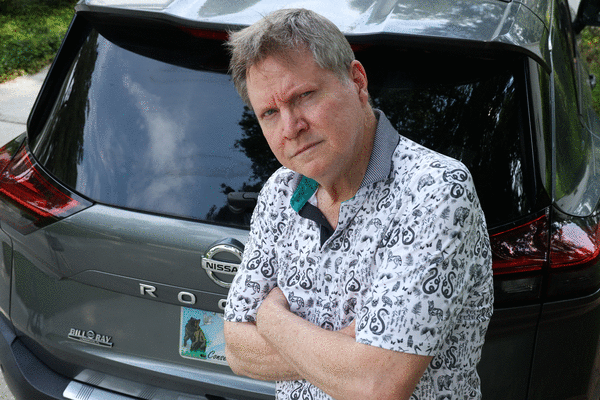
TALLAHASSEE, Fla. — Longtime Apopka environmental activist Chuck O’Neal, known for his fierce opposition to Florida’s recently revived black bear hunt, has sued state wildlife officials for using his driving records to secretly investigate his activities.
In a lawsuit filed in federal court in Tallahassee on Monday, O’Neal accused the Florida Fish and Wildlife Conservation Commission and four of its investigators of violating federal privacy laws when they pulled his personal driving records 28 times.
He also claims they violated his First Amendment rights and the state’s public records laws.
Their access to those driving records violates the federal Driver’s Privacy Protection Act, which can only be accessed as part of a criminal investigation, O’Neal said in his lawsuit.
“It should be an open and shut case on the driver’s information,” O’Neal told the Orlando Sentinel by phone on Tuesday.
O’Neal and other environmental activists whose records were pulled prompted public outrage over the summer when they revealed FWC’s actions. They believe the agency obtained their license plate numbers and then, using Flock cameras or similar devices, tracked their movements around the state, the Sentinel previously reported.
The founder of the nonprofit environmental group Speak Up Wekiva, O’Neal has tangled with the FWC numerous times, including suing to end bear hunting, campaigning against a ballot measure to enshrine hunting and fishing in the state constitution and frequently speaking out at the agency’s meetings.
A spokesperson for the agency said it had no comment on his lawsuit because it had not yet received it.
O’Neal and several other environmentalists who spoke out against bear hunting discovered several months ago that the FWC had requested their records from the Department of Highway Safety and Motor Vehicles’ Driver and Vehicle Information Database, or DAVID. The database contains driving records and license plate numbers, but also comprehensive personal data including social security numbers, medical and disability information, addresses and accident reports.
The Driver Privacy Protection Act was created to prevent corporations and government officials from obtaining, disclosing or using the restricted personal information in a person’s motor vehicle records, except in very rare instances.
The agency initially claimed it had pulled the records of those who spoke out against the bear hunt and protested in front of FWC commissioners’ places of business as part of a “criminal investigation.” But an agency official later admitted there was no criminal investigation, only a concern for “public safety.”
The agency then publicly released a sampling of media threats it had received, with the names redacted, saying those online comments justified its investigation. The environmentalists said the agency was trying to smear them with the anonymous remarks, arguing none of those whose records were pulled made the comments cited.
In his lawsuit, O’Neal said that the agency later released an unredacted version of the remarks and that document showed that none of the names attached to the incendiary comments matched those of any of the people whose driving records were pulled.
The FWC has pulled the personal information of at least 50 other environmentalists, far more than the Sentinel knew about when it reported on the incident in July, O’Neal said in his lawsuit. Several of them said they believed the agency was using the information to track their comings and goings to and from FWC meetings.
There were no black bear hunts allowed in Florida from 2015 to 2025, but FWC authorized them last year, prompting fierce opposition from some environmentalists and animal activists. The agency has also approved a bear hunt for next month.
O’Neal accused the agency of having “a policy of utilizing the DAVID database to obtain information regarding individuals that publicly criticize the FWCC or its commissioner,” though officials knew that those records “can only be used for legitimate criminal investigations.”
O’Neal is also suing over the agency’s failure to produce public records he requested related to the DAVID inquiries. In response to one request, the FWC said it found 85,832 emails between board members and investigators but “conceded that there was no criminal investigation of Plaintiff and no responsive exhibits existed.”
Another request produced a response that the FWC found 556 emails but the agency said the sheer number would require “extensive staff time to complete this request and may include unwanted emails as the search parameters provided are very broad.”
That many emails makes it seem like their interest in him was “more than just curiosity, more like an obsession,” O’Neal said.
O’Neal paid $151 for those emails, but the agency never turned them over. “They are not revealing any of it. They are not being compliant at all,” he said.
More than four months have passed since he first made his request. Despite a notice he intended to sue and multiple queries about the status of his request, the state has not provided any records.
“This is how you bring about justice unfortunately. You have to sue to get records,” he said.
©2026 Orlando Sentinel. Visit orlandosentinel.com. Distributed by Tribune Content Agency, LLC.





Comments