5 big changes to Minnesota deer season every hunter needs to know
Published in Outdoors
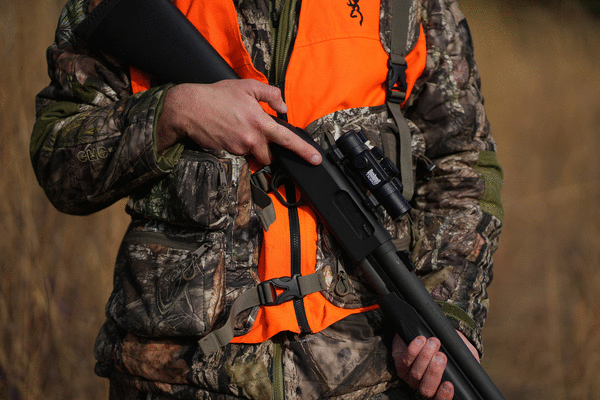
MINNEAPOLIS — So much of deer hunting is tradition.
But certain tasks will be new this year — especially for successful hunters.
Minnesota’s regular firearms season starts a half-hour before sunrise Saturday.
But hunters need to be aware of the changes well before.
Here are five new rules and requirements to know, from buying your license to taking your deer home.
Licenses are now electronic
This is the most important change: There’s a whole new system for getting your license, and the Department of Natural Resources is urging deer hunters not to wait until the last minute, like many often do.
Last year, hunters bought nearly 140,000 deer licenses on the Thursday and Friday before the opener, according to the DNR, and that makes the agency nervous. For weeks, conservation officers have been reporting that their most frequent task has been helping hunters navigate the new system, which has shown glitches.
To buy a license online, you have to either download an app to your iPhone or Android, or use a new desktop interface. Either way, you’ll need to create a new account.
You can still operate on paper if you prefer. Licensing agents, including some DNR offices and sporting goods stores, sell licenses in person, but they won’t print out the weatherproof license for your wallet or pocket. You’ll be looking at plain paper, so it’s a good idea to take a picture of that as a backup.
It’s important to log into the mobile app before leaving cell service. This will come in handy if you kill a deer, which we’ll get to in a bit.
Rifles are legal in most of the state
The decades-old line that split the state into a “rifle zone” and a “shotgun-only” zone has been erased, making rifles legal everywhere in Minnesota — except for counties that decided to continue the rifle prohibition.
Hunters planning to carry rifles in the old “slug zone” should double-check with the county they’re hunting in to make sure they’re legal.
Brown, Cottonwood, Dodge, Faribault, Houston, Jackson, Kandiyohi, Nobles, Pope, Rock and Watonwan counties will keep the rifle ban in place. In addition, Clay and Wilkin counties will ban rifles in part of their jurisdictions.
You ‘tag’ your deer electronically now
Used to be that the first order of business after recovering your dead deer was to officially make it yours — “validating” your harvest — by notching the day and month on a carcass tag and then attaching it to the animal. That act of attaching a physical tag to an animal is no more.
Pages 28 and 29 of the regulations book offer more details, but here are the basics.
You’re still allowed to print out a paper deer “tag” and notch it. You’ll need to present that in person at a game registration station. But since the weatherproof printouts aren’t available anymore, the electronic path, either with the app or via the licensing website, might be more practical.
Before moving the animal, validate your harvest with the mobile app, which asks you a few questions, such as date, time of day, sex of deer and weapon type. This will work even if you have no cell signal. (You did remember to log into the app before leaving cell service, right?)
You must “register” your deer — the second step of the validation/registration process — within 48 hours. There are two ways to do this: electronically or in person. Important: You can’t do this by phone anymore. If you have an internet connection, you can do a “quick registration” without logging in by selecting “Harvest Registration” at the top of the DNR’s “Licensing” page.
If you’re using the app without cell service, you can register your kill, but you must remember to open the app once you have a signal so it can sync with the system. Registering your deer in person only requires the notched piece of paper; you no longer need to show anyone the carcass.
CWD testing
For the first time in more than 15 years, Minnesota has a new regimen for testing deer for chronic wasting disease, and it will mean a change for many hunters.
Bottom line for this year: If you’re hunting in the southwest quadrant of the state, every deer one-year-old or older killed during opening weekend is required to be tested — even if no CWD cases have been found in your area.
If you’re hunting anywhere else, testing is optional — even if it’s an area known to have CWD.
Hunters subject to the mandatory testing must submit a sample within 24 hours. There will be sampling stations where wildlife officials will take the sample from your deer through Monday, or you can go to self-service stations.
The DNR’s interactive CWD map is your friend for finding the nearest station for you.
Anyone can get their deer tested, and the DNR encourages voluntary testing, but in-person options aren’t as widely available outside the southwest as they were in previous years. Hunters can request a test kit, contact a taxidermist, or try scheduling an appointment with a local DNR wildlife office.
Carcass transportation and disposal
Carcass movement restrictions have been eliminated. Everyone can now immediately leave their deer permit area with their deer — even if the area is a CWD management zone.
However, there are disposal rules within CWD management zones, and the DNR is no longer providing dumpsters.
Carcasses can only be disposed of in a landfill, with a garbage hauler, on private property where it was killed if the landowner says it’s OK, or with a meat processor or taxidermist.
©2026 The Minnesota Star Tribune. Visit startribune.com. Distributed by Tribune Content Agency, LLC






Comments