This Minnesota school puts hunting and outdoor rec safety in the classroom
Published in Outdoors
GRAND MARAIS, Minn. — As far as sixth-grade courses go, the Cook County school district requires one that is distinctly northern Minnesotan: a yearlong study in how to safely operate a rifle, ATV, snowmobile and motorboat.
The pre-K through 12th grade school of about 460 students in Grand Marais sits at the eastern gateway to the Boundary Waters Canoe Area Wilderness. Surrounded by myriad lakes, Lake Superior, a network of trails and thousands of acres of public land, hunting, boating and tooling around on recreational vehicles are intrinsic pieces of a North Woods lifestyle.
So for the past 10 years, the district has required the class to help ensure its students learn how to do it all safely.
A tragic snowmobile death of a Cook County youth about a decade ago was the impetus for the class. Before that, participation in community education safety classes had declined, despite the high rates of hunting and outdoor recreation in the region.
Ann Sullivan, a firearms safety instructor and Cook County commissioner, discovered that transportation was the reason for the falling numbers, as some students who live along the rural Gunflint Trail travel more than 100 miles round-trip to get to Grand Marais. And, with many area families working in the tourism industry, their erratic schedules interfered with attendance. A required class fixes that, Sullivan said.
“In rural Minnesota, it makes so much sense,” she said.
While not every student’s family participates in the region’s outdoors culture, Sullivan said, their friends’ families probably do.
Since 2024, 74 people, including six victims under age 18, have died using ATVs in Minnesota, according to the state Department of Natural Resources (DNR). Twenty of those deaths occurred this year.
The Minnesota Rural Education Association (MREA) honored the school district Nov. 15 in Brainerd with an innovation award. The district prepares students with real-world skills that reflect their communities and ways of life, said award presenter Jeff Granrud, Howard Lake-Waverly-Winsted school district math teacher and 2025 National Rural Education Association rural teacher of the year.
About 250 kids have moved through the program in a decade, which largely runs on borrowed equipment and a small budget. The class devotes separate sections to each area, with a field day to test students’ knowledge at the end of each section. The boating segment is new this year, teacher Emma Spoon said, and leaders still are trying to figure out how they will test students.
Tapping North Woods expertise
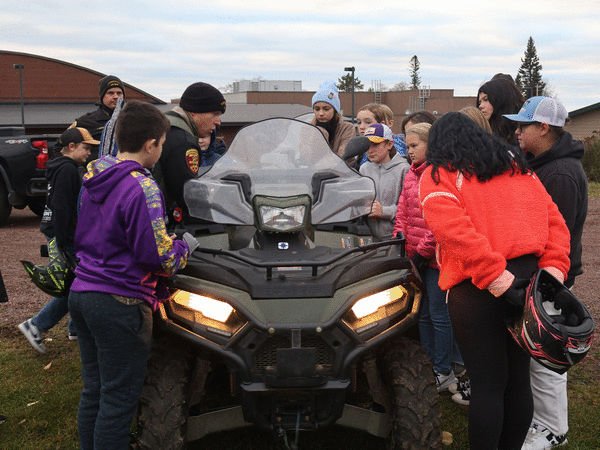
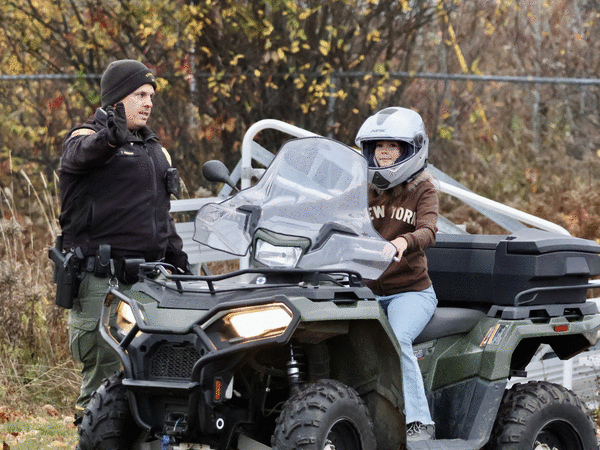
The school brings conservation officers from the DNR to class to discuss laws and ethics. They also help oversee the field days.
In late October, three officers orchestrated an ATV obstacle course outside the school, where kids demonstrated their knowledge of laws and hand signals on ATVs with their throttles blocked to limit their speed — just in case.
The gun safety test takes place on loaned private property outside the city, where kids learn to walk with a shotgun or rifle and how to shoot from different positions, as if they were hunting. The Cook County Sheriff’s Office has helped on that day.
The kids who don’t come from a snowmobile or ATV culture really benefit from the lessons, growing more confident as the year progresses, DNR conservation officer Hudson Ledeen said.
The class also includes archery and Native American treaty rights components, as well as a section on fire safety, including wildfires.
Principal Josh Bellanger said the course is a required elective and doesn’t replace any of the grade’s core curriculum.
But support for the course is not universal. One parent who has spoken against the class on social media said it should be an optional after-school program rather than a required course, with more focus needed on core subjects. He declined to be identified for fear of retaliation.
Families can opt their students out of a unit, although few do, Spoon said.
Some have declined the gun safety segment, she said, and some just opt out of field days, which aren’t graded.
“There are always a few kids who will be reluctant,” Spoon said, and if they decline to take part in a field day she writes down their name and asks them again in seventh grade.
The school’s dean, Sarah Lakosky, said she has a hunting rifle from when she was part of a crew directing a dog sled team in Canada above the Arctic Circle. But she never had to use it, she said. A single mom, Lakosky has walked with her son on grouse hunts. She said she appreciates that her son learned how to take the rifle apart and assemble it in the class.
The class also taught him to respect and understand the need for such types of safety, she said.
Sixth grader Runa had never been on an ATV before her October field test but passed easily. She was most nervous for the snowmobile test having never been on one of those either, she said. She said she was eager to learn firearm safety.
“My grandpa has [hunting rifles] and that would be something that we could do together,” she said.
____
©2026 The Minnesota Star Tribune. Visit at startribune.com. Distributed by Tribune Content Agency, LLC.






Comments