Rick Steves’ Europe: Bavarian charms -- Carvings, castles and cute towns
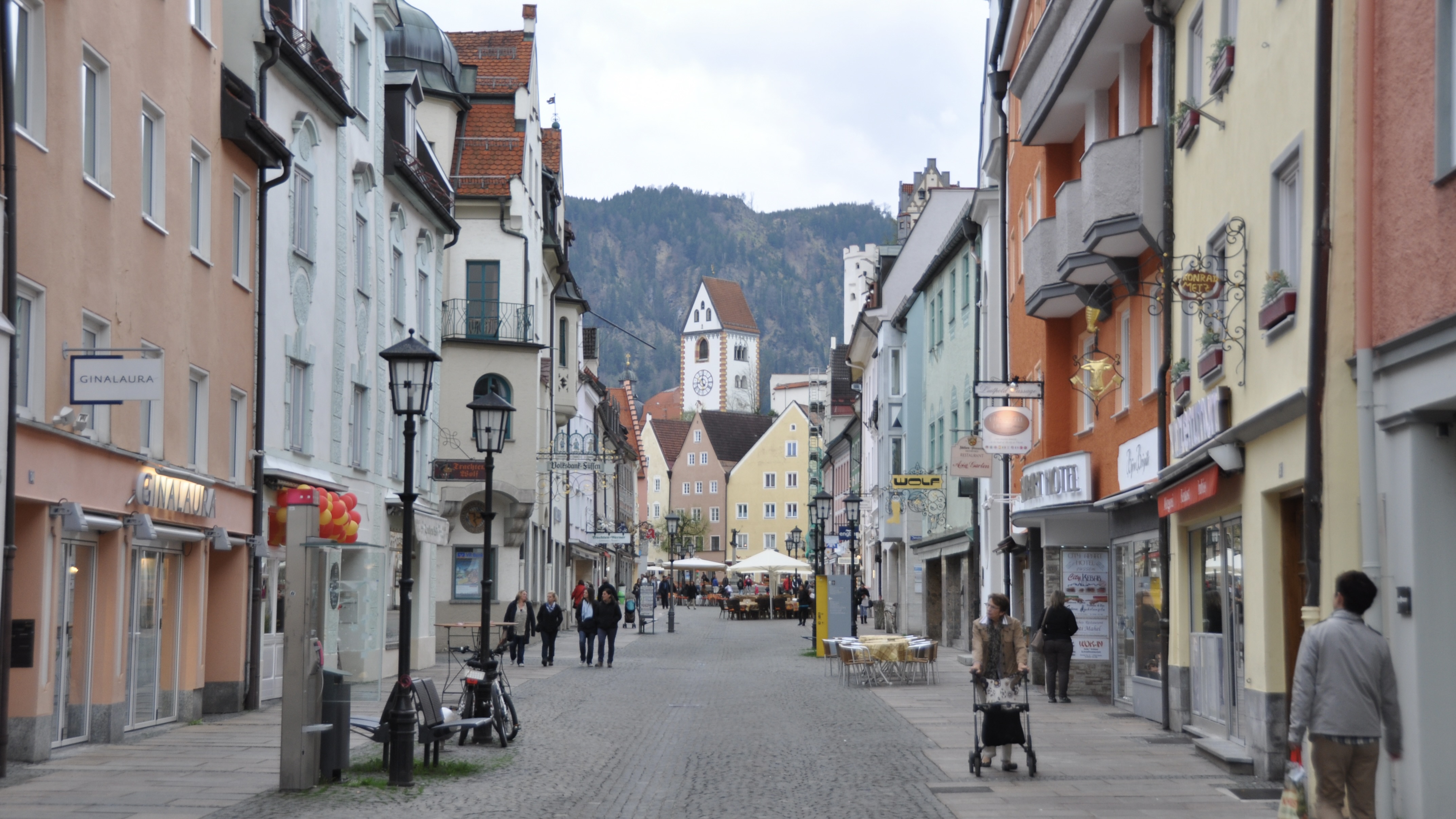


Cute villages, dirndls and lederhosen, fairy-tale castles. ... Like so many travelers, my images of Germany come from Bavaria, in the foothills of the Alps. You could easily spend a week here, soaking up culture as you bike along fragrant fields, tour the sights, and hop between quaint towns.
My favorite home bases for exploring the Bavarian Alps are Füssen and Reutte, which straddle the Austrian border. They put you an easy drive from the region's most popular sights: the wood-carving capital of Oberammergau and the popular “King’s Castles” with their fairy-tale turrets and romantic aura.
The romance starts with the older castle, Hohenschwangau – the hunting palace of King Ludwig II of Bavaria (a.k.a. "Mad" King Ludwig). Its mostly Neo-Gothic interior looks much like it did in 1835, with paintings inspired by Romantic themes.
Ludwig, who inherited the throne at age 18, did not want to deal with politics. He instead focused on constructing the fanciful Neuschwanstein Castle just up the hill and decorating it with images of medieval lore: brave knights, fair maidens, and scenes from Wagnerian operas. Just a few months after he moved into Neuschwanstein, Ludwig – who was already planning an even more extravagant castle – was declared mentally unfit to rule. Two days later, he was found dead in a lake. People still debate: Was it murder – as he was nearly bankrupting his kingdom with his costly castle building – or suicide? But today nobody complains about the cost of his castles. In fact, within six weeks of his funeral, tourists were already paying to visit them.
It's a quick drive or bike ride (or pleasant hike) to the King’s Castles from Füssen. The town itself, dramatically situated under a renovated castle on the lively Lech River, is a mix of real-world and cutesy-cobbled sights, with a colorful church (painted in a fresco technique called Lüftlmalerei) and a pleasant path to Lech Falls. Füssen's one must-see sight, the Museum of Füssen, spans a thousand years of the town’s history. A highlight here is the Dance of Death, painted shortly after a plague devastated the community in 1590. It shows 20 social classes, each dancing with the Grim Reaper – starting with the pope and the emperor.
A 20-minute drive across the border is the Austrian town of Reutte. Although its setting – surrounded by alpine peaks – is striking, the town itself is unremarkable. But I like Reutte for its fine countryside accommodations (the farther from the town center, the more rustic, authentic, and relaxing) and its proximity to one of my favorite ruined castles in all of Europe: Ehrenberg.
Ehrenberg was built to defend against the Bavarians and to bottle up the strategic Via Claudia trade route, which connected Italy and Germany. Now the castle is in ruins (though with explanatory signage), with hiking paths, a museum, and a 1,200-foot pedestrian suspension bridge that sways 300 feet above the valley floor.
The German village of Oberammergau is as commercial as it is cute – busy with tour groups and the venerable shops of the town's famous woodcarvers. It’s just a 45-minute drive from the King’s Castles, and near several other worthwhile sights, including Ettal Monastery (with a splendid Baroque church), Linderhof Castle (a Baroque and Rococo palace also built by Ludwig II), and the German lift to the Zugspitze (Germany's highest mountain, with a view of over 400 peaks in four countries).
Oberammergau is famous for its once-per-decade Passion Play. Back in 1633, in the midst of the bloody Thirty Years’ War and with horrifying plagues devastating entire cities, the people of Oberammergau promised God that if they were spared from extinction, they’d perform a play telling the story of Jesus’ entry into Jerusalem, the Crucifixion, and the Resurrection every decade thereafter. The town survived, and the people of Oberammergau are still making good on the deal. Every 10 years, about half of the town’s population (a cast of 2,000) are involved in the production of this extravagant five-hour Passion Play. Their next curtain is in 2030.
While Oberammergau is much sleepier in non-Passion Play years, its onion-domed churches and colorful houses – painted with biblical and fairy-tale scenes – give it a memorable aesthetic. Shop windows and the local museum display crafts from this wood-carving mecca. For thrills, nearby attractions include a gondola, alpine coaster, summer luge, and swimming/sauna complex.
Biking through Bavarian fields, I savor that moment when the setting sun warms up all the colors and the newly cut hay fills the air with a sweet and fertile humidity. Coasting home into my village, it occurs to me that the Alps hold a symphony of experiences that can endlessly delight lovers of culture, history, and nature. They certainly have for me.
========
(Rick Steves (www.ricksteves.com) writes European guidebooks, hosts travel shows on public TV and radio, and organizes European tours. This column revisits some of Rick's favorite places over the past two decades. You can email Rick at rick@ricksteves.com and follow his blog on Facebook.)
©2026 Rick Steves. Distributed by Tribune Content Agency, LLC.
(c)2026 RICK STEVES DISTRIBUTED BY TRIBUNE MEDIA SERVICES, INC.





Comments