Rick Steves’ Europe: Falling in love with the Matterhorn
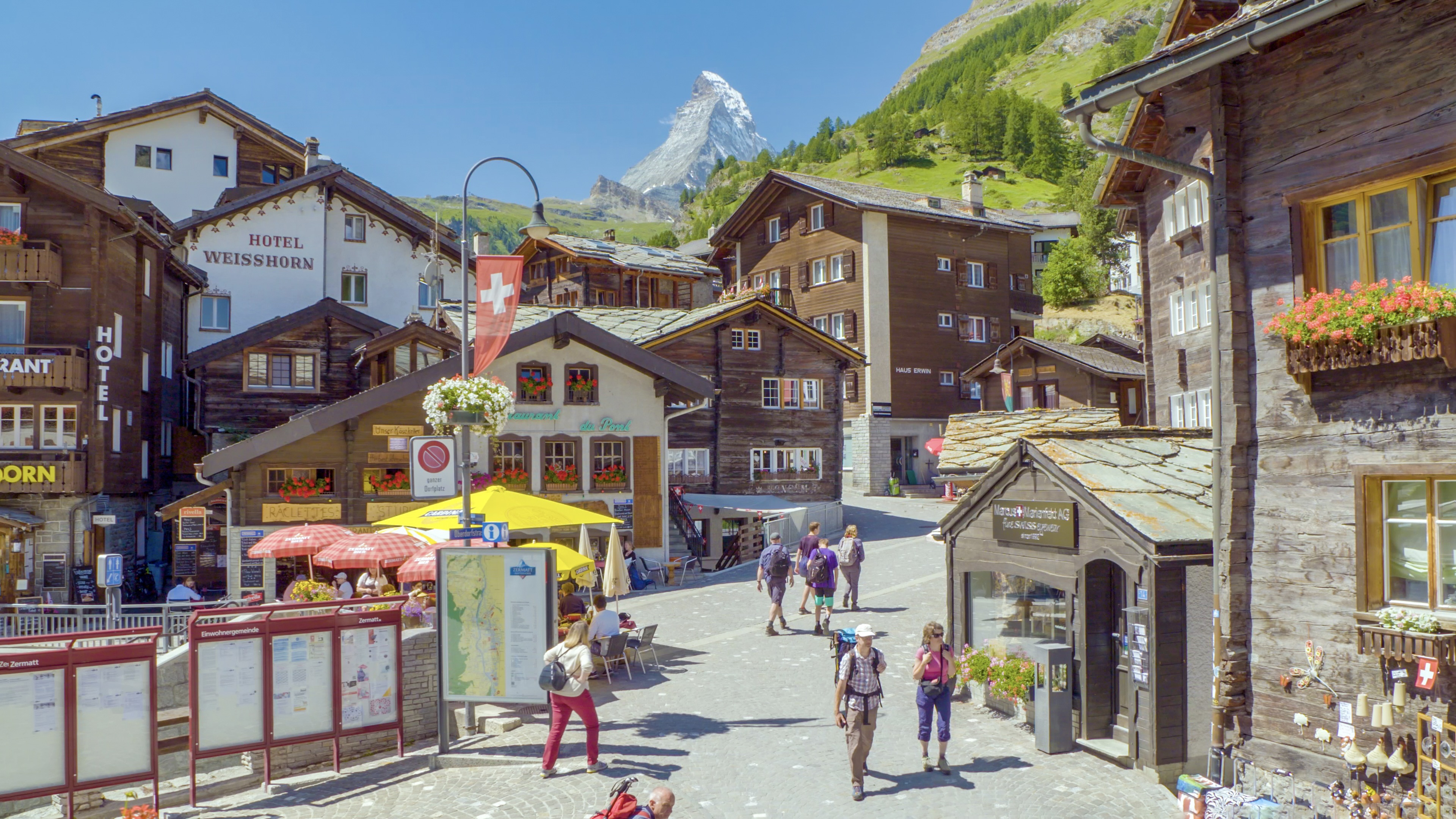



I have a confession: I'm in love with the Matterhorn. There's just something about this triangular peak of Disneyland fame – the most recognizable mountain on the planet. Just seeing it is one of the great experiences in Switzerland. And hiking with that iconic summit as a background is even better.
The 14,690-foot Matterhorn towers above Zermatt, a tiny-but-touristy town of roughly 6,000 people nestled at the dead-end of a long valley in Switzerland's remote southwest. While it’s barely two hours from Bern and Interlaken by train (or about three hours from Zürich or Lausanne), it’s not really on the way to anywhere. Especially considering its inconvenient location, many travelers find it overrated. If you make the trek and are met with only cloudy weather, you may end up with a T-shirt that reads, “I went all the way to Zermatt and didn’t even see the Matterhorn.” (This isn’t rare; it took me multiple trips before I caught a clear glimpse of it.)
But in sunny weather, riding the high-mountain lifts, poking through lost-in-time farm hamlets, and ambling along on scenic hikes – all with that famous pointy mountain nodding its white head in the background – make the trip worthwhile. And Zermatt itself also has pockets of traditional charm, with streets lined with chalet after chalet and overflowing flower boxes.
There are no gas-engine vehicles in Zermatt – only electric buses and taxis that slalom between the pedestrians like four-wheeled Vespas. (Drivers must park down in the valley and ride the train into town.) Strolling up the town's main street, Bahnhofstrasse, is a joy. Even bikes are forbidden on the main drag; the street is reserved for people and, in summer, a twice-daily parade of goats. Sure, the town hosts plenty of fabulously wealthy visitors, but locals like to say that the "traffic-free" nature of the town is a great equalizer. Zermatt strives to be a high-class mountain resort, but for active guests.
Once upon a time, Zermatt was a humble village of farmers, but with the first ascent of the Matterhorn in 1865 and the arrival of trains in 1891, it found itself on the Grand Tour of Europe. Over time, its residents learned it was easier to milk the tourists than the goats, and mountain tourism became the focus. Aside from the stone quarries that you’ll pass on the way into town, tourism is Zermatt’s only industry.
This little town is capable of entertaining about two million guests each year, hosting more than a hundred modern chalet-style hotels and a well-organized and groomed infrastructure for summer and winter sports. From town, countless lifts head to all sorts of hikes, ski slopes, and incredible views. But really it all comes back to the star of the show: the Matterhorn.
High summer into early fall is the best time to come to Zermatt. Visiting in spring is generally a bad idea, because most trails, lifts, and restaurants are closed. (Although, on the plus side, there are no crowds.) Early fall also works, as most lifts and trails remain open until the snow returns. (In winter, skiers take over the town, and prices jump even higher than in summer.) Zermatt has earned its reputation for untrustworthy weather – the valley can get completely socked in at any time of year. While two good-weather days are enough to experience the highlights, add at least one buffer day to your itinerary as insurance against rain.
The Zermatt region has three high-mountain summit stations linked by lifts and hikes: Matterhorn Glacier Paradise (closest to the Matterhorn), Gornergrat (with a historic cogwheel train that goes to 10,000 feet), and Rothorn (farthest up the valley from the Matterhorn). While prices are steep, the community has invested hundreds of millions of dollars in their mountain lifts in recent years. They’re absolutely state-of-the-art, and experiencing them is unforgettable.
Gornergrat is my pick if you can fit in only one high-mountain excursion, simply because it's a best-of-all-worlds experience. It features sweeping views from the top station and my favorite hike in the region, between the Rotenboden and Riffelberg train stops. Whichever excursion you opt for, pay close attention to the weather – the lifts aren’t cheap, and none of them is worth the cost if the Matterhorn is shrouded by clouds.
That said, don’t wait for perfectly clear skies to head into the hills – even in bright, sunny weather, the Matterhorn loves playing peek-a-boo behind the clouds. If it’s at least sunny-ish, get up the mountainside. Like me, you may find love at first sight of the Matterhorn.
========
(Rick Steves (www.ricksteves.com) writes European guidebooks, hosts travel shows on public TV and radio, and organizes European tours. This column revisits some of Rick's favorite places over the past two decades. You can email Rick at rick@ricksteves.com and follow his blog on Facebook.)
©2025 Rick Steves. Distributed by Tribune Content Agency, LLC.
(c)2026 RICK STEVES DISTRIBUTED BY TRIBUNE MEDIA SERVICES, INC.








Comments