
Environmental Nutrition: Try plantains!
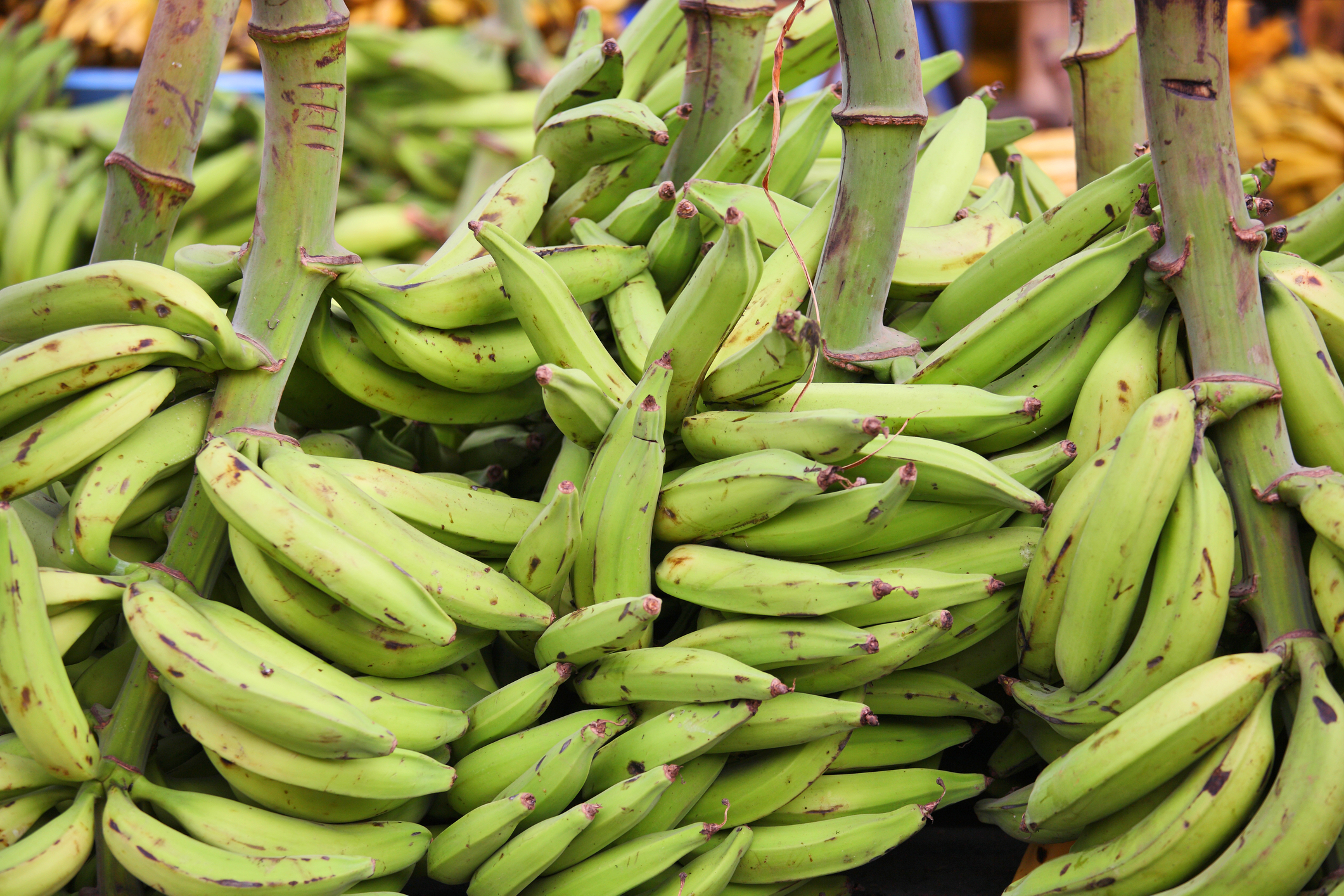
Plantains look like bananas but are bigger, with a neutral flavor and starchy texture similar to a potato. They’re typically cooked, steamed, boiled, and fried, rather than eaten raw.
The folklore
Plantains are thought to have originated in Southeast Asia, traced as far back as 500 B.C. Plantains are less common in American cooking, but that’s changing with the global influx/influ- ence of flavors as well as their nutritious distinction as a good source of fiber and several vitamins and minerals.
The facts
It’s no surprise that plantains (Musa paradisiaca) are in the same family as bananas. In fact, they are both hybrids of the same two wild species. The way they are bred for culinary uses makes them different. Plantain fruit is typically larger with a thicker skin than bananas. They are also starchier, less sweet, and mostly cooked before eaten.
Plantains may be enjoyed in each stage of ripeness from green to yellow and ripest black. One cup of cooked plantains provides 20% DV (DV=Daily Value, based on 2,000 calo- ries/day) of dietary fiber, about a third of the recommended amounts of vitamins A and C and potassium, and 16% DV of magnesium to support a healthy heart and bone density.
The findings
A good source of both soluble and insoluble dietary fiber, plantains promote digestive health. Research shows adequate intake of dietary fiber has several benefits, including support of gastrointestinal health and prevention of constipation. Unripe, green plantains contain resistant starch, which has been shown to benefit the gut microbiome (Food Chemistry: X, 2024).
Emerging research suggests unripe plantains may play a potential role in the natural management of Type 2 diabetes due to its ability to help regulate and control blood glucose levels (Journal of Food Biochemistry, 2022).
The finer points
Fresh plantains are in season and available all year at most large groceries as well as farmers markets. You can purchase plantains frozen, precut, cooked, or processed into flour and snacking chips.
Choose fresh green and yellow-green fruits for starchy, savory dishes, and black or yellow with black spots for sweeter recipes. Be sure skins are without bruises, cracks, or mold. Green fruits should be firm, yellow fruits should give to gentle pressure, and ripe, black fruits should be slightly soft, but not mushy.
Store and ripen at room temperature. Use ripe fruit within a few days. For savory plantains, prepare unripe green and yellow fruits like potatoes — boiled, mashed, baked, added to soups, made into chips. Try it sliced and baked in side dishes and desserts and mixed into baked muffins and breads.
(Environmental Nutrition is the award-winning independent newsletter written by nutrition experts dedicated to providing readers up-to-date, accurate information about health and nutrition in clear, concise English. For more information, visit www.environmentalnutrition.com.)
©2026 Belvoir Media Group, LLC. Distributed by Tribune Content Agency, LLC.









Comments