
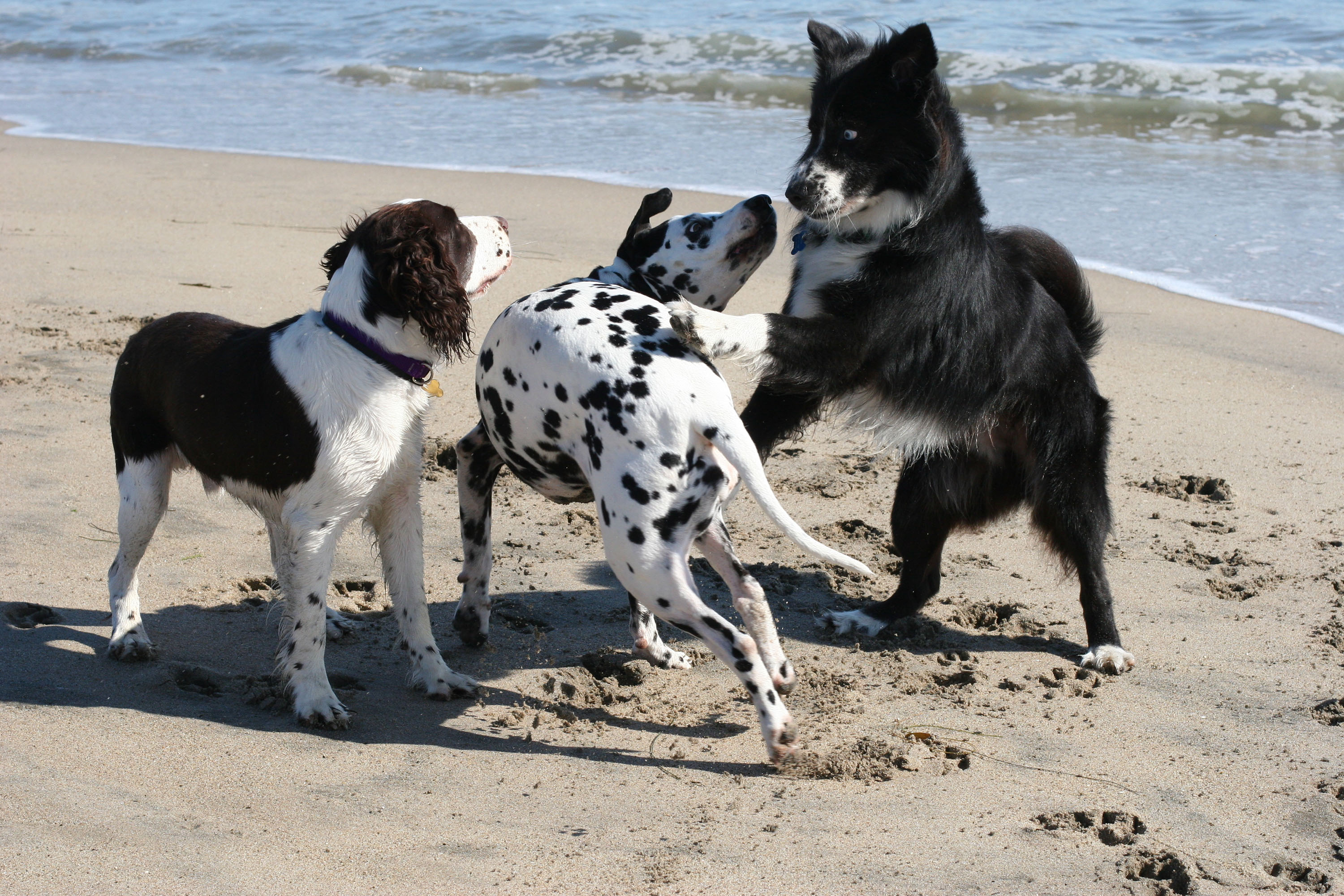
My Pet World: When one dog wants to play and the other wants space



Dear Cathy,
I have an eight-year-old toy poodle who weighs about nine pounds. He is very sweet-natured but has never been around other dogs except in passing when we are out for a walk. Last year, our son and his wife got a puppy. She is sweet but very rambunctious. We have had her around our dog, and it has not gone as well as I would like. The pup tries to play, but our dog growls and bares his teeth, so we are quick to separate them. They do OK in the same room together, but when the pup approaches or gets frisky, our dog starts growling and snapping.
We live a few hours away and will be visiting our son from time to time. We plan to bring our dog, and they will bring their dog when they visit. We need some guidance on how to help the dogs coexist without having to separate them, sequester one of them, or risk our dog getting hurt since he is smaller now than the puppy. We both have yards large enough to give both dogs plenty of room to run and play, but we are reluctant to give them free rein at the same time.
I regret not trying to socialize our dog when he was a pup and hope it is not too late now.
— Anita, North Carolina
Dear Anita,
Please don’t spend too much time regretting what you didn’t do when your dog was a puppy. Dogs can learn at any age. Your goal now is to help them feel comfortable together, even if they never become playmates.
Their ability to share a room peacefully is encouraging. The trouble starts when the younger dog enters your poodle’s space. She may be saying, “Let’s play,” while he is saying, “Please leave me alone.”
Growling is a warning. Don’t scold him, but don’t let her keep approaching either. Your son should practice a reliable recall with his dog, starting without distractions and rewarding her generously for coming when called. During visits, call her away before your poodle stiffens or growls whenever possible. Until her recall is reliable, use leashes and barriers to prevent unwanted approaches.
My first choice for improving relationships is walking them together. Choose a quiet, neutral location, with one adult handling each dog. Walk in the same direction on loose leashes, far enough apart that both remain relaxed. Gradually move closer only if they stay comfortable. If either becomes tense, stares, or growls, increase the distance. Several pleasant walks, with sights and smells to investigate, may accomplish more than one long backyard visit.
My second choice is using baby gates where needed to allow them to see each other without having to interact. If either barks, lunges, or becomes upset at the barrier, increase the distance or use separate rooms. I know you would prefer not to separate them, but your poodle needs somewhere to rest without an enthusiastic visitor. Reward both dogs for quiet, relaxed behavior, with each handler delivering treats separately to avoid competition. Feed meals separately and put away shared toys and chews during visits.
For early yard sessions, keep both dogs on loose leashes attached to well-fitting harnesses, with an adult handling each. Restraining only your poodle would still allow the larger youngster to rush him. Keep sessions short and give them both room to move away.
Finally, teach both dogs to wear a basket muzzle comfortably before introductions. A properly fitted muzzle allows panting, drinking, and treats, but should be removed for meals. I have trained my own dogs to accept one for added protection when introducing a new animal.
Train each dog separately, and in their own homes. Reward them for investigating the muzzle and voluntarily putting their nose inside. Then fasten it briefly, offer a treat, and remove it after a second or two. Gradually increase the time at each dog’s pace.
After repeated relaxed interactions between baby gates and on leashes, try closer visits with both dogs wearing their muzzles. Keep the leashes initially and give both dogs room to retreat. Never leave either dog muzzled unattended. If growling and snapping continue, or you’re unsure when to allow more freedom, consult a qualified behavior professional who uses reward-based methods. They can read both dogs’ body language and help you recognize when they’re comfortable enough for the next step.
Keep in mind, they may never be best friends, but if they can rest comfortably near each other while the family catches up, that counts as getting along, too.
_____
_____
========
(Cathy M. Rosenthal is a longtime animal advocate, author, columnist and pet expert who has more than 25 years in the animal welfare field. Send your pet questions, stories and tips to cathy@petpundit.com. Please include your name, city, and state. You can follow her @cathymrosenthal.)
©2026 Tribune Content Agency, LLC.
(c) 2026 DISTRIBUTED BY TRIBUNE MEDIA SERVICES, INC.







Comments