Cats know all about yoga
Published in Cats & Dogs News
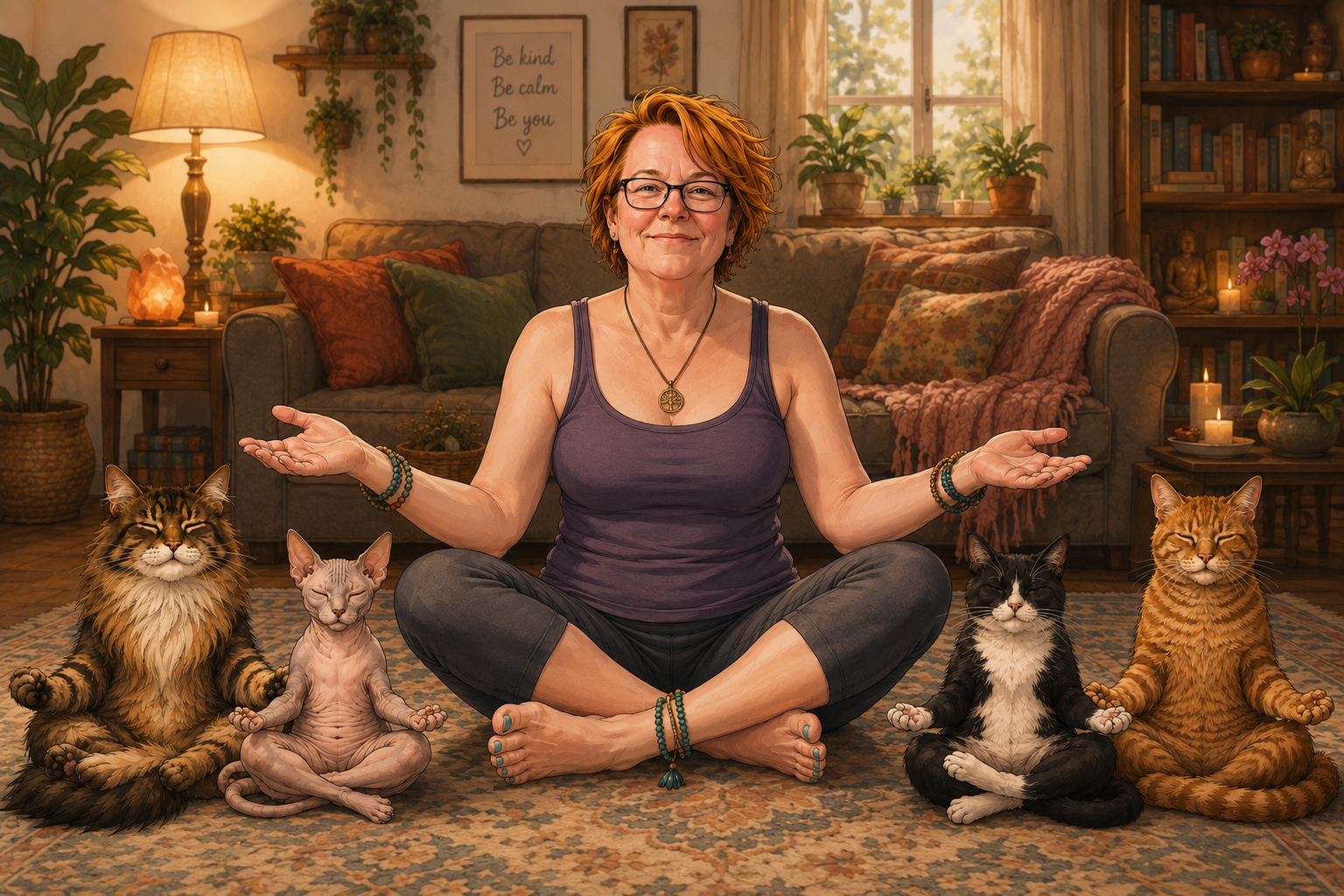
For anyone who has attempted yoga in a home shared with cats, one truth becomes clear almost immediately: what humans call a wellness practice, cats regard as a participatory event.
Roll out a mat, sit quietly and begin to breathe, and within moments a cat will appear as if summoned by ancient ritual. It may step delicately onto the center of the mat, curl beneath a downward-facing torso or settle squarely in your lap during meditation. Far from being an interruption, this feline involvement suggests that cats understand something fundamental about yoga.
They have, after all, been practicing it for thousands of years.
Natural Masters of Stillness
Cats spend much of their lives in a state that yoga practitioners work diligently to achieve.
They move with intention, conserve energy and rest without apology. When a cat settles into a sunbeam, every muscle softens. When it stretches after a nap, the movement is slow, deliberate and complete, extending from whiskers to tail.
Human yoga teachers often emphasize the importance of being fully present in the body. Cats appear to have never considered any other option.
A cat does not worry about unanswered emails while lounging on the windowsill. It does not replay awkward conversations from three years ago. It simply occupies the moment with complete confidence.
Stretching as a Daily Ritual
Observe a cat rising from sleep and you will witness a near-perfect demonstration of functional flexibility.
The front paws extend forward. The spine arches and lengthens. The hindquarters rise. Claws may emerge slightly for emphasis. Every inch of the body participates.
This movement, so familiar that many people scarcely notice it, closely resembles poses humans practice to release tension in the back, shoulders and hips.
Cats stretch not because they are trying to improve themselves, but because stretching feels good.
That may be one of yoga’s most important lessons.
The Art of Balance
Cats routinely perform feats of balance that would impress even experienced practitioners.
They walk along fence tops, perch on narrow windowsills and leap onto bookshelves with graceful precision. They land softly and recover instantly.
Yet their balance is not rigid. It is relaxed and responsive.
Yoga instructors often speak of finding steadiness without stiffness. Cats embody this principle naturally, adjusting moment by moment with subtle movements and complete trust in their bodies.
Meditation, According to Cats
Perhaps no animal better illustrates the essence of meditation.
A cat can sit motionless for long periods, eyes half-closed, appearing both deeply restful and fully alert. It is calm but prepared. Detached but aware.
Then, without warning, it may spring into action because a moth has entered the room.
This, too, contains a lesson.
Meditation does not mean withdrawing from life. It means cultivating a state of readiness in which one can respond clearly when something genuinely requires attention.
Or, in the feline case, when something flutters near the lamp.
When Cats Join the Practice
Cat owners know that yoga sessions rarely remain solitary for long.
One woman in Virginia says her large Maine Coon regards every exercise mat as a personal invitation.
“He waits until I’m in a difficult pose,” she said, “and then sits directly underneath me with the expression of a quality-control inspector.”
Her tuxedo cat takes a different approach, draping across her legs during savasana and purring loudly enough to drown out the meditation music.
Another practitioner reported abandoning a planned 45-minute session after a hairless cat climbed into her lap and fell asleep.
“I decided that if a warm, trusting creature chooses you as its resting place,” she said, “that probably counts as yoga.”
The Wisdom of Rest
Modern life encourages constant productivity, but cats offer a different model.
They alternate intense bursts of activity with unapologetic periods of recovery. They do not feel guilty about resting, nor do they explain why they need it.
Yoga similarly teaches that restoration is not laziness but an essential part of health.
The final relaxation pose, savasana, asks practitioners to become still and let the body integrate the benefits of movement. Cats appear to have elevated this principle into a full-time philosophy.
What Humans Can Learn
Cats are unlikely to instruct anyone formally, though many seem willing to supervise.
Their lessons are simple.
Stretch every day. Rest when tired. Pay attention to the present moment. Maintain balance. Accept comfort when it is available. And if a patch of sunlight appears on the floor, do not hesitate to rearrange your schedule accordingly.
These principles may not lead to enlightenment, but they can make life calmer and more grounded.
Yoga Teachers with Whiskers
Cats will never publish training manuals or lead retreats, yet they may be among the most effective yoga instructors available.
They demonstrate flexibility, stillness, awareness and a remarkable commitment to self-care. They remind us that wellness need not be complicated and that some of the best practices are also the simplest.
So the next time a cat steps onto your mat, sprawls across your legs or curls beside you during meditation, consider the possibility that it is not interrupting your practice.
It is joining you.
And judging by the serene confidence with which cats approach both stretching and rest, they may have been doing yoga all along.
========
Eleanor P. Whitford writes about pets, home life and the surprising ways animals illuminate human habits. This article was written, in part, utilizing AI tools.








Comments