What is my cat or dog looking at?
Published in Cats & Dogs News
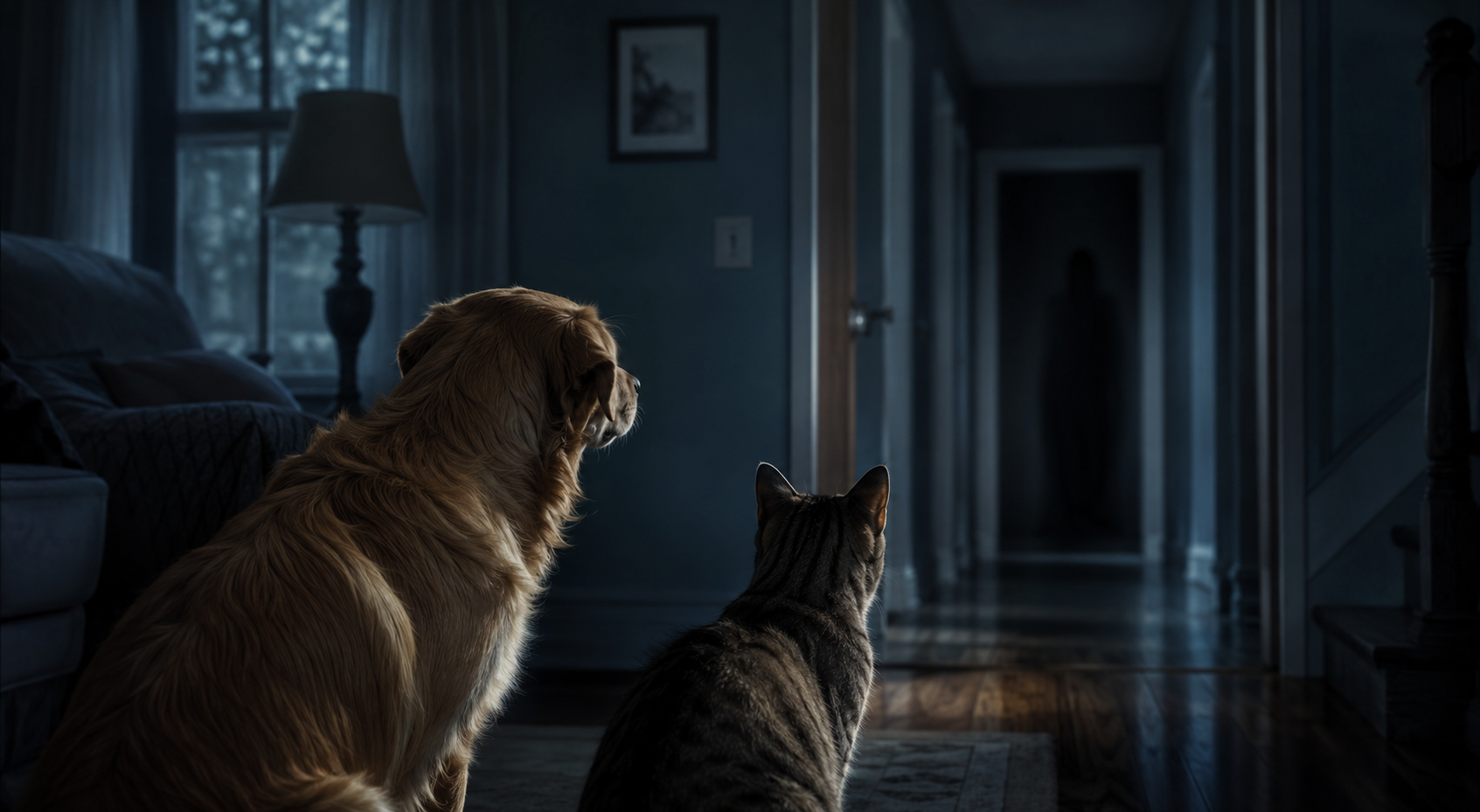
When your dog suddenly freezes in the hallway and stares into the darkness, or your cat locks onto a blank section of wall as if witnessing the arrival of an invisible monarch, most people have the same thought: “What are they looking at?”
The recent film “Good Dog” leans hard into that deeply familiar unease. Like many animal-centered thrillers before it, the movie taps into a universal experience among pet owners — the uncomfortable realization that our animals seem aware of things we are not. Whether played for horror, humor or emotional tension, the effect works because nearly everyone who lives with a pet has experienced it.
But while the cinematic answer may involve ghosts, demons or sinister forces lurking just offscreen, the real-world explanations are usually far more grounded — though no less fascinating.
Animal behavior experts say pets inhabit a sensory world dramatically different from our own. The result is that dogs and cats often react to sounds, scents, vibrations and visual cues that humans never notice at all.
A world built from smell and sound
Dogs, in particular, experience reality through scent in a way humans can barely comprehend.
A dog’s sense of smell is estimated to be tens of thousands of times more sensitive than that of a human. Some working dogs can detect illnesses, identify emotional changes in people, or follow scent trails days old. Inside a quiet home, that means a dog may be reacting to things far beyond its owner’s awareness: a raccoon moving outside, a neighbor returning from work, electrical heat cycling through walls, or another animal that crossed the yard hours earlier.
Cats, meanwhile, are specialists in subtle motion and environmental awareness. Their hearing range exceeds that of humans, especially at high frequencies. A cat staring intently at a ceiling corner may be hearing insects inside the wall, tiny shifts in plumbing, or even the ultrasonic squeak of electronics.
To the human observer, however, the behavior can appear eerie because there is no visible trigger.
Part of what makes these moments unsettling is how focused pets become. A dog staring silently toward an empty doorway instantly changes the emotional atmosphere of a room. Humans are social creatures, and we instinctively trust animal reactions. If the dog thinks something is there, our brains begin assuming something might actually be there.
The power of projection
Movies like “Good Dog” exploit another truth: people project emotion and meaning onto animals constantly.
Pet owners become highly attuned to their animals’ behavior patterns. When something deviates from normal — prolonged staring, sudden barking, cautious pacing — the brain searches for explanations. In low light or quiet environments, imagination fills the gaps.
Psychologists note that humans are wired to identify threats quickly, even when evidence is incomplete. It is the same reason people see faces in shadows or become nervous in silent houses. An alert animal acts almost like emotional confirmation that danger may exist.
That effect intensifies at night.
A cat suddenly sprinting from one room to another at 3 a.m. feels different than the same behavior during daylight. A dog growling softly at the backyard fence after midnight carries emotional weight even if the cause is ultimately mundane.
The movie understands this instinct well. The horror is not simply the animal itself. It is the suggestion that the pet may know something before the humans do.
Why pets stare at “nothing”
Despite the spooky reputation, veterinarians say most staring behavior has ordinary explanations.
Dogs often fixate on subtle movement, distant sounds, remembered routines or anticipation. A dog staring toward the kitchen may simply associate that location with food preparation. Older dogs sometimes stare due to cognitive changes similar to dementia in humans.
Cats are even stranger by human standards because they are both predators and prey animals. Their brains are wired to track tiny motion changes constantly. Light reflections, dust particles, insects or air currents can hold a cat’s attention far longer than people expect.
Then there are the famous “zoomies” — sudden bursts of frantic movement common in both cats and dogs. To humans, they can appear irrational or supernatural. Behaviorists generally interpret them as bursts of excess energy, stress release or play behavior.
Still, logic does not always erase emotion.
Many lifelong pet owners admit there are moments they still find unsettling. The dog that refuses to enter a room for no apparent reason. The cat that watches one particular hallway every night. The unexplained barking at seemingly empty space.
Even people who reject supernatural explanations entirely often remember these moments vividly because animals behave with such apparent certainty.
Pets and emotional intuition
What animals genuinely do seem skilled at is reading people.
Dogs especially are remarkably sensitive to human emotional states. Studies show they can recognize facial expressions, changes in tone, stress hormones and body language. Many owners report their dogs becoming clingy during illness, grief or emotional distress.
Cats are more subtle, but many cat owners describe similar experiences. A normally aloof cat suddenly sleeping beside a sick family member or remaining close during emotionally difficult periods is common enough to have become a recognizable pattern among pet households.
This sensitivity may contribute to the myth that animals “sense” supernatural events. In reality, they may simply be reacting to human tension before the person consciously recognizes it themselves.
A nervous owner creates a nervous pet. A stressed household changes the emotional tone animals respond to.
In that sense, movies like “Good Dog” succeed because they blend legitimate animal sensitivity with human fear and imagination.
The comfort hidden inside the fear
Ironically, the same behavior that unsettles people is also part of why they love living with animals.
Pets make homes feel alive. Their awareness expands the environment beyond what humans notice alone. A dog hearing someone approach before the knock at the door, or a cat noticing a bird outside before anyone else does, reinforces the feeling that animals are participating in the household alongside us rather than merely occupying it.
Even the strange moments become part of the relationship.
Many pet owners laugh nervously when their dog stares into darkness or their cat watches an invisible point in the room. But few would trade away those moments entirely. The mystery is part of the charm.
And perhaps that is why stories like “Good Dog” resonate so strongly. Beneath the suspense and fear is a simple emotional truth: living with animals constantly reminds humans that we are not experiencing the world the same way they are.
Our pets move through a richer landscape of scent, sound, motion and instinct. Occasionally, when they stop and stare into what appears to be empty space, they give us a brief glimpse of that hidden world.
Even if it does make us turn on an extra light before bed.
========
Corbin Vale is a longtime features writer focusing on pop culture, home life and the emotional relationships between people and animals. He lives in the Mid-Atlantic with an opinionated cat and a deeply suspicious hound dog. This article was written, in part, utilizing AI tools.







Comments