Building better men, brick by brick in 'Boys Will Be Men'
Published in Mom's Advice
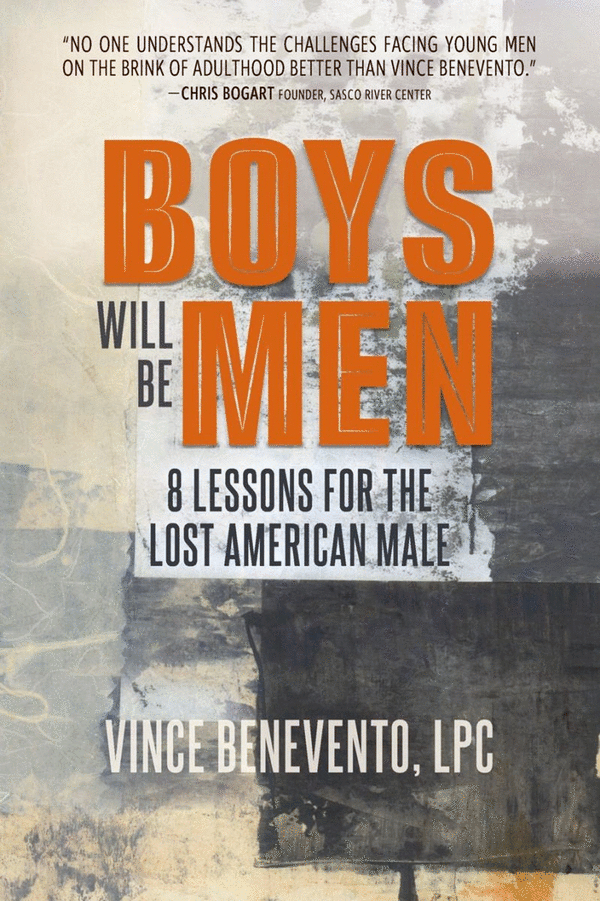
In an era when conversations about masculinity often oscillate between defensiveness and despair, Vince Benevento’s "Boys Will Be Men: 8 Lessons for the Lost American Male" takes a different approach. Rather than debating what masculinity should mean, Benevento focuses on what young men actually need: structure, accountability, mentorship and a sense of purpose grounded in action.
Drawing on nearly two decades of experience counseling and mentoring young men through his work at Causeway Collaborative, Benevento makes a compelling case that traditional talk therapy — while valuable — often fails to engage the very population most in crisis. What works better, he argues, is an active, relational model that meets young men where they are and moves them forward through doing, not just discussing.
The book is organized around eight lessons, each grounded in lived experience rather than theory. The lessons are accompanied by compelling stories from both Benevento’s own life and the lives of some of the young men he has counselled. Benevento’s writing is direct and accessible, but never simplistic. He understands that many young men resist introspection not because they lack depth, but because they lack a framework that feels honest, practical and respectful of their instincts. Throughout the book, he reframes qualities often labeled as “problems” — aggression, risk-taking, intensity — as raw materials that, when properly channeled, become sources of strength rather than self-destruction.
One of the book’s central insights is that growth happens incrementally. Change is not a breakthrough moment but a process of clearing chaos and rebuilding “brick by brick.” This emphasis on consistency and ownership runs through the narrative, reinforced by real stories of young men navigating addiction, depression, disengagement and despair. These accounts never feel exploitative or sentimental; instead, they illustrate how progress often begins with small, unglamorous commitments that compound over time.
Benevento is particularly strong when addressing fatherhood and mentorship. He challenges the notion that financial provision can substitute for emotional presence, arguing persuasively that boys learn how to regulate emotion, handle failure and relate to others by watching the men in their lives. The book’s call for presence over performance feels especially urgent in a culture that rewards busyness while quietly eroding connection.
Equally notable is Benevento’s rejection of rugged individualism as a masculine ideal. In one of the book’s most resonant sections, he emphasizes that men require relationship — that accountability, vulnerability and brotherhood are not signs of weakness but essential tools for resilience. Strength, in his telling, is not domination but control: the ability to be firm without being brittle, confident without being cruel.
Importantly, "Boys Will Be Men" is not written solely for parents, counselors or coaches, though all will find it valuable. The book also speaks directly to young men themselves — particularly those who feel stuck, disoriented or quietly overwhelmed by expectations they don’t know how to meet. Benevento never talks down to his audience, nor does he offer shortcuts. What he offers instead is a path: demanding, practical and rooted in the belief that men are capable of more than they are often told.
The tone throughout is firm but compassionate. Benevento does not excuse destructive behavior, but he refuses to define men by their worst moments. His concept of “gentle strength” — power governed by restraint and empathy — feels like a corrective not only to toxic caricatures of masculinity but also to cultural narratives that equate masculinity itself with harm.
Readers looking for academic theory or ideological debate may find the book intentionally narrow in scope. Boys Will Be Men is not a sociological treatise; it is a field manual. Its value lies in its clarity of purpose and its refusal to overcomplicate problems that, while deeply rooted, often require simple but sustained interventions.
At its best, the book reminds us that masculinity is not something to be dismantled or defended, but built — through presence, perseverance and purpose. Benevento makes a persuasive case that when men are given structure, challenged to take responsibility and invited into meaningful relationship, they don’t retreat from growth. They rise to it.
"Boys Will Be Men" doesn’t promise easy answers. What it offers is something more credible — and more necessary: a grounded vision of manhood shaped not by slogans, but by daily choices and lived example.









Comments