Uniting faith and project management for purposeful leadership
Published in Mom's Advice
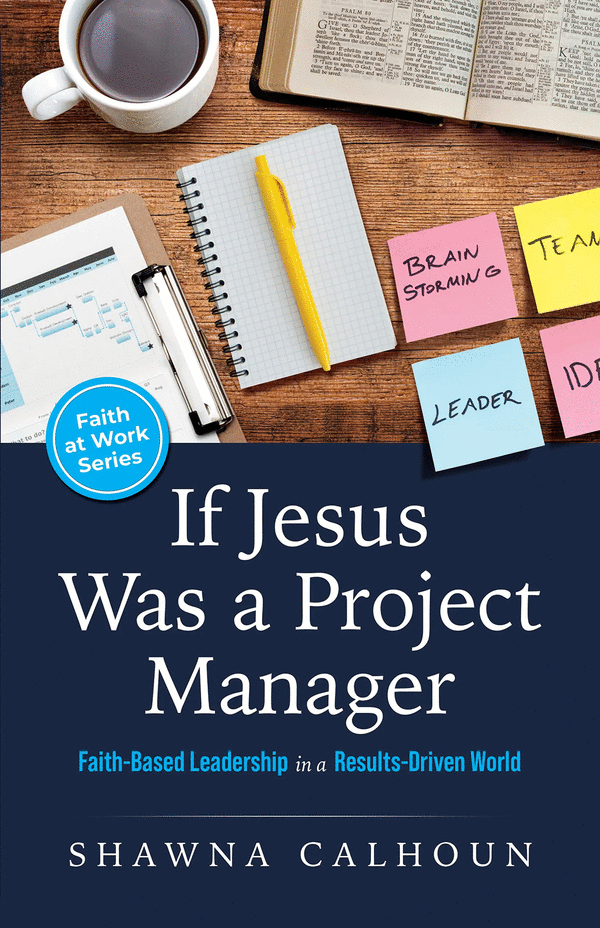
In this groundbreaking book – the first in Calhoun’s seven-part “Faith at Work” series – the author bridges two worlds that rarely meet: timeless spiritual principles and the demands of contemporary project management.
Unlike generic business devotionals, "If Jesus Was a Project Manager" zeroes in on the specific responsibilities of a project manager, illustrating exactly how Christ’s teachings can inform daily tasks, from planning sprints to leading teams. The approach is refreshingly role-specific; Calhoun doesn’t settle for broad platitudes.
Instead, she masterfully connects Scripture with established secular frameworks – Stephen Covey’s "The 7 Habits of Highly Effective People" is one notable example – to create practical tools that work in any organizational culture. The result is a comprehensive integration of faith and methodology, a sort of blueprint for excelling at work without compromising one’s Christian values.
One of the book’s greatest strengths is how concretely it translates biblical principles into professional best practices. Calhoun frames Jesus’s model of leadership in terms familiar to anyone who’s managed a project: vision casting, stakeholder communication, conflict resolution and even risk management all get a faith-based treatment grounded in scripture. Each chapter blends timeless truths with real-world application. For instance, when examining why projects fail, Calhoun invokes the biblical story of the Tower of Babel as a cautionary case study.
The lesson? Projects built on pride or selfish ambition are destined to falter, whereas those founded on service and stewardship thrive. She identifies warning signs of “pride-driven projects,” such as leaders chasing personal glory or trying to control every outcome without humility. It’s a powerful example of how the author draws direct parallels between ancient wisdom and contemporary workplace pitfalls. These scriptural case studies never feel forced; instead, they shed new light on everyday management challenges. Whether discussing how Moses delegated tasks or how Jesus empowered His disciples, Calhoun finds remarkably relevant insights for today’s managers.
But this book isn’t just about philosophical parallels – it’s packed with concrete, actionable advice. Calhoun goes beyond inspiration to provide detailed frameworks and habits that readers can implement immediately. From checklists for ethical decision-making to step-by-step approaches for handling underperforming team members with grace, the guidance is highly practical. In one chapter, she presents a “Restoration Framework” for addressing team failures in four measured steps (from private conversation to guided improvement plans), echoing Jesus’s own teachings on correction and forgiveness. In another, she outlines how to integrate prayerful reflection into risk assessment meetings – without alienating secular colleagues or sacrificing professional credibility.
Calhoun is careful to maintain that credibility throughout the book. Her tone is never preachy or naive. Instead, she acknowledges the pressures of a results-driven environment and shows how faith can be a source of strength and ethical clarity, enhancing rather than hindering performance. Even crisis leadership scenarios are addressed head-on: layoffs, conflicts, even entrepreneurship pivots. Calhoun incorporates these tough situations into her discussion, demonstrating how a Christ-inspired leader can navigate upheaval with integrity and compassion. By the final chapters, it’s clear that this isn’t just a feel-good manifesto – it’s a working playbook for melding spiritual values with professional excellence.
Calhoun writes with the confident clarity of a seasoned project manager and the warmth of a mentor who genuinely wants to see you succeed. Her background in healthcare and technology project management (over 20 years of experience across multiple industries) shines through in the book’s logical structure and real-life examples. The material is organized into four parts mirroring a project’s lifecycle: laying the foundation of faith-based leadership, planning projects with divine guidance, leading through the inevitable storms, and finishing strong with integrity and purpose. This intuitive progression makes the 354-page guide easy to follow and ensures no aspect of the project manager role is left untouched.
Despite the rich depth of content, the prose remains accessible. Calhoun has a talent for “connecting the dots”– she interweaves Bible verses, personal anecdotes and corporate anecdotes in a way that feels seamless and illuminating. One moment she might reference Daniel facing the lions’ den as an analogy for trusting God amidst project risks, and the next she’s drawing on her own experience dealing with a high-stakes healthcare project. The tone stays professional yet conversational, often addressing the reader directly. For example, Calhoun poses reflective questions (“What fears or needs might be driving your stakeholder’s resistance?”) that prompt the reader to apply the lessons to their own situation – making the reading experience interactive and engaging rather than a one-way lecture.
The writing style manages to be both instructive and inspiring. Complex concepts are distilled into memorable principles, sometimes even alliterative phrases or acronyms that you’ll easily recall in the heat of the moment at work. Yet, the book avoids buzzword bingo or hollow corporate-speak. Instead, Calhoun’s advice is grounded in virtues like humility, patience and service – qualities she argues are as critical to project success as any Gantt chart or status report. Importantly, she doesn’t shy away from acknowledging challenges. She empathizes with readers who operate in secular workplaces, noting that openly living out faith at work can be sensitive. Her guidance on this is thoughtful: she encourages demonstrating Christ-like leadership primarily through actions – integrity, excellence, genuine care – rather than through overt religious rhetoric, unless the culture welcomes it. This balanced approach helps the book feel relevant to a broad range of professional environments. Whether you’re at a Fortune 500 company or a nonprofit, Calhoun’s voice comes across as that of a wise colleague who has been through the trenches and emerged with hard-won wisdom.
"If Jesus Was a Project Manager" is an uplifting and informative read for any professional looking to integrate faith with their leadership style. First and foremost, it’s a godsend for Christian project managers, product owners, Scrum masters and team leaders who have yearned for resources that speak directly to their day-to-day responsibilities. Calhoun understands the language of Agile backlogs and KPIs, and she equally understands the call to serve God in all things – this book brings those two callings together in a harmonious way. Readers who have enjoyed mainstream leadership classics but felt something was missing will find that missing piece here. If you’re a fan of books like Covey’s "7 Habits" or John Maxwell’s leadership guides, you’ll appreciate how "If Jesus Was a Project Manager" builds on similar principles while infusing them with deeper spiritual significance. It’s also ideal for church leaders, ministry organizers or educators in Christian business programs who want to draw connections between biblical leadership and organizational success.
That said, you don’t need a PMP certification or a corner office to benefit from this book. The core lessons on character, purpose and servant leadership are valuable for anyone in a position of influence – whether you’re managing a company project or coordinating volunteers at your church. Calhoun’s insights could help an experienced executive recalibrate their definition of success, or give an aspiring young leader the confidence that their faith can be an asset in their career, not a liability. Even readers outside the Christian faith might find intriguing the universal leadership truths presented (though the book is unabashedly faith-centric in its perspective).
Ultimately, "If Jesus Was a Project Manager" will resonate most with those who believe that work can be a calling and that business excellence and biblical values are not mutually exclusive. For such readers, this guide will not only affirm that belief – it will equip them with the tools to live it out, producing results that matter in both the boardroom and the Kingdom.









Comments