Dengue cases continue to rise after heavy rain in Tampa Bay
Published in Health & Fitness
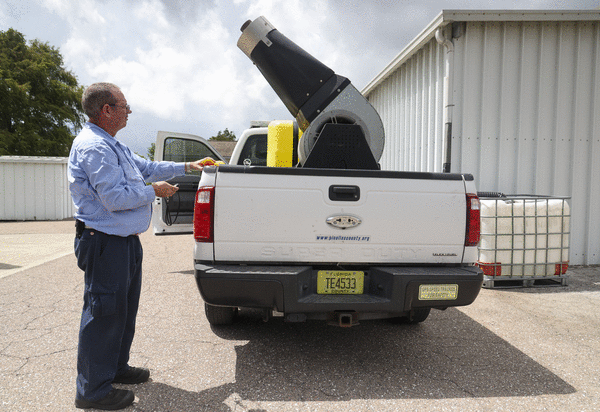

TAMPA, Fla. -- After days of rain across the Tampa Bay area, local officials are ramping up efforts against an unprecedented rise in cases of dengue fever this year.
As of Oct. 1, Hillsborough has seen 223 confirmed dengue fever cases, the most in the state. But that number is likely much higher, Florida Department of Health officer Carla Fry said. State and local officials are testing people for dengue regularly. A total of 540 cases have been reported in Florida as of this week, according to the U.S. Centers for Disease Control and Prevention.
Pinellas County reported 20 cases since August. Overall, the Tampa Bay area has recorded 282 cases across Pinellas, Hillsborough and Pasco counties as of Thursday.
Pinellas and Hillsborough counties have extended state of emergency orders from last month as cases rise. That allows counties to access state resources to continue mosquito control efforts.
“This is unprecedented. This is now the largest outbreak in Florida’s modern history,” Fry said.
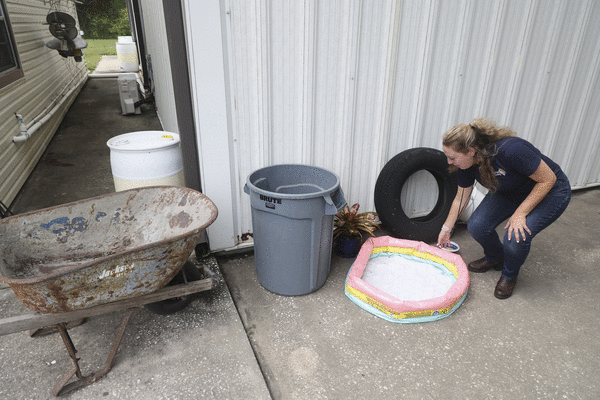
At a news conference Tuesday, Tampa Mayor Jane Castor said the city is working with Hillsborough County to curb the outbreak. Tampa’s neighborhood enhancement department has focused on identifying businesses likely to have standing water — a breeding ground for mosquitoes, she said. Tire shops, where stacks of tires collect rainwater and other condensation, are a frequent culprit.
The neighborhood enhancement team is monitoring 85 businesses to make sure they are discarding standing water regularly, and two businesses have received citations, Castor said.
“This is our main focus,” said Susan Wenrick, the city’s neighborhood enhancement director. “We are taking a very aggressive approach to getting the stagnant water removed, and making sure there are no holding places for water.”
County officials have identified 18 ZIP codes most affected by dengue in Hillsborough, which centers around Tampa and other suburban communities. About 352,154 acres have been treated regionally as of Sept. 25, officials said in a presentation to Hillsborough commissioners on Wednesday.
Josh Bellotti, Hillsborough County’s engineering and operations director, said Manatee, Pasco and now Lee counties have been helping with treatment as dengue spreads. It’s cost more than $4.1 million to date for mosquito services, he added.
Health officials want to wipe out dengue fever cases before winter starts. Doing so would ensure dengue fever doesn’t become a regular, recurring illness in the Tampa Bay region, Fry said.
A recent study from the University of Florida showed that mosquito bites happen most often during ordinary activities close to home. Dog walking and gardening were among the most frequent, according to the study, which was published last month in Springer Nature Link.
Researchers used a smartphone app to allow Florida residents to report when and where participants were bitten by mosquitoes. They also trapped mosquitoes in residential communities around Vero Beach, working with the Indian River Mosquito District. That’s where they found the species aedes aegypti, the primary mosquito responsible for spreading dengue.
“It was definitely surprising to find that we saw more Aedes aegypti,” said co-author Panpim Thongsripong, an assistant professor of vector-borne disease ecology, in a statement. “We expected to find more Aedes albopictus in suburban Indian River County because of the area’s vegetation and residential setting.”
Researchers found that the number of mosquitoes collected in a yard did not always correlate with the number of bites people reported. People who spent more time outside during evening hours were more likely to report being bitten, the study said.
Humans aren’t able to spread dengue fever to other humans. But if a mosquito bites an infected person, Fry said, it then can contract dengue fever and spread it to other people.
A Hillsborough County woman who died last month was the first known person to die as a result of dengue fever in the state this year. Her death was the first fatality from the tropical disease in almost a century in Tampa Bay.
Dengue is also not like the flu or other illnesses. If a person who has been infected with dengue once gets it again, Fry said, they’re more likely to have a more severe infection. That could lead to worse fevers and a harder recovery period.
It’s also important to be more conscious of dumping out water when it’s raining, Fry said. The Tampa Bay region has experienced a rainy week as a cold front stalls over Florida and Hurricane Isaias formed.
Pinellas officials have also confirmed West Nile virus activity among its sentinel chicken flocks, according to a Thursday news release.
State and local officials have given clear guidance on how to ward off the spread of dengue fever: Drain garbage cans, gutters and buckets. Throw out old tires, planters or other items where water could gather. Keep pools chlorinated and covered when not in use. Most importantly, if you think there’s a problem, report it.
“I’m an avid gardener, I love my plants and my flowers, and I go around and make sure that I don’t have any of those pots collecting water,” Castor said. “If everybody does their part and ensures that they don’t have standing water on their lot, at home or at their business, then we can start to see these cases come down.”
©2026 Tampa Bay Times. Visit at tampabay.com. Distributed by Tribune Content Agency, LLC.









Comments