Penn trial tests ultrafast form of radiation aimed at reducing cancer treatment side effects
Published in Health & Fitness

Penn Medicine researchers are testing whether an ultrafast form of radiation therapy can treat cancers in the head and neck with fewer side effects.
The clinical trial marks the first time the technology, conformal FLASH proton therapy, is being used in humans.
Radiation therapy, one of the most commonly used cancer treatments, works by aiming high-energy beams at tumors. While this kills cancer cells, it can also cause damage to surrounding healthy tissues.
Patients with head and neck cancers, for example, can develop ulcers in the mouth, damage to the jawbone, dry mouth, and scarring as a result.
A trial launched this month at Penn Medicine’s Abramson Cancer Center will assess whether delivering radiation more than 100 times faster than typical therapies is safe and could lessen that damage.
The pilot trial will enroll 10 people whose head and neck cancers have returned.
These are patients who lack good treatment options and risk side effects that interfere with speaking, breathing, and swallowing.
“Giving another full dose of radiation is very hard for these patients,” said Jonathan Schoenfeld, who directs the Head & Neck Radiation Oncology program at Mass General Brigham and is not involved in the trial. “This is a good population that could potentially benefit from this type of approach.”
The specific type of FLASH radiation used in this study was developed by researchers at Penn and the Belgium-based Ion Beam Applications S.A. (IBA), which manufactures the platform and is sponsoring the study.
In mouse studies, FLASH proton therapy reduced side effects while still killing cancer cells. Researchers have since tested the approach in a clinical trial involving dogs with cancer.
However, promising results in animals often do not translate to humans. Even if the trial produces encouraging results, it could take years before the therapy becomes widely available.
The hope, ultimately, is not only to preserve quality of life in patients, but to make radiation therapy more convenient and accessible.
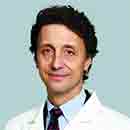
“Instead of 30 to 40 treatments, we can do the treatment in one to five treatments,” said Alexander Lin, a radiation oncologist at Penn and the trial’s lead investigator.
Faster and fewer doses
Doctors typically divide a patient’s radiation therapy into dozens of daily treatments over several weeks.
FLASH radiation aims to accomplish that in fewer doses.
Think of it like air travel: A trip from the East to the West Coast would take hours with today’s technology. But if you can fly at the speed of light, it would take less than a second.
“We’re giving the same dose or similar dose, but the dosage rate changes,” said Constantinos Koumenis, the vice chair for research in Penn’s Department of Radiation Oncology and a developer of the therapy.
Lin hopes this lighter schedule could alleviate some of the time and financial burden of treatment.
The FLASH therapy builds upon a highly advanced radiation treatment, proton therapy, which uses protons to more precisely target tumors. Penn has heavily invested in the expensive technology, with its fourth proton therapy center — a $224 million facility at Penn Presbyterian Medical Center in University City — expected to open in 2027.
The researchers are also incorporating a technique called conformal radiation therapy, which shapes the radiation beam to match the tumor’s three-dimensional size and location. This helps limit exposure to nearby healthy tissue.
The exact biological explanation for FLASH radiation’s effects remains a mystery. However, scientists theorize that the treatment reduces damaging oxidation in healthy tissue while promoting faster recovery.
“The hope is that, if this type of trial is successful, you can treat patients who need more radiation with much lower risks,” Schoenfeld said.
But “it’s a new treatment that we don’t fully understand yet, so I would highlight that it’s still very early days,” he added.
First trial
The primary focus of the Penn trial will be assessing the treatment’s safety and feasibility, with an eye on quality of life and cancer outcomes.
Researchers will be taking a more cautious approach to begin, using a dose and schedule that have already been found safe and effective in patients. The only difference will be giving the radiation at the FLASH speed, Lin said.
Schoenfeld said he would first want to see whether the team can deliver their treatment with the intended speed and precision — an accomplishment in itself for an early stage trial.
Then he would look at how the tumors respond to FLASH and whether patients develop side effects over a period of months to years.
“Some of these side effects are longer-term side effects, so it’s important to start to follow these initial cohorts of patients as long as possible,” he said.
The Penn team will follow patients for at least five years.
If the trial shows promise, the researchers hope to launch additional trials in other types of cancer, from gastrointestinal to liver tumors.
“If these trials show that they’re safe, we want to target any solid tumor that we can target,” Koumenis said.
_____
©2026 The Philadelphia Inquirer. Visit inquirer.com. Distributed by Tribune Content Agency, LLC.








Comments