The diarrhea-causing parasite has been linked to more states, CDC says. Is SC still safe?
Published in Health & Fitness
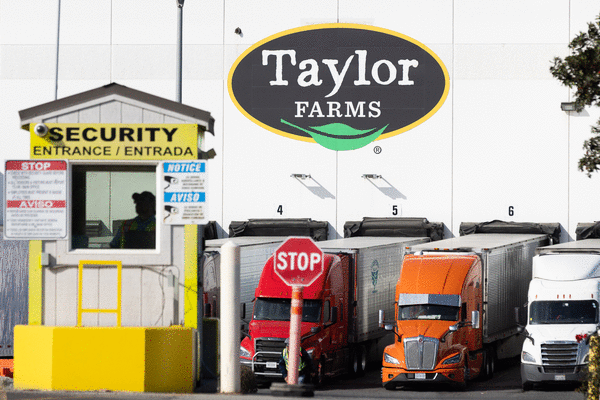
COLUMBIA, S.C. — The parasitic outbreak of cyclosporiasis, the diarrheal disease caused by the Cyclospora parasite, has made headlines once again as six more states have been reportedly exposed, according to a recent update from the CDC.
Since May 1, the CDC has received reports of 10,468 laboratory-confirmed domestic cases of cyclosporiasis. The government agency is also aware of more than 12,255 additional cases that are not laboratory-confirmed or require further investigation and analysis. There have been 517 hospitalizations.
These numbers are expected to rise, as it takes as long as six weeks to determine if a sick person is part of a Cyclospora outbreak, the U.S. Food and Drug Administration said.
Although it’s not generally thought of as a life-threatening illness, two people have already died from the outbreak, both in Michigan.
Here’s everything you need to know about the illness and the situation in SC:
What is cyclosporiasis?
Cyclosporiasis is a diarrheal illness caused by Cyclospora, a parasite that’s also a single-celled organism that’s too small to be seen without a microscope.
The parasite usually causes watery diarrhea with frequent and sometimes explosive bowel movements. It’s not supposed to be life-threatening, but some people can become very ill and require hospitalization.
Symptoms usually start after one week of exposure to Cyclospora. The most common symptoms besides diarrhea are a loss of appetite, weight loss, bloating, nausea, and fatigue, according to the CDC.
Less common symptoms include low-grade fever and vomiting. Without treatment, symptoms can follow a remitting-relapsing course that can last from a few days to a month or longer.
How many cases are in SC?
While cases of cyclosporiasis have been confirmed in South Carolina, the SC Department of Public Health has stated that the number of cases sits around the state’s yearly average and that they are not investigating any outbreaks at this time.
As of Aug. 4, the number of confirmed cyclosporiasis cases this year in SC is 59, with July accounting for 49 cases alone. Over the past five years, SC has averaged around 50 cyclosporiasis cases per year.
The state agency keeps track of the regions that have the most cases. Here’s where the cyclosporiasis cases are allocated across SC’s four regions:
—Upstate: 26 cases
—Midlands: 11 cases
—Pee Dee: 11 cases
—Lowcountry: 11 cases
Iceberg lettuce from Taylor Farms De Mexico, the alleged source of the cyclosporiasis outbreak, was recalled from SC on July 17. The FDA said that there are no cases with exposure to the recalled lettuce in SC in its latest investigation update.
The 15 states that have been linked to the outbreak are Arkansas, Iowa, Illinois, Indiana, Kansas, Kentucky, Missouri, Michigan, Nebraska, New Hampshire, North Carolina, Ohio, Oklahoma, Pennsylvania and West Virginia.
Tips for a concerned public
Monitoring for cyclosporiasis continues in SC, and while there is nothing to worry about yet, here are tips to reduce your risk of the parasitic illness:
—Visit a clinician if you have prolonged or watery diarrhea, especially if it lasts more than a few days
—Reduce your risk by thoroughly washing fresh produce under clean running water before eating and by following safe food handling practices. It is important to thoroughly wash produce even if it is labeled as pre-washed
—Wash your hands before and after handling food
—Cooking kills the parasite. Cook your food thoroughly
—If you are traveling to areas where cyclosporiasis is endemic (such as tropical and subtropical regions), it’s important to know that standard chemical disinfection or sanitization of food or water is unlikely to eliminate the risk of Cyclospora
©2026 The State. Visit thestate.com. Distributed by Tribune Content Agency, LLC.









Comments