Lifelike simulator keeps rural Minnesota childbirth centers ready -- and open
Published in Health & Fitness
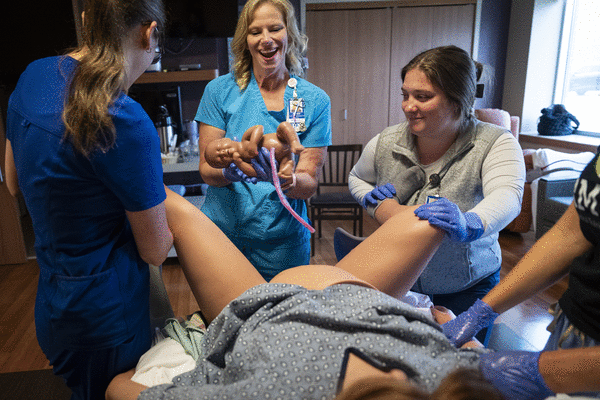
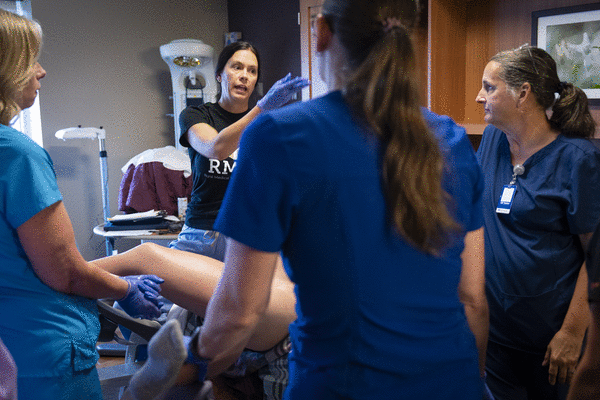
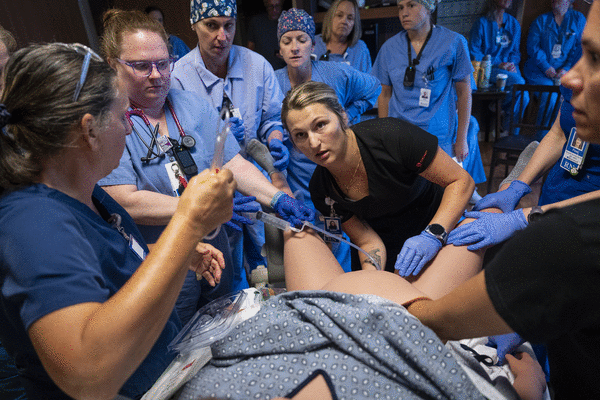
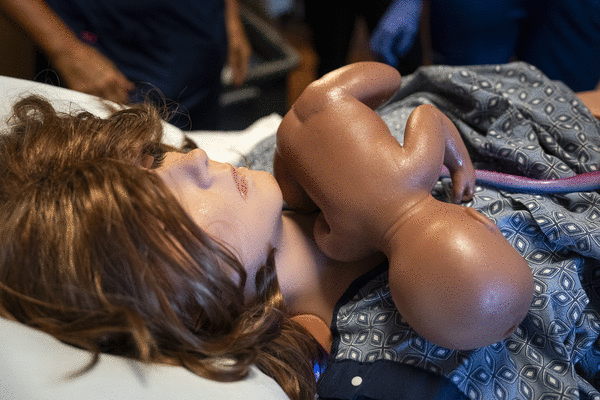

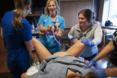
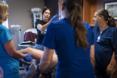
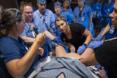
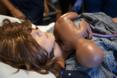

Even if it wasn’t a real emergency, nurse Pam Johnson sensed the clock ticking as she tried to deliver a baby doll whose shoulder had lodged in the birth canal of a high-tech childbirth mannequin.
An instructor guided her on where to put her hands and how hard to press to get the baby unstuck.
“That’s a lot of pressure!” Johnson exclaimed.
“I agree. It’s more pressure than you would think,” said the trainer, Dr. Keri Bergeson, “but you’ve got to get that baby out.”
Shoulder dystocia only happens in one out of every 100 or 200 childbirths, and almost never at small hospitals such as Riverwood Healthcare Center in Aitkin. But that lack of real-life opportunity explains the importance of the ROSE training program, which is based at Community Memorial Hospital in Cloquet and schedules childbirth simulations across rural Minnesota.
“Some of these scenarios, you just don’t see them very often,” said Rick Breuer, chief executive of Community Memorial in Cloquet. He convinced Blue Cross and Blue Shield of Minnesota in 2021 to pay for the mannequin and launch ROSE, which is short for Rural Obstetrics Simulation and Education.
The training is proving vital at a time when many rural hospitals are closing obstetrics units and forcing women to travel farther for births. A dozen hospitals in Minnesota have stopped scheduling childbirths since 2020, and even Community Memorial had to suspend its OB program because of staffing shortages.
Some closed their units because their birth numbers were dropping and they feared a lack of experience that would leave them prone to errors and malpractice lawsuits, said Bergeson, who directs rural programming for the University of Minnesota’s family medicine department.
Lifelike simulations provide a solution, especially compared with the old-school method of pulling a doll through a hollowed-out cantaloupe to mimic the birth experience, Bergeson said.
“My goal is to create a certain amount of anxiety, because you’re going to feel that anxiety when the real thing hits,” she said.
The mannequin is wirelessly controlled and contains a series of pistons and pumps that simulate childbirth scenarios. Nicknamed Virginia, the mannequin is so anatomically accurate that a TV filming crew decided that it couldn’t use the video of a training session, Breuer said.
“It’s an overused phrase, but it really is a state-of-the-art solution, something we couldn’t afford on our own,” he said.
Training programs expanded nationwide after the American College of Obstetricians and Gynecologists encouraged them as a way to keep low-volume OB programs running. But ROSE is one of the only U.S. programs based at a small hospital rather than a large academic medical center.
Riverwood schedules two ROSE sessions per year. The hospital only delivers 40 to 80 babies annually, but that number nudged up from 2020 to 2024 as OB units shut down elsewhere. Chief Executive Ken Westman said Riverwood would struggle to afford the training on its own, but needs it to keep its OB unit running.
Bergeson started the July 16 training session at Riverwood by explaining what to do if women suffer uncontrolled bleeding after birth — a leading cause of maternal death and disability.
Then a single tap on a wireless tablet triggered Virginia to simulate that situation, and red fluid started oozing out of her vagina and onto the floor.
“Oh my God!” Bergeson yelled in fake surprise.
Nurse Amber Workman stepped in, recommending a medication that restricts blood flow and feeling around inside the mannequin’s birth canal to find the source of the bleeding.
Often, the uterus hasn’t closed enough after birth to cut off the hundreds of vessels that previously supplied blood to the baby. She tried a massage technique to get the uterus to close, but that didn’t work.
“Can I get a Bakri?” she said, ordering a balloon to inflate inside the birth canal to control the bleeding.
It was the right call. Bleeding stopped and the simulation ended. Bergeson warned the nurses in real-life cases to check the expiration dates of Bakri balloons, which often sit for months in small hospitals and become unusable. Two rolls of saline-soaked gauze can be a backup option in an emergency, she told them.
“It works just as well,” she said.
Births become more complex
It’s rare for women in Minnesota to die during an uncomplicated childbirth. The state’s hospital adverse event reporting system has recorded three such deaths since 2009 and nine cases of women being severely disabled during what should have been low-risk births. However, complicated and high-risk childbirths are becoming more common because women are getting pregnant at later ages and with chronic diseases.
Both diabetes and obesity increase the risk of mothers for shoulder dystocia, for example, which was the challenge Johnson faced in her simulation.
As she was adjusting to Bergeson’s direction to apply a lot of pressure, Johnson pressed firmly on the doll’s exposed head to try to free its shoulder and get the rest of the body out. The instinct in a high-stress situation is to pull the baby straight out, but that can cause nerve damage in this scenario, Bergeson said.
“Never out,” she told Johnson. “Straight down. Down, down, down, down!”
Two nurses moved the mannequins’ legs upward to help, then cheered when Johnson wriggled the baby doll free.
Even as a nurse with 19 years of experience, Johnson wouldn’t normally find herself in the position of a doctor or midwife delivering the baby. Nor would Workman be expected all on her own to handle vaginal bleeding after birth.
Yet Bergeson said they still have to be ready, given that rural doctors can be 20 minutes or more away and emergencies can happen quickly.
“You have to have an idea what to do,” she said.
Practicing different roles also teaches nurses why certain things are done during childbirth, which is something that doctors don’t have time to explain in live situations, said Donna Corey, a nurse who coordinates Riverwood’s OB program.
“If you learn why something happens, it comes back easier to you” when you need it, she said.
Fewer Minnesota birthing centers
Minnesota remains above average in the U.S. for the number of small hospitals that deliver babies, but it also lost more obstetrics programs than other states over the past decade.
Bergeson said she is motivated to help small hospitals keep their OB programs open. Closing them because of liability risks just transfers those risks to mothers, who then have to travel farther for deliveries, she said. But even hospitals that have stopped scheduling childbirths need training, in case women in labor show up unexpectedly in their emergency rooms.
Prior to Aitkin, the ROSE team traveled 270 miles to Canby in southwestern Minnesota to train providers at a hospital that hasn’t scheduled childbirths for years. Before that, they trained paramedics in Grand Marais, which lost its hospital OB unit in 2015 and is 110 miles from the nearest birthing center.
Community Memorial suspended its childbirth program in 2023 with reluctance, Breuer said, but the hospital did not have enough staffing at the time to ensure 24/7 coverage of its OB unit. The hospital hopes to reopen the unit at some point.
The Cloquet hospital is financially distressed, having lost money on operations in multiple years over the past decade, and can’t support the ROSE program long-term on its own, he said. Blue Cross’ $125,000 contribution covered the initial purchase of the simulator.
New federal rural health funding is expected to help, but Breuer said the ROSE program might need to start charging other hospitals a modest fee to keep going. He thinks there will be a willingness to chip in. Some hospitals need the program to provide minimum training hours for doctors or nurses, or to meet requirements of licensing agencies or malpractice insurers.
“We think we’re helping people,” he said.
©2026 The Minnesota Star Tribune. Visit at startribune.com. Distributed by Tribune Content Agency, LLC.








Comments