Is the medical industry sick? Why Maryland doctors burn out
Published in Health & Fitness




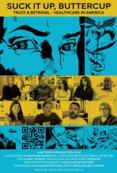

BALTIMORE — In her surgical care for women with reproductive cancers, Dr. MaryAnn Wilbur said she faced repeated demands from both insurance companies and the hospitals she worked for to compromise on providing the best care for her patients.
“You start to see there are perverse incentives in both directions to withhold care — to perform care that is not needed — to perform the wrong care,” Wilbur told The Baltimore Sun. “What we have here is a reimbursement model that is based around the dollar and not on patient outcomes.”
The former Johns Hopkins doctor said private equity takeovers, predatory monopolies, and profit-driven reimbursement models are driving an epidemic of burnout and suicide among physicians.
As many as 400 American doctors take their own lives each year, according to the American College of Emergency Physicians, rates 250% to 400% higher than other professions.
On March 1, 2024, a third-year ophthalmology resident at George Washington University Hospital in Washington, D.C., took his own life, leaving a suicide note suggesting his suicide would not be the only one.
“There are other residents right now fighting a true life and death battle,” West wrote. “I hope that an effort can be made to understand, support, and mentor the residents rather than simply to assess and drive them toward their highest potential as doctors. To be clear, there are other people at real risk here at GW.”
In Maryland, more than 48% of physicians experienced burnout in 2023, according to the National Institutes of Health’s most recent survey, with young, female physicians at the greatest risk.
Wilbur attributes the burnout to doctors learning quickly after graduating that providing the best care for their patients isn’t always the health care system’s top priority. In her care for women with reproductive cancers, Wilbur faced repeated demands to educate insurance companies’ “peer” doctors about the standards of care for uterine cancer surgery.
On the other hand, hospitals have urged her to pursue more expensive methods, which she said may be less effective for the patient. She felt pressured to remove ovarian cancers with a surgical robot instead of an open abdominal surgery, where she could feel for lumps or peer behind other organs to catch spreading tumors.
“Somebody could bust out some of these half-assed surgeries,” Wilber said, “maybe even five if they want to work late, instead of one open procedure. And you can charge approximately double to use a robot.”
Wilbur details the pressures doctors face in a new documentary she co-produced called “Suck it Up, Buttercup,” that claims quality care is taking a backseat to profits. It premieres Thursday for one night only at Baltimore’s Senator Theater.
The American Hospital Association declined to comment on the documentary, but said in an emailed statement that they are committed to supporting doctors and the hospital workforce in general.
“The health care workforce is our most precious resource,” the statement reads. “Hospitals and health systems are committed to supporting them today, preparing them for tomorrow and building a pathway for the future.”
Physicians have little power to negotiate with drug manufacturers, insurance companies or their hospitals, said Gene Ransom, III, CEO of Maryland’s doctor advocacy group, MedChi.
Health insurance companies are exempt from federal antitrust law, Ransom said, and many states suffer near monopolies, driving up costs and giving insurers outsized power over doctors and patients. A paper by the American Medical Association found that 97% of insurance and Medicare Advantage markets are “highly concentrated,” with only one or two insurers.
“In nearly half of commercial markets, a single insurer controls at least half of the market,” the paper states. “These trends, paired with outside evidence of anticompetitive behavior, strongly suggest that market power is being exercised in ways that can harm patients and the physicians who care for them.”
A spokesperson for the national trade organization, America’s Health Insurance Plans, said part of their function is keeping costs down, and their administrative costs are limited by law.
“At a time when the prices charged by providers and drugmakers continue to rise sharply, health plans are doing everything they can to shield Americans from the full impact of those rising costs,” an AHIP spokesman wrote to The Sun in an emailed statement. “Health plans remain committed to partnering with policymakers to strengthen outcomes, expand access, and keep coverage as affordable as possible.”
Gregg Bloche, a physician and professor of law at Georgetown University in Washington, D.C., agreed with the premise that, as a nation, “We’re blowing up what we’re spending in health care.”
It’s easy to look for villains like insurance companies or their high-paid executives, but larger phenomena are at play, he told The Sun. Insurers are caught between patients’ expectations and the need to control costs.
“We as patients want all the services that can make even a small bit of difference, and it’s the doctors’ obligation to provide them,” Bloche said. “Health insurers don’t want to admit they are controlling costs by denying some care that might be of benefit, because people would be outraged. Instead, they try to hide the ball behind text like ‘medically necessary’ or ‘medically appropriate’ care.”
Baltimore Del. Terri Hill, a plastic and reconstructive surgeon, said the documentary’s premise rings true in her experience.
“Doctors sacrifice a lot of themselves to the systems,” she said. “If you don’t want to play by their rules, they believe you’re replaceable. There’s always somebody else young and idealistic coming out of medical school.”
Hill is working with Montgomery County Del. Bonnie Cullison to pass HB1367 — Reimagining Healthcare to find legislative solutions for Maryland.
“The bill is one of many efforts to take a look at the way health care is being delivered,” Hill said. “We can certainly do better, and we have to do better. We have to put patients back into the center; I don’t believe they’ve been in the center, as a priority, for a long time.”
©2026 Baltimore Sun. Visit baltimoresun.com. Distributed by Tribune Content Agency, LLC.









Comments