Minnesota folk and blues hero Charlie Parr gets with the times
Published in Entertainment News
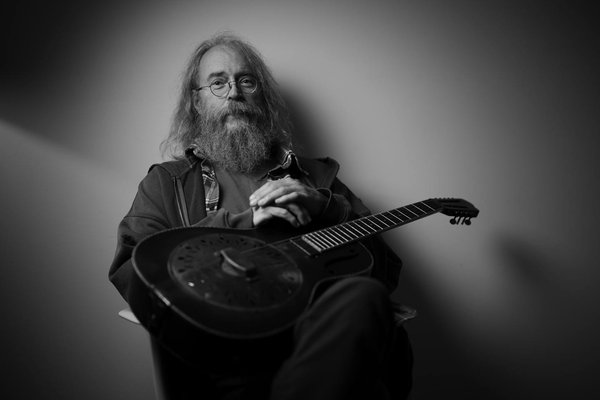
MINNEAPOLIS — It sounds like an album written for this moment: People struggling to afford healthcare. Neighbors relying on neighbors for food and medicine. Some folks just trying to get a roof over their head.
In truth, Charlie Parr’s inspiring new “folk opera” record, “Rooming House,” attests to the timelessness of his seemingly antiquated music.
“My songs and stories usually start with my own experiences or experiences of people around me,” the St. Paul-based acoustic folk and blues singer/guitarist said.
“Right now, a lot of people are having a lot of bad experiences.”
Parr, 60, has become one of Minnesota’s most internationally recognized singer/songwriters by singing almost exclusively about hard times. Some of his most-performed songs, including “Cheap Wine,” “1922 Blues” and “I Ain’t Dead Yet,” are filled with enough tragedy and strife to make old Irish folk tunes sound like Charli XCX.
Instead of him writing a record that reflects the times, it’s more like the times have finally, sadly caught up with Parr for “Rooming House,” issued two weeks ago on the Smithsonian Folkways label.
“There’s an irony in all this that’s not lost on me,” Parr said last month about the timing of his latest of more than 20 albums.
“Whenever I turn on the news now, affordable healthcare is an issue that comes up. The issue around people not having adequate shelter, we thought that was going to be solved, but it’s worse as ever.”
After a laundry list of other woes, he concluded, “It’s always been in my DNA to write this way, but here it is relevant again. Too relevant.”
Parr was raised on the Dust Bowl-era songs of Woody Guthrie, Lead Belly and Harry Smith’s “Anthology of American Folk Music,” records in his dad’s collection. More famously, he was schooled by the same 1960s-era folk and blues musicians of Minneapolis who inspired Bob Dylan, including Dave Ray, Tony Glover, Willie Murphy and the guy whose guitar Parr still symbolically plays at almost every show, Spider John Koerner.
Parr’s most frequent onstage collaborator, washboard player and percussionist Mikkel Beckmen, believes the new album exemplifies Charlie’s adherence to his working-class folk and blues heroes.
“He happens to be one of the best interpreters of that tradition,” Beckmen said.
“He can use the bits and pieces of his experiences and memories lying about to create deeply moving glimpses into the lives of regular people, whose lives have often been made harder because of decisions made by powerful people far away from our neighborhoods and homes.”
Strikes and socks
But old folk tunes weren’t the only way Parr learned about economic adversity.
A native of Austin, Minnesota, he experienced the grim and infamous Hormel Foods plant strike of 1985-1986 firsthand, since his dad worked there. Both his parents — who had Charlie when they were entering their 40s — also grew up during the Depression in hard-hit rural areas.
“Whether they meant to or not, they passed along a real sense of what it was like living through that,” he said.
When Parr moved to Minneapolis in the late-1980s, he quit school and went to work for the Salvation Harbor Light Center. He would visit unhoused people wherever they could be found, bringing them food and clothes, including socks he would take home and launder himself.
“You have no idea how much clean socks can mean to some people,” he said.
Parr also lived in an actual rooming house like the one at the center of his new album. He paid about $50 a month for a small room with a shared kitchen and bathroom space. The house was located in Minneapolis’ Cedar-Riverside neighborhood, so he could walk to the Viking, 400 Bar and Five Corners Saloon, where guys like Koerner, Ray and Glover still frequently performed.
“So many things about those years have stuck with me,” he said, relishing the communal vibe at the rooming house.
That era inspired the characters who roam “Rooming House,” including: John, an orphan who grows old in the house from the age of 12, starting in the opening song “Duluth 1964;” a young waitress who relies on other residents for child care, as heard in “Mother Sara;” and Joseph, who robs a bank for $1 so he can go to jail to receive free medical care he desperately needs.
“If I had money, I’d go and see just what the hell is wrong with me,” Parr sings in what’s likely to become the record’s most lasting song, “(What’s So Funny About) Universal Healthcare?”
“I took a look at that WebMD / It says, ‘I’d get your affairs in order it it were me.’”
New collaborator, new tour stops
“Rooming House” actually started as a book idea. Parr has authored one novel (“Last of the Better Days Ahead”) and a short-stories collection (“Five”). While dreaming up the book version of “Rooming House,” though, the stories started coming out musically.
“I teased out one of the songs, and before I knew it I had the whole record written in about a month,” Parr said.
With similar whim-following instinct, he wound up making the record with another longtime Twin Cities music fixture: drummer Dave King of the jazz groups the Bad Plus and Happy Apple and rock band Halloween, Alaska.
The two were originally planning to make instrumental/experimental recordings, but when King got wind of Parr’s new storybook album he expressed great interest. Parr noted with legit disappointment, “I guess my jazz fusion record is gonna have to wait.”
Parr’s regular rhythm keeper Beckmen — who couldn’t argue with having the renowned King standing in for him — marveled at the natural chemistry the two storied music vets discovered while making “Rooming House.” Aside from a solo by cellist Jacqueline Ultan of the Laurels String Quartet in the closing song “Lilliput Park,” King is the only other musician heard on the record.
“Dave is so unafraid of being quick and yet not getting in the way,” Beckmen said.
“The songs are built with lots of space, lots of pause for brief creative moments or bursts and exclamations, and both Dave and Charlie are very patient with each other in their playing.”
King will return from an Australian tour to perform “Rooming House” for the first half of the State Theatre concert. The second half will feature other guests and songs.
Friday’s show tops off another bustling year for Parr, who moved to St. Paul shortly before the pandemic after nearly two decades in Duluth, where his two now-adult kids grew up.
He said he loves St. Paul — “It’s two hours closer to wherever I’m going on tour” — but he still spends almost as much time on the road as he does at home. His itinerary now includes a lot of European dates, where Beckmen said Parr has developed a cultish mystique as sort of “an elder, guitar-wielding monk wanderer.”
Unlike in America, though — where he mostly tours solo and often sleeps in the back of his vintage Toyota Land Cruiser — Parr has to line up lodging for his European gigs, for reasons that underline the timeliness of his new album.
“In places like Denmark or the Netherlands, if they see me sleeping in my car, people are always like, ‘Are you OK? Can I help you?’” he said.
And why is that?
“Because they don’t really have transient populations over there like we do in America. They’re not used to seeing that.”
©2026 The Minnesota Star Tribune. Visit startribune.com. Distributed by Tribune Content Agency, LLC








Comments