Sound Advice: Some tips when considering indoor TV antenna options
Published in Entertainment News
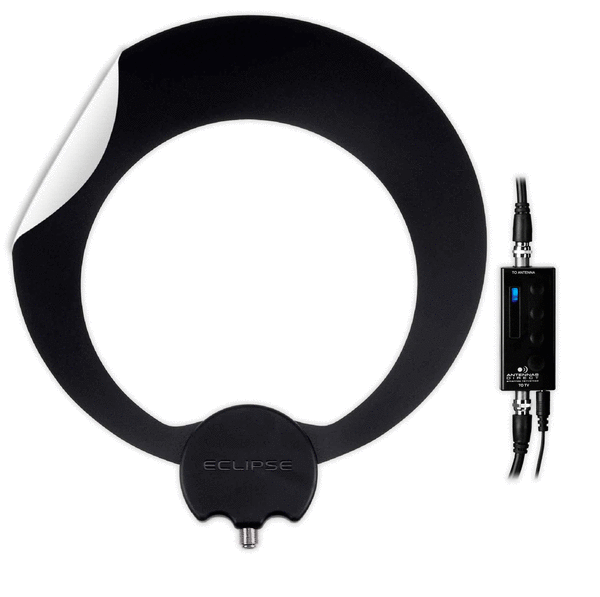
Q. Would you recommend a good amplified indoor TV antenna for broadcast reception? I live in a small condo about 20 miles from San Francisco's Sutro Tower.
—D.B., Alameda, California
A. A good indoor TV antenna is practically an oxymoron. When receiving over-the-air (OTA) transmissions, the antenna is absolutely critical, and it has been a very long time since an indoor antenna really excited me. This will lead many of you to ask what that exciting indoor antenna was. It was the Zenith Silver Sensor, and longtime readers will remember me singing its praises almost 20 years ago. It was a UHF antenna with stunningly good reception for an indoor antenna, and readers who purchased it raved as much as I did. Unfortunately as an UHF-only antenna it was rendered obsolete when digital broadcasts stopped being exclusively UHF. I probably still have one tucked away somewhere and will have to pull it out and see how it compares to some of the newer antennas, at least for UHF channels.
A good place for antenna shoppers to start is antennaweb.org, which provides antenna type recommendations by ZIP code. You are in luck as your ZIP code puts you in Antennaweb's "yellow" category, which says an indoor antenna will likely be adequate. Being in a condo complicates things somewhat, but given the Sutro Tower is almost 1,000 feet tall you have a better chance of getting a strong signal.
When shopping for antennas on Amazon, be sure to check that the reviews are actually for the product depicted. I once saw an antenna with tens of thousands of reviews and an almost perfect score of over 4.5/5 stars. Closer inspection revealed the unethical seller had listed it so it was including the reviews for WD-40. If you see a listing like that and it seems to be too good to be true, it probably is.
As for your antenna, sometimes the old ways work best and an ordinary, unamplified model performs as well as pricy, gimmicky models. (I have found this to be especially true for FM radio.) The old-school $15 Philips Rabbit Ears Antenna is easily found online and in stores, and users seem as pleased with it as others are with their expensive antennas, sometimes even more so. Among amplified models the $49.99 ClearStream Eclipse Amplified Indoor Antenna (antennasdirect.com) and the $109.99 Antop Mini Big Boy (antopusa.com) are highly regarded. I would try that $15 Philips before spending more, though. Buy it from a local retailer and return it if not satisfied.
One final note regarding OTA TV tuners. I have found the tuners in the last few generations of TCL TVs to be standouts. Several years ago my dad upgraded from a 2018 65-inch TCL 6-series to a 2024 75-inch TCL Q6. I was there to do the install and setup for him, and using his roof-mounted outdoor antenna he was able to pull in over 100 stations including the subchannels, most of them very clearly with strong signal lock. Previously he got about 60 channels, and not all of them were that strong. Another standout brand for OTA TV is LG. LG TVs allow you to manually scan and add channels. One of my personal frustrations with newer TVs and OTA broadcasts is how many of them limit you to what the TV can find on automatic scan, and not allow you to attempt manual tuning by setting the channel and adjusting the antenna to improve signal quality. LG is to be commended for giving consumers this flexibility when so many other manufacturers try and make the decision for you.
———
©2026 Tribune Content Agency, LLC











Comments