Entertainment
/ArcaMax
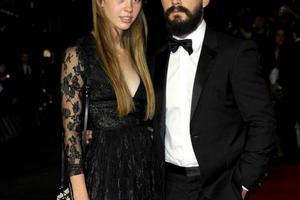
Mia Goth 'focusing on her daughter and career amid fallout from Shia LaBeouf's recent arrest'
Mia Goth is said to be focusing on her daughter and career amid the fallout from Shia LaBeouf's recent arrest.
The actress, 32, and fellow Hollywood star Shia, 39, who met in 2012 while filming Nymphomaniac: Vol. II, have had an on-and-off relationship spanning more than a decade and share a daughter, Isabel, born in 2022.
Shia was arrested on...Read more

Taylor Swift draws public praise from estate of Elizabeth Taylor
Taylor Swift has drawn public praise from the estate of Elizabeth Taylor.
Following the release of a music video described as an "extraordinary" homage to the late Hollywood star, the singer was hailed thanks to the promo accompanying Taylor's track Elizabeth Taylor, which was part of her The Life of a Showgirl project.
Released during ...Read more

Michael Bublé marks 15 years of marriage with Luisana Lopilato
Michael Bublé is toasting 15 years of marriage with Luisana Lopilato.
The singer, 50, has marked the occasion by sharing a tribute to his wife, 38, online - describing her as "everything real in a world that can sometimes feel like smoke and mirrors".
Michael and Luisana celebrated their anniversary on 31 March, and the singer has now ...Read more

Lindsey Buckingham attacked by woman after stalker ordeal
Lindsey Buckingham was attacked by a woman outside a building.
The assault against the Fleetwood Mac icon, 76, happened in Santa Monica this week, in what police sources have described as an incident involving a suspected stalker.
Lindsey was arriving for an appointment on Wednesday (01.04.26) when a woman approached and threw an unidentified ...Read more

Megan Thee Stallion was given 'wake-up call' after being taken to hospital mid-performance during Moulin Rouge! The Musical
Megan Thee Stallion has said she was given a "wake-up call" after being taken to hospital mid-performance during her Broadway run in Moulin Rouge! The Musical.
The singer, 31, who is currently appearing in the role of Zidler in the production at the Al Hirschfeld Theatre, was rushed to hospital on Tuesday (31.03.26) after falling ill shortly ...Read more
Jessie Jones, playwright and TV actor known for co-writing film 'Kingdom Come,' dies at 75
LOS ANGELES — Jessie Jones, a playwright and actor who appeared on shows such as "Murphy Brown," "Night Court," and "Melrose Place," has died. She was 75.
Jones died March 20 after a long illness, according to an online obituary. Jamie Wooten, a friend and one of her longtime writing partners, told Deadline she died in Washington, D.C.
"...Read more
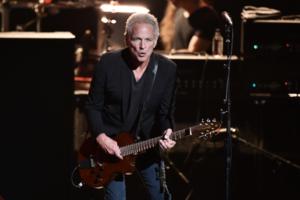
Lindsey Buckingham, former guitarist for Fleetwood Mac, attacked by a woman in Santa Monica
LOS ANGELES — Rock & Roll Hall of Famer Lindsey Buckingham was attacked by a woman in Santa Monica on Wednesday morning.
The Los Angeles Police Department confirmed that a woman with a history of stalking Buckingham, 76, tossed an unknown substance toward the former Fleetwood Mac guitarist and vocalist from a container as he entered a ...Read more
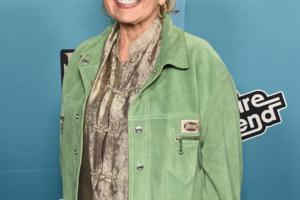
Roseanne Barr reveals 'damaged heart,' fears dying in surgery
Roseanne Barr provided an update about her health, revealing to fans she may have to undergo surgery soon for a “damaged heart.”
Barr opened up about her fears and concerns during a recent episode of her podcast, the “Roseanne Barr Podcast.”
“This doctor says I have to go get my heart checked out because it’s damaged,” she ...Read more
Rapper Pooh Shiesty's family home raided by FBI
FBI agents descended on a Tennessee home linked to rapper Pooh Shiesty, who was only just released from prison some five months ago.
The residence is tucked in the Memphis suburb of Cordova. According to property records obtained by TMZ, the home belongs to Lontrell Williams, which is Pooh’s real name as well as his father’s.
Federal ...Read more
Fleetwood Mac's Lindsey Buckingham attacked by female stalker
Fleetwood Mac alum Lindsey Buckingham was reportedly attacked in Santa Monica by a woman suspected of stalking the musician.
This is not the 76-year-old Grammy winner’s first brush with the woman, who fled after throwing an unknown substance at Buckingham upon his arrival at an appointment, law enforcement sources told NBC4 Investigates.
The...Read more
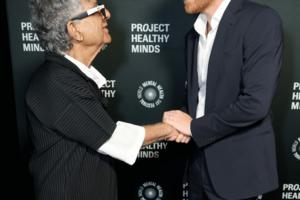
Prince Harry replacing guru friend named in Epstein files at Australian event
SAN JOSE, Calif. — Prince Harry was not the first choice to headline a mid-April conference in Melbourne, Australia, about mental health in the workplace — and not because people may wonder about the extent of his regular workplace experience.
According to a new report, Harry was asked to replace Deepak Chopra, the original keynote speaker ...Read more

Paul McCartney rocks Apple HQ with lengthy set of classic tunes
SAN JOSE, Calif. — Further proof that it must be really, really good to work for Apple Computers came on Tuesday night when none other than Paul McCartney performed a private concert for employees at the company’s headquarters in Cupertino.
Yeah, all that and a stock purchase plan, too? Must be nice.
The Sir Paul show, held at Apple Park (...Read more

Sources confirm Taylor Swift, Travis Kelce wedding date, venue
Taylor Swift and Travis Kelce plan to say “I do” in her beloved Rhode Island this June, at least according to sources shedding light on the star-studded nuptials.
The Grammy-winning superstar and three-time Super Bowl champ, both 36, are “both involved” in the planning and are slated to celebrate tying the knot at Ocean House on ...Read more

Megan Thee Stallion recovering after hospitalization for 'extreme exhaustion, dehydration'
LOS ANGELES — Megan Thee Stallion is on the mend after a bout of "concerning symptoms" landed her in the hospital Tuesday evening, cutting her latest "Moulin Rouge" performance short.
A spokesperson for the rap star, 31, confirmed to The Times on Wednesday that the artist's doctors "ultimately identified extreme exhaustion, dehydration, ...Read more
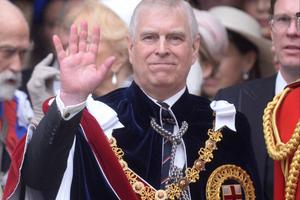
Andrew Windsor probe now involves UK prosecutors
The former Prince Andrew is at the centre of an investigation that now involves UK prosecutors.
Officials from the Crown Prosecution Service are working to provide guidance to police examining 66-year-old Andrew's links to Jeffrey Epstein, who died aged 66 in his New York jail cell in 2019 from an apparent suicide.
The CPS confirmed on ...Read more
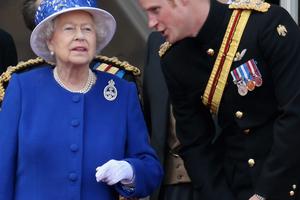
Queen Elizabeth 'refused to take calls from Prince Harry without member of staff present'
Queen Elizabeth is said to have refused to take calls from Prince Harry without a member of staff present in her later years.
The claim is made by Hugo Vickers in his new book about her life - Queen Elizabeth II: A Personal History - in which the royal author writes the late monarch took precautions during conversations with Harry following his...Read more
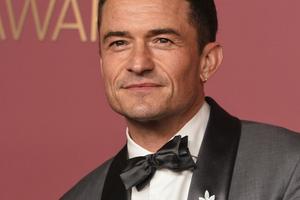
Orlando Bloom shares glimpse of 'love language lately'
Orlando Bloom has shared a glimpse of his "love language lately".
The actor, 49, made the statement on social media after going public with a new relationship following his split from 40-year-old singer Katy Perry.
Orlando confirmed the end of his relationship with Katy last year, with the pair continuing to co-parent their daughter Daisy, ...Read more

Family guide to new movie releases
'THE SUPER MARIO GALAXY MOVIE'
Rated PG for action, mild violence and rude humor.
What it’s about: The Mario gang set out for outer space to find and rescue Princess Peach's long-lost sister Princess Rosalina.
The kid attractor factor: The animation, adventure and colorful characters.
Good lessons/bad lessons: Sowing discord and oppression...Read more

How a simple Amazon item helped create distinctive visual effects for Project Hail Mary
A simple item bought from Amazon helped create the distinctive visual effects for Project Hail Mary.
Cinematographer Greig Fraser revealed he bought a filter from the company as he worked on the complex demands for the production, which he said was "my most challenging film I've ever done, by far".
The film, directed by Phil Lord and Chris ...Read more

Charli XCX among headline names attached to 73rd Sydney Film Festival
Charli XCX is among the headline names attached to the 73rd Sydney Film Festival.
The singer appears in a leading role as part of an initial slate of films unveiled ahead of this year's programme, with the festival set to run from 3 to 14 June.
Organisers have announced 13 titles ahead of its full line-up reveal on 6 May, offering an early ...Read more
Inside Entertainment News
Popular Stories
Related Channels

Chess Puzzles
By Pete Tamburro

Horoscopes
By Holiday Mathis
Kurt Loder
By Kurt Loder
Stephanie Hayes
By Stephanie Hayes

Tracy Beckerman
By Tracy Beckerman
Comics