Remember that time WGN was hijacked by pirates? Filmmaker Jane Schoenbrun does
Published in Books News
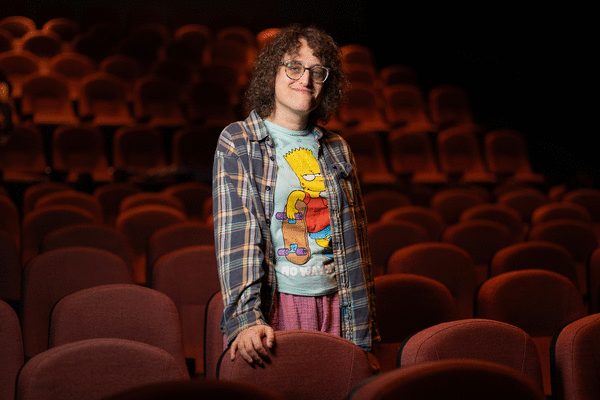
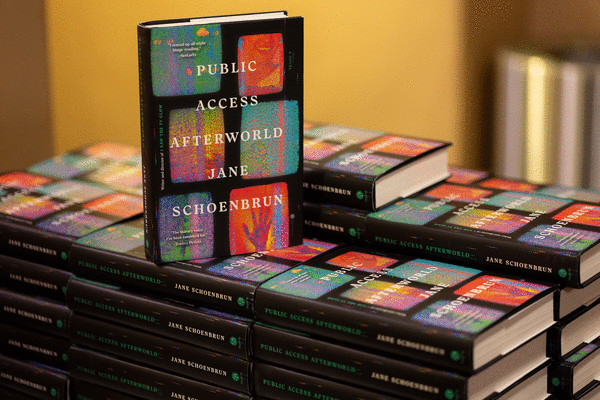
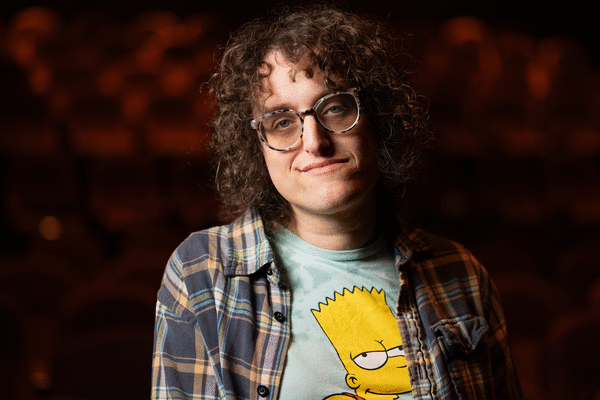
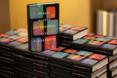
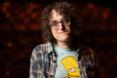
CHICAGO — Jane Schoenbrun knew all about what happened in Chicago on Sunday, Nov. 22, 1987, first during a 9 p.m. newscast on WGN-TV, then two hours later on WTTW, midway through an episode of “Doctor Who.” After I finished their terrific new novel, “Public Access Afterworld,” I was certain Schoenbrun had to have been familiar with the incident and its still-lingering mystery. And, yup, of course. See, Schoenbrun, among our most exciting contemporary filmmakers — no less than the most original voice in film of the past decade, according to screenwriter Paul Schrader — tells stories about screens, multiplex screens, TV screens, computer screens, and the dimly lit rooms where we watch them.
More specifically, they tell tales of the unexplained lurking just beyond those screens.
In their 2021 film debut, “We’re All Going to the World’s Fair,” a teenager takes an online challenge and transforms. In the 2024 breakthrough, “I Saw the TV Glow,” two friends, obsessed with a “Buffy the Vampire Slayer”-like series, believe they can be buried alive and wake up inside of the show itself. “Teenage Sex and Death at Camp Miasma,” Schoenbrun’s critical hit from this last summer, finds a young filmmaker (Hannah Einbinder) traveling to the home of a reclusive actress (Gillian Anderson), the former “Final Girl” of a junk “Friday the 13th”-ish franchise who now lives on the movie’s abandoned set.
But “Public Access Afterworld” is as confident as debut fiction gets. It’s also as hard to neatly summarize as Schoenbrun’s films. It partly tells the story of a Chicago Project in the Los Alamos desert, running parallel with the Manhattan Project, and partly concerns the loose network of people who wrestle for years with its byproduct, a sort of TV station hidden in broadcast signals, “buried under all the other channels, under even the static.”
Which brings me back to WGN, WTTW and 1987.
That late autumn evening, if you were watching WGN news, during the sports segment — the Bears had just defeated the Lions by 20 — you witnessed the uncanny: The signal skipped for a beat and was replaced by someone wearing a Max Headroom mask, that stuttering, wisecracking avatar of early AI who briefly carried his own TV series. What happened for the next 28 seconds is hard to characterize: Whoever was wearing the mask wavered back and forth against a background of black-and-white zigzags. He spoke mostly garbled words, though a few stood out: “I think I’m better than Chuck Swirsky … frickin liberal” (meaning WGN’s then sports anchor, now a play-by-play Bulls announcer). He mimed drinking a Pepsi, muttered “Catch the wave,” and tossed the can.
Then a station engineer at WGN cut the signal.
But two hours later on WTTW, during the “Doctor Who” episode “Horror of Fang Rock,” Max Headroom returned for 93 seconds, and this time, he managed to say “Your love is fading …” and “My files!” and that he had “made a giant masterpiece for all the world’s greatest newspaper nerds” — either a reference to WGN’s call letters or an allusion to the Chicago Tribune, which was then the owner of WGN and had used “World’s Greatest Newspaper” as a front-page slogan until 1976. Finally, Max pulled down his pants and was spanked with a fly swatter by a woman wearing a French maid’s outfit.
The whole thing was as absurdist as it sounds; the Tribune described it sniffily the next day as the work of a “sophisticated video pirate with an unsophisticated sense of humor.” But sprung on unsuspecting viewers, it was otherworldly, even vaguely chilling.
The other day, after Schoenbrun’s recent book event at the Gene Siskel Film Center in the Loop, I mentioned the incident and said it reminded me of their work, and they said, well, in fact, there’s a quick allusion in “Public Access Afterworld” to the broadcasting hiccup. A group of high school students hears about a secret signal beneath their TV static, and their first assumption is a Max Headroom-style prank. Or wait, one asks sarcastically, how about a signal from another dimension: “Maybe it’s ‘Videodrome,’” which in the world of Jane Schoenbrun is an easy nod to David Cronenberg’s 1983 classic about a pirate broadcast of torture porn that has James Woods rethinking reality.
Indeed, the WGN incident was “one of the many notorious glitches in mind while I was writing,” Schoenbrun said, also mentioning Christine Chubbuck, a 29-year-old reporter for a Florida morning TV show who shot herself on live TV in the summer of 1974. Schoenbrun, 39, said they spent “a lot of time as a young person on TVTropes.com, combing the archives for broadcast glitches that appeared sinister, even if they had been intentional.”
What became unsettling about the Chicago glitch was its lack of closure.
The FBI and FCC investigated and concluded it was amateur video pirates, probably using expensive microwave equipment inside a mobile van and overpowering the signals, interrupting broadcast feeds between the stations and downtown transmitters atop the John Hancock Center and Sears (now Willis) Tower. And yet, no motive for the broadcast intrusion was identified, and no one was ever arrested for the prank. Nearly 40 years later, there has still never been a suspect named, and no one has claimed credit.
That absence of an explanation reminded Schoenbrun of “an even bigger inspiration,” an online creepypasta, or internet-born horror, titled “_9MOTHER9HoRSE9EYES9.” It was posted in seemingly random parts of Reddit throughout 2016. “It was essentially a novel-length, multi-narrator epic written anonymously in comment sections. The author would start commenting on whatever the Reddit thread was about, then eventually shift into this beautifully written other thing, and people noticed and started combining the posts into what became a gorgeous Pynchon-by-way-of-Lovecraft novel. I think it’s one of the greatest works of art of the last 10 or 15 years — and no one has ever claimed it.”
The primary characters of the first part of “Public Access Afterworld” are young online connoisseurs of the seeming mysteries in the everyday matrix of ordinary media. In the book’s lore, the Christine Chubbuck incident becomes a Texas weatherman in 1988 who rambles through “a half-coherent final monologue about the absurdity of reality,” then shoots himself in the head on live TV. (Stranger yet, this forecaster has been making cryptic, seemingly nonsensical references to a Public Access Afterworld.) The initial protagonists, high school AV kids, get their first taste of Public Access Afterworld late at night, watching the FCC-mandated switch from analog to digital on June 12, 2009.
There, Schoenbrun drew on YouTube videos of people filming their TV sets to capture the switch. The chapters set at a tech company drew on their own job experience at a tech company, which Schoenbrun found “really creepy, almost satanic.”
Initially, they imagined “Public Access Afterworld” as an ongoing series at HBO; the plot for three complete seasons of the proposed show was sketched out. It came close to being made. “I had started writing right after ‘I Saw the TV Glow,’ which literally cost 40 times what my first film cost. It was a huge leap in ambition, and I wondered what another leap would look like — what if I kept going bigger? I knew I wanted to make something about the actual act of transition and it would need a big canvas, so I had 12 different ideas bumping around in my brain, then it began to congeal into a mythology.”
Like their other work, the result is, to put it mildly, elliptical, tricky to follow, though paradoxically more approachable than that sounds. It’s not hard to imagine it beginning as a pitch for an HBO series. There’s human sacrifice, historical figures, cults, political conspiracy, the unchecked hubris of tech billionaires. The hero, a 27-year-old trans content moderator at a YouTube-ish behemoth, stumbles on a potential apocalypse, but is not sure the world is worth saving. Schoenbrun still pictures a TV series, or maybe a movie series, though for now, “Public Access Afterworld” is the first of a book trilogy.
Schoenbrun isn’t thinking of this as merely a secret history, “but as stories of queerness, diverging from the norm — the narrator says in the prologue, they don’t give people like us the Sunday night time slot on HBO, they send us to hell. I’m interested in the notion that the people in the novel being moderated out of our society, reality and existence are actually the ones hidden beneath the manicured front-facing broadcasts we get.”
Schoenbrun came out as trans while writing their first feature, and is now at the forefront of a film movement dubbed Trans New Weird. They return, again and again, to themes of transformation, alienation and identity, set against dreamy images of nostalgia and suburbia. Think Cronenberg. Or more aptly, David Lynch, of whom Schoenberg said in an interview: “I remember the feeling immediately after the end of his movies for the first time, being completely befuddled — but in a way that I knew was going to be scratching at the inside of my brain and body for weeks before I had untangled my feelings about it.” They told me: “I think I have been fascinated with screens even before I settled on screens as a way to talk about issues, the way one reality creates the other, how the stories we tell and reflect back on ourselves make our reality as much as they reflect it.”
Schoenbrun’s work, however, including “Public Access Afterworld,” often comes across in equal parts grounded and tactile, a layer of the surreal draped over the everyday. It’s a tangible world of old blockbusters and online fan communities, scrolling in bed until 3 in the morning and broadcasting hiccups that spark underground legends. The key image of “Public Access Afterworld,” they said, is a video store in the middle of the Los Alamos desert. But I’d rather not try to explain that. The last time I tried to explain Schoenberg’s work to someone, I gave up and just said it was like a distant radio signal.
Schoenberg said they want to be understood, not intentionally opaque. They said they try their best, “even when it comes out elliptical, which sometimes means leaving people with ambiguity.” The goal is “a balance between not feeling like you’re holding the hand (of the audience) and not making something so impenetrable it confuses in a bad way.”
If the WGN incident itself were a Schoenbrun movie, it might play that way.
It already does.
There are lots of similar gremlins in broadcasting history — the Playboy Channel was interrupted a few months earlier with a ticker of Bible verses; three consecutive World Series games in 1959 between the White Sox and the Los Angeles Dodgers were disrupted across Michigan’s Upper Peninsula — but in almost every case, the culprit was a station employee and soon discovered. The only clarity in the 1987 Chicago case is rumors on Reddit, sometimes with intriguing details — it was an inside job, it was pulled off entirely using an ancient Apple II computer — but all we’re left with is a foot in reality and a foot in the surreal. You might even call it positively Schoenbrunian.
©2026 Chicago Tribune. Visit at chicagotribune.com. Distributed by Tribune Content Agency, LLC.






Comments