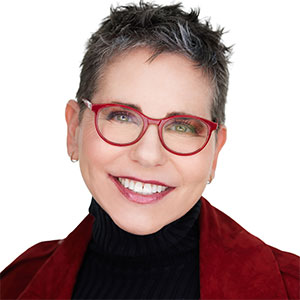
Adriana E. Ramírez: This isn't the story she set out to write. It's the book she needed to write
Published in Books News
In the summer of 2007, I went to Colombia to figure out my MFA thesis. I was working on a master’s in nonfiction writing, and after workshopping a series of essays on my childhood and undergraduate days, I got inspired to write a book about why people move.
I’d always wondered what motivated a family to pack up what few belongings they could carry and find a new home. My family tree was colored by three major moves, and I thought this could serve as a structural backbone for a family memoir.
The first: My ancestors left the Iberian Peninsula at some point between 1600 and 1800, if we follow the Spanish sides of my family tree. At some point they settled in Colombia, firmly established as cattle ranchers in the mountains of Santander, the northern Andes, by the 19th century.
At some point around the mid 20th century, I knew my family had left those mountains for the cities along the coast, mainly Barranquilla. This was the second big move.
And in 1981, my mother left Colombia to marry my Mexican father. By late 1983, months after my birth, they’d established themselves in Houston, Texas, residents of an entirely new terrain, a third and defining relocation.
At the beginning of 2007, I was thinking about a book that would challenge common immigrant narratives – and I had this idea to push against the trope of a destitute family coming to the United States. My parents were always firmly middle class, even in the U.S. This third part, I decided, would be the driving force of the book – the story I knew best.
But as I set out to research this family memoir, it was the second story that kept consuming my thoughts. There was an entire civil war, The Violence, that I knew very little about, that my family kept alluding to in vague ways, that somehow made hundreds of years of permanence irrelevant.
It was the shortest of the three major uprootings, both the voyage from Spain to the Americas and my mother’s journey from Colombia to the United States were considerably farther than a move from Colombia’s interior to the coast. But this much shorter journey was just as profound as moving across an ocean or a sea.
And this, I realized, was the story I most wanted to tell.
So that summer of 2007, armed with a Lacie Harddrive and a FlipCam, both now obsolete, I traveled to Colombia on a K. Leroy Irvis Fellowship from the University of Pittsburgh. My uncle Alberto, my favorite human on this planet that is not in my nuclear family, and who recently passed away, took it upon himself to be my tour guide. He and his family drove me all over Santander, introducing me to old relatives and new strangers.
I spent most of my evenings writing in my journals, trying to recollect all the stories that had been recounted during the day. Later that fall, I spent hundreds of hours transcribing and translating interviews and anecdotes.
To fill in my knowledge, I read dozens of books and articles on Colombian history, trying to find an answer to the question: How did the Colombia of the past become the Colombia of today?
I took her beauty and violence for granted, and never questioned the origins of what emerged on the nightly news or in salacious newspaper headlines about my mother’s land.
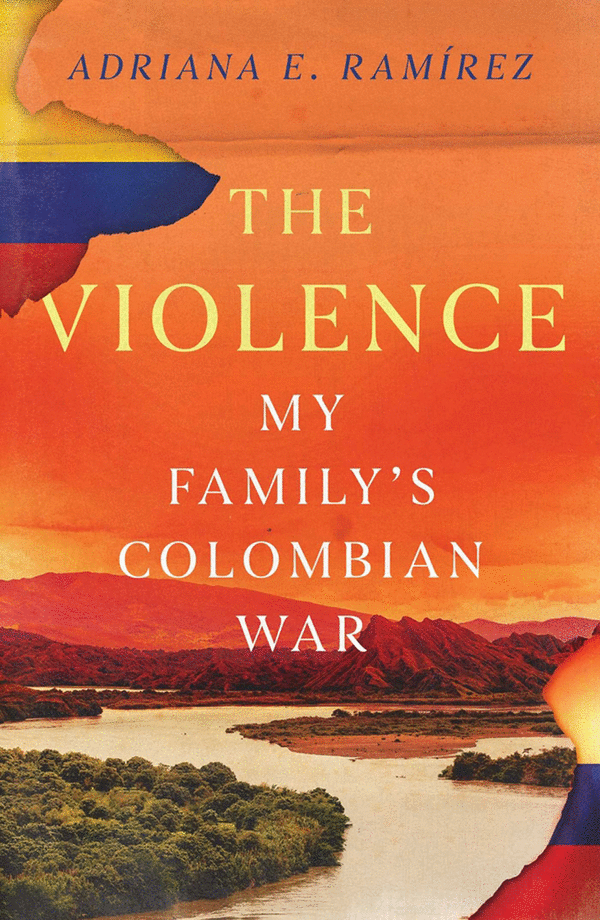
The thesis I wrote, which is now a book out now from Scribner, “The Violence: My Family’s Colombian War,” was not about how people moved, it turns out.
The story that emerged was not a story about migration. It was the story of a family doing what they had to do to survive without compromising their principles. It was a story about a civil war whose consequences still resonate today. It was a story about family myths and betrayal, about passion and warfare.
And at the center of it all stood my grandmother, Esther.
A book based on oral histories is going to have errors. As a writer of nonfiction, I have accepted this. No two people experience the same thing equally (see my kids’ love of “The Minecraft Movie” compared to my deep hatred). When putting together “The Violence,” I made some incredibly difficult choices about which version of the story to privilege.
My biggest fear in writing a family memoir is that my family will not speak to me anymore. My father has always warned me that “dirty laundry should be washed at home” and not aired out for public consumption. But to me, this was a story worth telling and sharing, even if I hurt some feelings, even if some of the details aren’t perfect.
History functions the same way; facts are unstable and open to interpretation, depending on who is telling the story. President Trump recently accused the Iranian government of killing 45,000 protesters earlier this year. The U.N. puts that number closer to 20,000. Iran has confirmed only 3,000 dead. Colombian history is the same way.
Still, thousands of people died. All histories, whether personal or official national records, carry a truth to them as well. If we listen to all the testimonials, whether true or mostly true, there are larger capital-T-Truths that will emerge: Truths about a nation. Truths about families. Truths about our heroes.
If there’s a villain in “The Violence,” it's an imperfect man, I’m just not sure which one. Is it the cheesemonger who became a warmonger, ordering the assassinations of thousands under the righteous pretense of partisanship? Or is it the man who fought for his people, only to find himself leading a terrorist guerrilla group decades later?
Or is it my grandfather, a man who vowed to be faithful to my grandmother on his wedding day, in the middle of national conflict, but failed to live up to his promise?
Perhaps the biggest villains are the men who thought to find peace with a weapon, who thought that killing the opposition was better than compromise or negotiation.
But as much as we want to put men like that in the past, it’s not hard to find them in our present.
“The Violence: My Family’s Colombian War” is a warning about what happens when a country succumbs to bad instincts, when we put too much faith in utterly human beings. But it’s also about the good people who survive, who love and live to tell the story – however imperfect it might be.
At its heart, “The Violence” is a book about a family enduring. It’s about Colombia and my grandmother – unknowable and beautiful and dangerous.
I wanted to write a book about why people moved, but almost 20 years later, I’m glad I listened to my instincts and wrote the book I needed to write and told the story I needed to tell.
Even if my family never forgives me.
©2026 PG Publishing Co. Visit at post-gazette.com. Distributed by Tribune Content Agency, LLC.


Comments