A Navy family moved into military housing, then started getting sick
Published in News & Features




VIRGINIA BEACH, Va. — Laura Campbell was sick.
Flu-like symptoms. Debilitating leg pain. Heart palpitations. Anxiety. Nausea. Fatigue. She felt faint.
She visited the emergency department three times in the 2 1/2 years her family lived in their military housing on Vera Cruz Road in Virginia Beach. The Campbells moved into a four-bedroom townhouse on Joint Expeditionary Base Little Creek-Fort Story in September 2023. Immediately, Campbell said, she smelled mold. She didn’t think much of it at the time.
“There was a smell in one of my kids’ bathrooms the day we moved in,” Campbell said. “And (the housing company) came in and replaced some drywall, and I trusted them.”
The Campbells — Laura and her husband, Chief Damage Controlman Matt Campbell — say their health, finances, safety and well-being have been compromised due to mold exposure in their military-provided housing. Their landlord — Balfour Beatty, a UK-based infrastructure and construction firm — has for years been embroiled in lawsuits and reporting on what military families allege are poor housing conditions, ongoing maintenance issues and growing out-of-pocket expenses to manage the impacts.
The Campbells believe their home is unsafe. As of Friday, Balfour Beatty had not tested the home for mold, despite multiple requests by the Campbells.
In an emailed statement from a Balfour Beatty spokesperson, the company said various inspections “did not identify conditions that would make the home unsafe to occupy.” The company has conducted multiple moisture tests and visual inspections, which they claim showed no “evidence of active water intrusion or mold growth.”
But an independent investigator hired by the Campbells in May found chronic and active water intrusion, several strains of mold and microbial growth, and excessive humidity — which the report concluded leaves the home “unsuitable for normal occupancy.”
Balfour Beatty said it commissioned a third-party certified industrial hygienist employed by an independent environmental consulting firm to review the report, and “the conclusions differ markedly from those reached in the resident’s report.”
“The third-party assessment found that the home remains habitable and that the analytical methods used by the resident’s consultant are not supported by the Environmental Protection Agency or prominent scientific organizations such as the American Industrial Hygiene Association (AIHA), the American Conference of Governmental Industrial Hygienists (ACGIH) and the American Board of Industrial Hygiene (ABIH), among others,” a Balfour Beatty spokesperson said.
Balfour Beatty said a written opinion in support of the assessment is being finalized. The Campbells’ independent investigator, Jeffrey Oelrich, said he stands behind his findings and welcomes a comparison of his report with any competing assessment.
“The recommendations and values in my report draw from peer-reviewed scientific literature and are widely accepted within our industry; the EPA simply hasn’t caught up to the rapidly evolving science regarding indoor microbial testing,” Oelrich said. “These standards carry weight in military housing, where deferred maintenance and incomplete responses to water intrusion have left families facing persistent dampness and related health concerns.”
Symptoms, but no answers
Laura and Matt Campbell met at college in Alabama. Laura Campbell was a teacher before Matt Campbell joined the Navy in 2011. Now, she is a family photographer and stay-at-home mom to their three children, and he is a trainer with the Afloat Training Group in Norfolk.
When she moved into the Vera Cruz Road house, Laura Campbell said, she was living a healthy lifestyle. So when the symptoms started, she didn’t know what was happening.
Neither did her doctors. She was prescribed Zoloft for her anxiety. Her periods became irregular.
Ten months later, she was pregnant. Then, suddenly, she wasn’t. She suffered a second miscarriage shortly after her first.
“I could not figure out what went wrong,” Campbell said. “I was far enough along, saw the heartbeat with both babies. Heartbeat, fine. And then bam, gone.”
She said her symptoms worsened for months — to the point that she could barely function.
“I felt like everything started crashing down when I lost those two babies,” Laura Campbell said. “I would look at something and my brain would not respond, and my children were just watching me deteriorate.”
The moldy smell lingered. Laura Campbell suspected mold was growing in multiple places — including on vents, under sinks, and on window sills.
Balfour Beatty cleaned the house’s HVAC system. But the problems persisted, the Campbells said.
So did the family’s symptoms.
The Campbell boys, all under 12, struggled with unexplained symptoms: constant sickness, nose bleeds, breathing problems, migraines, and developmental delays, among others. Matt Campbell had heart palpitations and vomiting. And Laura Campbell kept getting sicker.
She said after spending several minutes in the bathroom bathing her children, she would go outside and collapse on the back patio, close to passing out.
In September 2025, a storm brought rain into the Campbells’ home. The Campbells submitted a maintenance request via Balfour Beatty’s resident portal for mold testing and remediation. The maintenance team repaired the roof and dried affected areas, but did not conduct mold testing or remediation.
Problems persist
The Campbells’ house, like nearly all military housing, is managed by a private company. In 1996, Congress approved the Military Housing Privatization Initiative, which allowed the Department of Defense to partner with private companies to manage and operate military housing. In Hampton Roads, home to 83,000 active duty service members, private companies manage the majority of military housing.
Balfour Beatty manages and leases approximately 43,000 units of Army, Navy and Air Force housing across 55 installations nationwide. It manages 249 new and renovated homes on Fort Story.
The company entered into a 75-year ground lease to manage housing on Fort Story and Fort Eustis in 2004. The lease was amended a year later, and the Campbell’s townhouse was built a year after that.
The privatized family housing program was established to address chronically poor conditions in military housing. Advocates say the problems persist.
Change the Air Foundation, a nonprofit dedicated to providing information, resources and support to families to achieve healthy indoor air, conducted a survey of about 3,400 military families in 2025.
Three-quarters of them said mold, mildew or microbial growth was an issue in their housing. As many said they had suffered negative health impacts as a result of their living conditions.
Erica Thompson, Change the Air’s director of military family relations, is herself a military spouse whose family was impacted by mold exposure. It started about six months after she, her husband and children moved onto Maxwell Air Force Base in Alabama.
The house had excessive humidity, leaking windows and rotting wood. Her kids were getting nauseous and headaches in certain rooms. Some had rashes. Some had brain inflammation. One developed pediatric cataracts in both eyes. One developed postural orthostatic tachycardia syndrome, or POTS. Four developed asthma. Their family dog started having seizures and had to be put down within weeks.
They’ve been out of their house for two years, but Thompson said they’re still feeling the effects.
“This isn’t something that’s like a runny nose that goes away, and our kids aren’t the only ones,” Thompson said. “That’s what I’m hoping to convey to (congressional) offices, is that this impacts lots of families on a substantial level — this isn’t just our family, our one story. This is across the nation.”
‘I think you have mold poisoning’
In April 2026, Laura Campbell went to Balfour Beatty’s housing office on Fort Story and shared her health issues and concerns about possible mold in the home with the property manager.
She said she was told to put in a work order.
At the time, Matt Campbell was on a short deployment in Spain. Laura Campbell saw a doctor who spent hours going over her history, her symptoms and her daily environment.
“By the end of it and all my symptoms, he said, ‘I think you have mold poisoning or mycotoxin poisoning.’ And I was like, ‘What? Why?’”
He ordered bloodwork and advised her to stay out of the house.
The next night, Laura Campbell started sleeping in her car.
“I gave it four or five nights, and I still was feeling bad, but I had a few of those symptoms kind of lessen, and I was like, “OK, I think I feel something here. I think that he’s right.”
Then she spent one night in the house — and felt worse.
Soon after, her bloodwork came back with mold-related toxin levels that, in at least one case, was more than 16 times the upper limit of the normal range. The confirmation, Campbell said, came with “every emotion you can imagine.”
Representatives from Balfour Beatty came to the house three times in two weeks, but did not test for mold.
In an email quoting a Balfour Beatty employee, an Army Housing Office employee wrote that “no mold was found” based on a moisture indicator test, even though the purpose of the test was to detect moisture — not mold.
Laura Campbell said company representatives told her it is against their policy to test for mold and said if “there is no moisture, there is no mold.”
“A drywall repair will suffice,” the email, obtained by The Virginian-Pilot and Daily Press, stated.
Laura Campbell said the experience was heartbreaking.
“It’s really been out of our control, and it’s so frustrating because I’m a mom with three children and my husband in the Navy gone overseas, and I’m trying to trust these people to take care of our living environment,” Campbell said.
In response to questions about the Campbell’s situation and their mold-related policies, a Balfour Beatty spokesperson shared the following statement:
“It is important to distinguish between mold testing and mold inspections. Consistent with EPA guidance, our approach is to carry out a thorough inspection for signs of moisture and mold where concerns are raised. The EPA does not recommend routine air sampling or other forms of mold testing in most situations because there are no accepted health-based standards against which the results can be interpreted. The priority is to identify and address any source of any moisture and any visible mold.”
Laura Campbell enlisted the services of Jeffrey Oelrich, a certified industrial hygienist based in Virginia Beach. Oelrich has conducted thousands of environmental investigations over his 21 year career. After speaking with Campbell and visiting the home on May 13, he agreed to conduct a full investigation.
In the meantime, Laura Campbell and her kids and their dog Ivey needed a place to stay. Balfour Beatty employees made a reservation for the family to stay at a hotel off Shore Drive. Campbell said she tried to check in, but was turned away because the hotel doesn’t allow pets.
She also noticed the hotel had several Google reviews alleging mold and pest infestations.
In email exchanges between Laura Campbell and Balfour Beatty reviewed by The Virginian-Pilot and Daily Press, Campbell asked the housing company to find a suitable alternative.
“No, this is unacceptable. I will not go from one unsafe area to another. Please find something else. See the attached image with mention of mold and bugs. Would you want to stay here??” Laura Campbell responded to a Balfour Beatty employee.
She decided to take her children to an Airbnb, and later to Georgia to stay with her father, while they waited for Matt Campbell to return from deployment.
A spokesperson from Balfour Beatty said the company offered the Campbells accommodations, but they declined.
“Although our inspections did not identify conditions that would make the home unsafe to occupy, we nevertheless offered the family temporary hotel accommodation while their concerns were being reviewed and also offered an alternative home. Neither offer was accepted.”
On May 20, Balfour Beatty posted a notice on the Vera Cruz Road house door stating a contractor inspection “in the bedroom on the wall” would occur the following day.
A lengthy legal history
For years, Balfour Beatty has been at the center of lawsuits and reporting alleging poor conditions in the military housing they manage across the country.
In Florida, a 2025 lawsuit against the company brought by families currently and formerly stationed at Naval Air Station Key West alleges “appalling conditions” at Balfour Beatty homes on the base.
“Ceiling collapses, water damage, faulty air conditioning, structural defects, pest infestations, and exposure to toxic mold and asbestos were all part of these families’ day-to-day existence at their Balfour homes,” the complaint reads.
Dozens of families are suing the company for compensation related to injuries and damages sustained while living in allegedly unsafe housing conditions at Balfour Beatty managed properties.
The lead plaintiff, Navy spouse Jackie Talarico, lived at a Balfour Beatty home on NAS Key West for three years with her husband and two children. She said when she raised concerns with the company about maintenance issues in the home, she was told, “everything was safe,” and there was no mold.
But her family started experiencing unexplained symptoms — bleeding, vomiting, respiratory issues, developmental delays. She said her neighbors had similar symptoms, including what they coined the “Sigsbee cough” for the Sigsbee Park neighborhood where many of them lived.
According to the complaint, the Talaricos alleged they were exposed to water leaks and mold. They said it took several months for Balfour Beatty to acknowledge the HVAC unit in the home needed to be replaced. When workers arrived to address mold in the master bathroom, they allegedly dismissed the idea of a leak and just re-caulked.
Mold reappeared two weeks later, the complaint says.
The complaint states Jackie Talarico and her husband Anthonie Talarico have lost thousands of dollars on healthcare costs, personal property losses and repair expenses.
Jackie Talarico said housing issues are readiness issues.
“How are (servicemembers) supposed to stay focused on the mission when they have a sick family at home?” Talarico said. “For all that military families sacrifice, we shouldn’t have to sacrifice a healthy home.”
Balfour Beatty did not respond to questions about whether they are considering changing their company policies or practices regarding mold, maintenance or resident concerns in light of recent reporting and lawsuits.
“These companies hold all the power,” Talarico said. “They have all the power to do the right thing, and they’re choosing not to. It’s sad.”
In 2021, Balfour Beatty pleaded guilty to one count of fraud for falsifying maintenance records to illegally claim millions of dollars in performance-based incentives. By artificially inflating their metrics, the company stole millions from taxpayers. Under the terms of the plea agreement, they were required to pay over $65 million in restitution and fines.
As a part of the agreement, Balfour Beatty also spent three years under a federal compliance monitorship. It ended in early June.
In a press release marking the end of the monitorship, Balfour Beatty said it has worked to implement a broad improvement program.
“The conclusion of the monitorship marks an important milestone and (Balfour Beatty Communities) will continue to embed these improvements as part of its long-term operating model, while maintaining a strong focus on transparency, consistent delivery, operational performance, and the resident experience,” the release stated. “(Balfour Beatty Communities) remains committed to working closely with the US military service branches to provide safe, reliable, and well-maintained housing for service members and their families while ensuring a strong compliance environment and operational framework.”
“Unsuitable for normal occupancy”
On June 17, nearly a month after receiving a notice on their door about the contractor’s inspection at the home on Vera Cruz Road, Laura Campbell sent an email to a Balfour Beatty employee asking when repairs would begin. She was given June 22 as a start date.
In response to a request for comment on why the company had not yet completed any repairs at the home on Vera Cruz Road, a Balfour Beatty spokesperson said, “We also remained ready to complete the remaining repairs and repeatedly sought access to the home so that work could be carried out. As we tried to schedule that work, the family told us they did not want repairs carried out while they were preparing to move and asked that the work wait until after they had left the property.”
On a Friday in July, the Campbells received the final report from Jeffrey Oelrich, the certified industrial hygienist they had hired.
It concluded the home was “unsuitable for normal occupancy.”
Oelrich said when he walked into the Vera Cruz Road home, he immediately felt the air’s heaviness.
“You can tell that the air’s thick. It’s not right. I knew there was super high humidity the second I walked into the living room, which is right inside that front door. And you could feel it,” Oelrich said.
Multiple strains of mold and bacteria in elevated amounts were found in the home. Some of the specific strains are associated with adverse health impacts, Oelrich said.
And, crucially, he found high humidity and elevated dew points throughout the home — conditions conducive for mold and microbes to spread and thrive.
“There’s no such thing as a mold-free or bacteria-free home. No one’s trying to suggest that,” Oelrich said. “But when we don’t maintain moisture levels and building maintenance correctly, they’re easily able to get out of balance.”
The HVAC system is also blowing mold and microbes throughout the home, according to Oelrich’s findings.
The report identified certain strains of xerophilic — or dry-loving — mold in the home. Those molds don’t need liquid water — they can draw moisture directly from the air.
Oelrich noted that mold causes the same allergic reaction whether it’s dead or alive, so killing mold isn’t adequate.
“By any voluntary standard, or even the EPA will tell you, if you’ve got visible mold, you need to remove it,” Oelrich said. “And so by installing a new sink base, you’re not physically removing anything.”
Oelrich recommended the home remain unoccupied during remediation, and belongings should be removed, assessed for salvageability, and either cleaned or discarded.
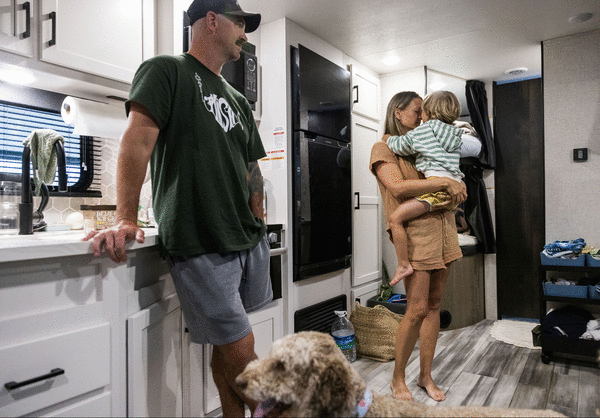
The Campbells won’t return to the home on Vera Cruz Road. They purchased a camper and are living at a campground on Dam Neck.
After it became clear to the Campbells that they would not return to their Fort Story home, they asked Balfour Beatty — weeks after the repairs were scheduled to begin — to hold off on any remediation work until they could safely remove their belongings.
As the dispute resolution process between the Campbells, Balfour Beatty and the Army Housing Office continues, Matt Campbell’s basic allowance for housing is still being fully allocated towards the house on Vera Cruz Road they are not living in.
The Campbells have struggled to find moving companies willing to work with mold contaminated belongings to help them move out of the home. One company agreed to do the move for $5,300.
The Campbells requested assistance from Balfour Beatty to cover the cost of moving and storage for their belongings and to segregate Matt Campbell’s basic allowance for housing.
At an informal dispute resolution meeting between the Campbells, Balfour Beatty and the Army Housing Office, the Campbells were offered $9,675 to cover the moving costs and housing allowance. Laura Campbell said she was told they would not receive financial assistance with the move unless they accepted the offer.
“They said that was all we would get and that would cover the cost of the move,” Campbell said. “They’ve lost their minds if they think I’m accepting that.”
At the same meeting, the Campbells presented their own estimate for the out of pocket expenses they’ve incurred from their time at the Vera Cruz Road house.
All in — out of pocket medical expenses, temporary accommodations, environmental testing, the housing allowance, and more — the Campbells estimate they’ve lost at least $117,000. With additional expenses like remediation and replacement of household goods, they said their estimate rises by tens of thousands of dollars.
“(Their offer) was a slap in the face,” Laura Campbell said.
A push in Congress
A bipartisan bill was introduced in January 2026 to protect families from the pervasive threat of mold and hazardous conditions in privatized military housing.
The Military Occupancy Living Defense Act, or MOLD Act, would create standards for housing and environmental safety.
Within 180 days of passage, the bill would require the secretary of defense to issue “interim guidance for acceptable levels of relative humidity, ventilation, dampness, and water intrusion to be applied at all covered housing.”
The bill would mandate inspections by independent third-party inspectors whenever there is a tenant complaint regarding safety or habitability or after remediation work is completed. It would also afford families the right to withhold servicemembers’ basic allowance for housing until an inspection deems the home habitable.
The mandated inspections would require evaluations of HVAC systems and signs of water intrusion, dampness, humidity, and mold — both visible and non-visible.
For Erica Thompson, director of military family relations at Change the Air Foundation, these standards are necessary to create the safe living environments servicemembers and their families deserve.
“We don’t want to live in these extravagant homes,” Thompson said. “We just want homes that are safe that our families can live in that aren’t impacting their health.”
A MOLD Act provision was included in the Senate’s version of this year’s National Defense Authorization Act. But it was left out of the House’s version — leaving its legislative future uncertain.
On July 29, a coalition of nineteen military-related organizations sent a letter to Congress urging them to support the legislation.
“Far too often, military families in privatized housing encounter toxic, unsafe living conditions: mold, pest infestations, faulty maintenance and more,” the letter reads. “Service members willingly sacrifice a great deal for our country. However, they should not be expected to sacrifice their or their family’s health and well-being.”
No going back
The house on Vera Cruz Road has sat vacant for two months.
At their camper on Dam Neck, the Campbell boys roughhouse in the few feet of space between the kitchen sink and the table where they eat their meals.
“We went from 2,000 square feet to 200,” Matt Campbell said.
Each of the Campbell boys has struggled in his own way. Barrett, a middle schooler, worries his classmates will make fun of his family’s situation. Wells, 4, misses his toys. Ellis, the Campbells’ middle child and “free spirit,” had an uncharacteristic breakdown on a hot July day — in tears, he pleaded with his mom to let them go home.
Laura Campbell hopes that when they’re older, her boys will understand why she did what she did — and why she can’t let them go back to the house on Vera Cruz Road.
In recent weeks, she has begun treatments for lymphatic drainage to reduce the swelling and pain under her arms. She said her soreness and persistent sickness are constant reminders of her family’s situation.
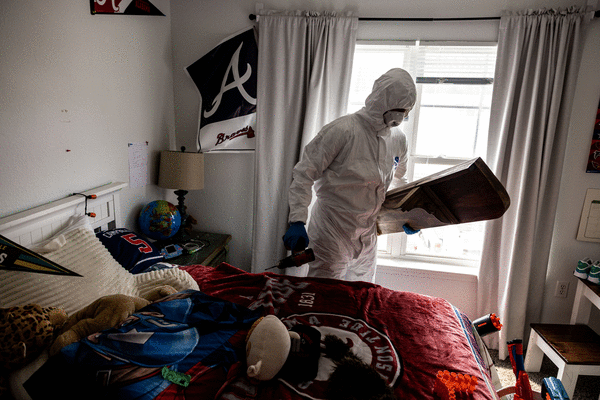
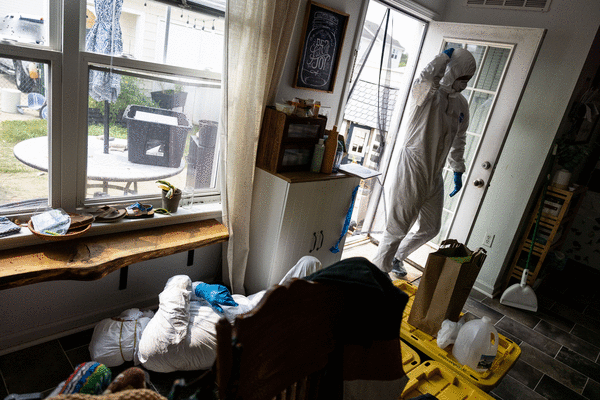
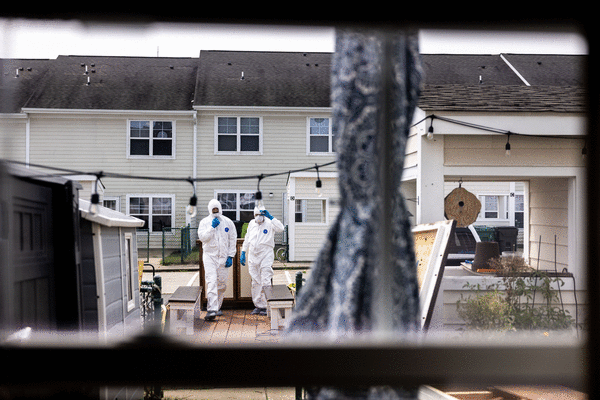
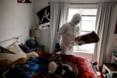
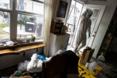
On July 16, Matt Campbell, clad head-to-toe in a Tyvek hazmat suit and N95 mask, threw out every item of food left in their abandoned kitchen at the house on Vera Cruz Road: chicken nuggets from the freezer, a half-eaten box of Panda Puffs cereal sitting on top of the fridge, salad dressing from the fridge door, a bag of shriveled limes on the counter.
This is not how he and his wife had planned to spend their 17th wedding anniversary.
Laura Campbell stood in the alley, waiting for her husband to reemerge. She was too scared to go into the house.
Tears welled in her eyes as she looked at the house on Vera Cruz Road her family once called home.
“It’s a nightmare every day,” she said. “I can’t believe this is my life.”
She has turned to prayer for help letting go of the fear. But she said she’s not there yet.
“Some days, it feels impossible to keep going.”
©2026 The Virginian-Pilot. Visit at pilotonline.com. Distributed by Tribune Content Agency, LLC.






Comments