Oil companies continue to show little interest in Arctic refuge drilling
Published in News & Features
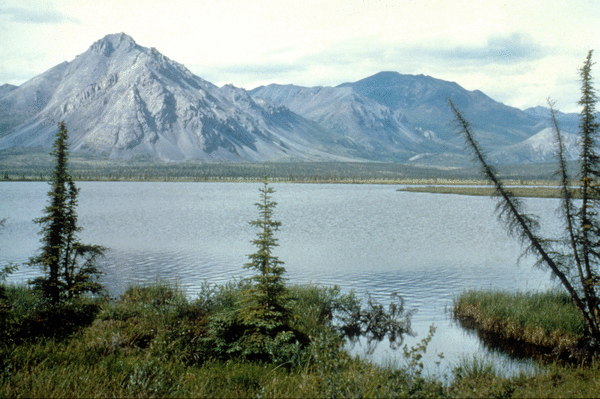
ANCHORAGE, Alaska — Oil companies on Friday once again showed little interest in the latest lease sale for the Arctic National Wildlife Refuge in Alaska, but the results were enough to disappoint groups that have fought to protect the region along the Arctic Ocean from development.
The lease sale raised just $3.7 million with only two parties bidding for five tracts, out of 58 tracts offered. The sale raised a tiny fraction of the money the federal government has estimated it would generate.
A state development bank, the Alaska Industrial Development and Export Authority, won three tracts, adding to its seven tracts in the region.
A small Cook Inlet operator, Hex Energy, won two tracts.
The income from the sale was far below a recent lease sale held on another federal area in the state, the National Petroleum Reserve-Alaska west of the Arctic refuge.
That sale, in an area that’s home to relatively recent, large oil discoveries, raised $163 million as companies snatched up 187 tracts, generating speculation that perhaps the Arctic refuge lease sale would be large.
It wasn’t to be.
The winning bids in Friday’s Arctic National Wildlife Refuge sale acquired a total of 70,000 acres, for a 10-year lease. The leases give the two parties a chance to explore the tracts with seismic studies and drilling.
Three lease sales held in the refuge, over five years, have generated less than $20 million in high bids, and no interest from major oil companies. That’s far below the $1.8 billion the federal government had originally estimated the sales would bring in over a decade, to be split between the Alaska and federal governments.
The area is politically sensitive after decades of battles between environmentalists and the push to expand oil drilling in Alaska, and it’s costly to develop because it is far from the heart of the North Slope oil fields.
Environmental groups have urged the industry to stay away from the area and its federally protected polar bears, caribou herds and millions of migratory birds.
They pointed out in statements after the sale that major banks and insurance companies have said they would not support oil drilling in the refuge.
The Bureau of Land Management called the sale “successful” in a prepared statement.
Despite the small number of bids, Kevin Pendergast, head of the Bureau of Land Management in Alaska, struck an optimistic tone shortly after the bid opening. He characterized the sale as setting the stage for future development in the region.
The refuge area contains up to nearly 12 billion barrels of technically recoverable oil, Pendergast said.
Federal geologist David Houseknecht, an expert in the area, has said the refuge appears to contain large pools of oil with similar characteristics to giant oil discoveries west of the refuge, around the National Petroleum Reserve-Alaska.
“While the history of this area is long on policy, a new era of active leasing and exploration is just beginning to unfold,” Pendergast said.
“We look forward to learning more about the subsurface of the area as leaseholders pursue exploration and ultimately to the next phase when, like the NPR-A to the west, this area’s full potential begins to be revealed and responsible development takes shape,” he said.
Congressional Republicans in 2017, under President Donald Trump’s first administration, passed a law approving lease sales in the refuge.
The Alaska Industrial Development and Export Authority has been the lone leaseholder in the refuge.
It picked up its initial seven tracts in the first lease sale in 2021, on about 365,000 acres, in the closing days of the first Trump administration.
The second lease sale in 2025, under President Joe Biden, was canceled after parties submitted no bids amid complaints from industry groups that the terms for potential exploration and development were too strict.
The Alaska Wilderness League said in a statement that revenue from the lease sales have fallen well below Congress’ original expectations.
“Economic gain was a false justification to permanently to sell off the most ecologically and culturally significant landscapes in the United States,” said Kristen Miller, executive director of Alaska Wilderness League. “The American people don’t want this, the oil industry doesn’t want this, and our public lands deserve so much better. The Arctic Refuge, traditional homelands of the Gwich’in people, deserves permanent protection.”
Officials with Voice of the Arctic Iñupiat, a group representing Alaska Native leaders from the North Slope, praised the lease sale as an important step toward self-determination for the people of the North Slope where the refuge is located.
Taxes on oil infrastructure and other development in the region provides more than 95% of the revenue for the North Slope Borough.
Nathan Gordon Jr., mayor of Kaktovik, the only community in the refuge, said the lease sale underscores years of advocacy for cautious development in the refuge.
“The Trump-Vance administration is doing the right thing by advancing policies, including those that permitted the sale, supported by our community,” Gordon said.
Sovereign Iñupiat for a Living Arctic, an Alaska Native group opposed to drilling in the refuge, said they were disheartened to see the bidding.
“Our leaders continue to offer up more of the Arctic Refuge even as we are living with the consequences in the Western Arctic,” said Nauri Simmonds, executive director of the group. “Time and again, the benefits promised to our communities fall through, while the consequences stay with our people.”
The 19-million-acre refuge in northeastern Alaska has long been a battleground between conservation groups and industry. Congress decades ago set the 1.6-million-acre coastal plain aside for potential future oil and gas leasing that could lead to drilling.
Republicans last year under President Donald Trump mandated a new set of lease sales for the refuge in the One Big Beautiful Bill Act, at least four by 2035.
The legislation came after Biden administration had taken steps to stop potential drilling in the area, such as canceling the leases issued in the first sale, though a judge reversed that action.
The refuge is sure to remain a political lightning rod. Conservation groups have sued to stop activity in the area, citing violations by the Trump administration of the National Environmental Policy Act, the Endangered Species Act and other laws.
_____
©2026 Anchorage Daily News. Visit at adn.com. Distributed by Tribune Content Agency, LLC.






Comments