Meta asks US Supreme Court to toss Washington state campaign finance law
Published in Business News
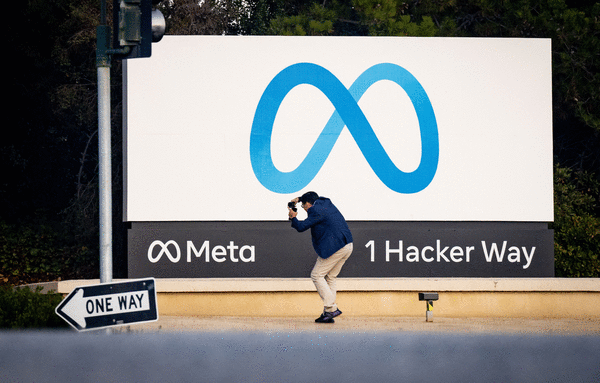
SEATTLE — Meta, the parent company of Facebook, has asked the U.S. Supreme Court to throw out at least a portion of Washington's campaign finance law as it appeals a $35 million fine for repeatedly failing to disclose information required by the law.
In its appeal, filed Friday, Meta argues that Washington's law, which requires political ad sellers such as Facebook to disclose information about those ads, is shutting down critical forums for political speech."
Washington's law, originally passed by voters over half a century ago, requires ad sellers, to disclose the names and addresses of people buying political ads, the intended audience and the total number of views of each ad. Ad sellers must provide the information, within two business days, to anyone who asks for it.
The dispute dates to 2017, when three people separately asked both Google and Facebook for the ad information that they are required to compile and disclose. When the two companies failed to fully comply, then-Attorney General Bob Ferguson sued them.
In response, both companies paid a fine and said that Washington's requirements were too onerous and that they would stop selling political advertisements in the state. Neither company fully stopped selling ads in the state. Ferguson sued Facebook again in 2020, saying the company was repeatedly and openly violating state campaign transparency laws.
That lawsuit wound its way through state courts until this summer when a split state Supreme Court upheld the $35 million verdict against Meta. The record fine — the largest campaign finance penalty in U.S.history — represented 822 instances in which Meta had failed to disclose the required information about political ads on its site. The $10,000 penalty per ad was tripled because courts found the company intentionally violated the law. As part of the total, Meta was also ordered to pay $10 million of the state's legal fees in the long-running case.
Washington Attorney General Nick Brown previously called the state Supreme Court decision upholding the penalty against Meta a "major win for election transparency."
“Washington State has strong disclosure laws and they apply to all advertisers who sell political ads — regardless of size," he said in a June statement. A Brown spokesperson said Tuesday they were reviewing the filing.
Meta, in its appeal to the U.S. Supreme Court, is represented by Paul Clement, a famed Supreme Court litigator and the solicitor general under former President George W. Bush.
Meta's appeal calls Washington's law "so onerous that it has caused several key forums to decline to run political advertisements altogether."
"The chilling effect of this regime on core political speech is undeniable," Meta writes in its appeal. "Had Washington simply banned political ads from digital platforms altogether, that would be an obvious First Amendment violation. The results should be no different when a state achieves the same end via the most burdensome political-ad disclosure regime in the Nation."
Meta argues that Washington explicitly targets digital platforms because they — as opposed to newspapers and radio and television stations, which also have to comply with the law — must compile information on the demographic information of people targeted by political ads.
The company also argues that the nature of digital ads — which, unlike newspaper or television ads are not reviewed by the platform before being posted — makes it more difficult for them to comply with the law.
Meta writes that the state Supreme Court, in upholding the penalty, ignored "the distinct First Amendment problems" that the disclosure requirements entail.
"A third-party 'disclosure' regime so onerous that it results in no actual disclosure but instead shuts down channels for political speech altogether," Meta writes, "cannot withstand any form of First Amendment scrutiny.
©2026 The Seattle Times. Visit seattletimes.com. Distributed by Tribune Content Agency, LLC.







Comments