Warning from Minnesota hospitals: The financial crisis is arriving
Published in Business News
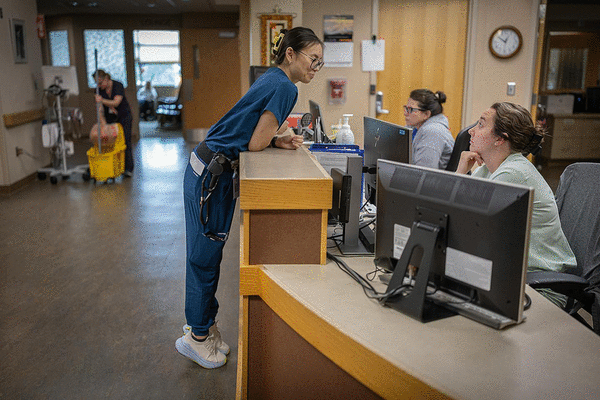
Minnesota hospital leaders fear 2027 will be the year when a crisis becomes an emergency, as federal budget cuts push small-town facilities to close.
Hospital leaders gathered at the State Capitol on Tuesday, ahead of the midterm elections and the next legislative session, to warn that state or federal policy changes are needed to preserve access to hospital care across rural Minnesota.
“By the time a hospital closes, it’s already way too late,” said Dr. Rahul Koranne, chief executive of the Minnesota Hospital Association.
Onamia’s hospital almost ran out of money this year because of a federal payment glitch, while Madelia’s hospital leaned on lines of credit from local banks to make payroll. Faribault’s hospital stopped scheduling childbirths in a cost-cutting move, meaning for the first time that the majority of Minnesota’s rural hospitals don’t provide this service.
The old tricks to stay afloat won’t work in 2027, when federal cuts begin to remove thousands of Minnesotans from government-subsidized health plans and leave them uninsured, Koranne said. Hospitals’ financial reserves will be drained if they absorb the cost of more uninsured patients, he said.
By the numbers
Minnesota has not yet seen the hospital closure crisis that has hit other states in part because it uses the federal critical-access program to boost government reimbursements to its smallest, most vulnerable hospitals. Minnesota, with 76 critical-access hospitals, ranks fourth behind Texas, Iowa and Kansas.
Only St. Joseph’s Hospital in St. Paul and Mayo Clinic Springfield have closed outright recently, although others such as Regina Hospital in Hastings have surrendered their licenses and become freestanding campuses of larger hospitals.
The latest state financial data shows 31 Minnesota hospitals are financially distressed, meaning they lost money on operations in four of the last eight years. That means a quarter of the state’s hospitals are closure risks.
Hospital leaders are concerned about the growing prevalence of patients with low-paying, government-subsidized insurance programs, which cover two-thirds of people seeking emergency or inpatient care.
Hospitals had relied on patients covered by private insurance to generate enough money to offset losses from Medicaid, the government health program for people with disabilities or low incomes that pays well below what it costs to treat patients. Now, there are fewer privately insured patients to offset those losses.
String of disappointments
Hospital leaders celebrated Minnesota’s $705 million bailout of HCMC in Minneapolis that preserved the state’s largest trauma center. Other than that, they have endured a string of disappointments.
They beat a deadline last year to apply for a tax-financing system that would boost federal payments to hospitals, only for President Donald Trump’s One Big Beautiful Bill to negate much of the projected benefit.
That law created grants for rural hospitals to invest in new technologies and programs, including $193 million for Minnesota this year. But the grants have yet to be awarded, and many hospitals hesitated over the opportunity because it requires them to spend money they don’t have up-front, and be reimbursed later.
Lobbyists also failed this year to convince state lawmakers to preserve a program that allows hospitals to purchase drugs at a discount and pocket the profits by billing insurers full price when the prescriptions are filled at participating pharmacies. Hospital leaders still have a chance to convince lawmakers next year to preserve the so-called 340B program, which nets them more than $1 billion per year.
What it means
Tuesday’s gathering highlighted four hospitals experiencing different levels of strain.
Winona Health Services is a midsize hospital that is too big for critical-access benefits and suffered double-digit percentage operating losses in 2023 and 2024. Community Memorial Hospital in Cloquet is financially distressed as well, and has suspended childbirth services because of staffing shortages despite providing simulation training to the rest of the state.
On the other hand, United Hospital District in Blue Earth has relied on a family-medicine physician model to draw patients and increase the number of women giving birth at the hospital. Lakewood Health System in Staples gained local financing to expand its cancer center with the expectation of growing need.
The messages from leaders of the four hospitals were the same, though.
“The formula isn’t working anymore,” said Rick Ash, United’s chief executive.
What’s next
Lawmakers must weigh hospitals’ warnings against already rising costs, and the reality that medical bills are paid by Minnesotans through their tax dollars or health insurance premiums and copays.
Small hospitals were ripe for mergers 20 years ago with health systems such as Mayo, which was eager to broaden its network across southeast Minnesota and drive patients to its flagship hospital in Rochester for specialty care.
But large health systems aren’t eager to acquire small hospitals now. Three proposed or completed mergers in Minnesota reflect the urgency instead for large hospitals to band together to strengthen their financial positions ahead of federal cuts.
The pressure on hospitals is “unlike anything I’ve ever seen,” said Rick Breuer, chief executive of Community Memorial, which recently stopped providing home care, cardiology and other services.
Winona is facing the closure next March of its money-losing dialysis unit, which stayed open for the past three years only because of a $3 million donation to save it, said Rachelle Schultz, Winona’s chief executive.
“A gift from a neighbor is not a stable financing system,” she said.
©2026 The Minnesota Star Tribune. Visit at startribune.com. Distributed by Tribune Content Agency, LLC.








Comments