Reduce, reuse, recycle snow? That's one way Aspen hopes to save ski season from climate change
Published in Business News
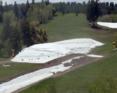
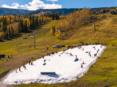
Most blankets are meant to keep whatever is underneath warm and cozy. But the specialty blankets that one Colorado ski company used to cover piles of snow in the spring kept them cold enough to survive the state’s hottest summer on record.
Earlier this month, Aspen One unveiled collections of snow that it saved from last winter using insulated blankets from a Finnish company called Snow Secure. The blankets were part of an experiment the ski resort operator hoped would help build its “climate resilience” in the face of warming winters, said Chris Miller, senior vice president of sustainability, community, and advocacy — and it proved to be a success.
Despite the summer heat, 85% of the snow volume under the blankets remained intact, Miller said. By preserving the prior season’s snow, Aspen One aims to bolster early season snowmaking in future years and reduce the resources needed to do so.
“This technology allows us to have more confidence and predictability that we’ll be in a place to have the kinds of conditions we want to have when we want to open, while at the same time reducing energy use and water use from early season snowmaking,” Miller said. “We have purchased additional blankets and the intent is, given the success of the pilot, to expand the program.”
Aspen One is not alone in searching for solutions to insulate its ski resorts, both literally and figuratively, from a warming climate. One recent study predicted that Colorado’s ski season could be shortened by 23 to 34 skiing days by 2050 due to the effect of greenhouse gas emissions. Across the state, ski companies have invested hundreds of millions of dollars in snowmaking equipment so that the slopes can open even when natural snowfall is scarce.
Last winter, which saw very little snow and sustained above-average temperatures, was a stark reminder of future weather possibilities. Coincidentally, Aspen’s mountain operations team had decided to invest in the Snow Secure blankets before the reality of the warm and dry winter set in, Miller said.
“We have to be building a climate resilience toolbox in order to ensure that we are able to be as prepared for what will increasingly be variable conditions over the course of the winter,” he said. “You would never wish last season on anyone in this industry, but it was a great test of this technology.”
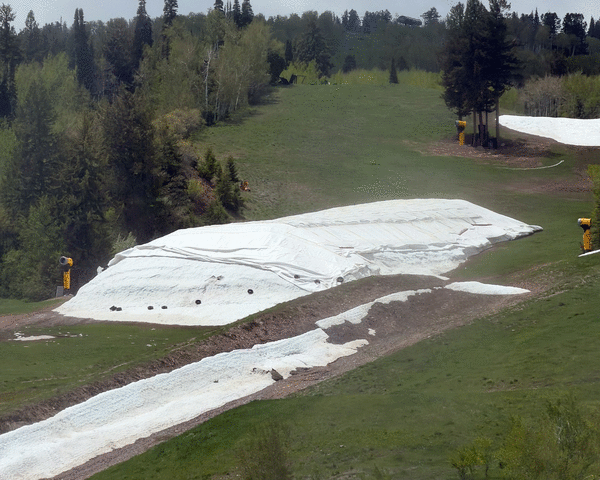
Last April, as Colorado’s record-low snowpack melted, employees at Snowmass and Buttermilk ski resorts began moving some of the remaining snow into large piles on their respective mountains. They covered them with Snow Secure’s products, modular 82-foot by 32-foot mats or “blankets” that link together, forming large white mounds that would remain there all summer.
The blankets are made of extruded polystyrene, which is a common material used for insulation. Miller said that’s one of the benefits: There’s no energy required to make them work.
“This is a highly effective, and quite simple and low-tech tool,” he said.
Sensors tracked the temperatures both above and beneath the blankets throughout the season. Even when the exterior reached triple digits at the height of bluebird summer days, the environment below never broke 45 degrees Fahrenheit, Miller said. The average temperature between April and October was about 35 degrees, which is why so little of the snow melted, he added.
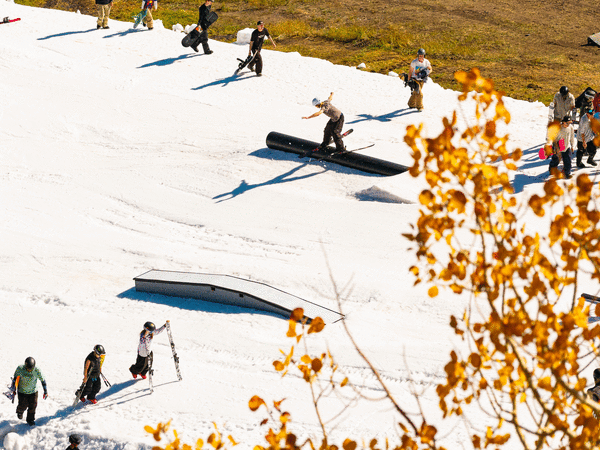
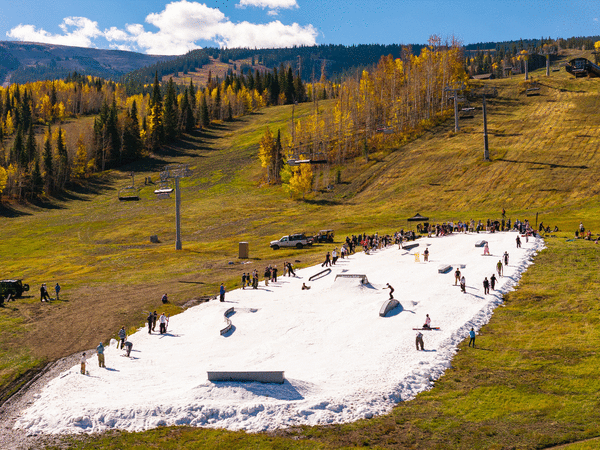
The snow maintained its integrity, too. At the beginning of October, crews groomed it into a pop-up terrain park at Snowmass where skiers took turns grinding rails against the backdrop of the golden aspen leaves.
“That’s not something you typically see,” Miller said.
Though the pilot was modest, it proved the impact could be significant. It would have taken 3.4 million gallons of water to make the couple of piles of snow the resorts saved last spring.
“It’s a great example of what we want to try and do here, which is to do things that both have a sustainability story, but are also smart business decisions,” Miller said.
That’s why Aspen One has already purchased additional Snow Secure blankets in anticipation of saving more snow in 2027. The company, which was first in Colorado to test them, doesn’t yet have a long-term vision for how much snow it would like to save or the exact utility, but Miller expects it will be a trendsetter.
“My guess is we’ll begin to see a number of resorts use this kind of technology because it is cost-effective, right? If part of what these things do is have potential to reduce the amount of overall snowmaking that happens, an investment in this product that has a 20-year lifespan, I think, many resorts will find have an ROI,” he said.
©2026 MediaNews Group, Inc. Visit at denverpost.com. Distributed by Tribune Content Agency, LLC.










Comments