War made planting difficult. Now it could boost farmers' profits
Published in Business News
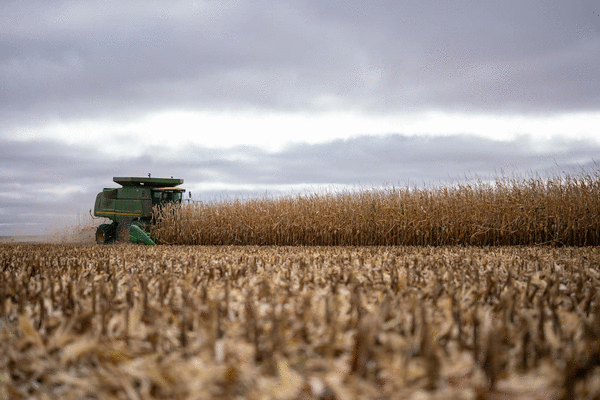
MONTEVIDEO, Minnesota — A better-than-expected harvest may yield needed profits and financial relief for many farmers who need it this year, after rough results in 2025 fueled worries about a broader foreclosure crisis.
Higher crop prices are making some farmers more hopeful than they felt in the spring, when international conflict suddenly made planting crops costly. Conflict continues to increase farmers’ diesel costs, but it’s also leading to crop scarcity that is driving up prices for American farmers’ harvest.
One year’s strong harvest may allow farmers to pay down existing debt, but it doesn’t change the wider factors that led to the money-losing years as farms sustained collateral damage amid unpredictable wars and tariff fights.
Megan Horsager, who is buying her family farm near Montevideo in western Minnesota from her father, said she lost money in 2025’s depressing growing season.
This year feels different. Her 750 acres of sugar beets, soybeans and alfalfa and 1,200 acres of corn were thick with dried crops on a recent Friday. Her toddler at one point jokingly tried to take a bite from a hard ear of field corn covered with rows of vibrant kernels — and found it dry, exactly as it should be prior to a successful harvest.
“We’re feeling optimistic,” Horsager, 34, said.
Other Minnesota farmers are not feeling so good. People in the state’s northwestern region experienced more severe drought conditions than elsewhere in Minnesota and Pam Vipond said her family is now feeling the repercussions, with a soybean crop yielding about half as many dried beans per acre as last year.
“Probably as of Fourth of July, the rain shut off,” said Vipond, whose family grows corn and soybeans on more than 1,200 acres in Mahnomen County. She said farmers west of her family’s operation have it even harder, with some corn plants producing no ears.
Overall, 61% of Minnesota’s corn crop is in good or excellent condition, and soybean crops are the same, the U.S. Department of Agriculture reported Oct. 13. Last year’s data for the comparable week is unavailable because of the government shutdown.
But prices for crops rallied this year. Corn futures have risen about 18% since this time last year, and soybean prices have increased about 27%.
When the U.S.-Israeli war against Iran broke out in late February, crop prices were not nearly as high. The conflict quickly inflated the cost of fertilizer, a key expense for American farmers. This exacerbated concerns that 2026 would end like 2025: unprofitable for many row-crop farmers.
John Griffith, an executive vice president with the large Minnesota-based farming cooperative CHS, said he’s seen a variety of factors including drought and global trade disruptions contribute to the rise in crop prices. He said Russia and Ukraine are targeting each other’s “economic engine” with attacks, harming exports in Eastern Europe.
That disruption, he said, “puts a little fear into the marketplace. And that fear manifests itself in higher prices.”
In Minnesota, the rise likely lifted corn prices from “not breaking even” to a “break-even situation,” and the profitability of soybeans became even stronger, Minnesota Farm Bureau President Dan Glessing said.
But everything’s not all rosy. “Obviously, fuel prices are going to gobble up some of that,” Glessing said.
Diesel prices in Minnesota have increased from $3.57 to $6.13 a gallon over the past year, AAA reported on Oct. 13. At Horsager’s farm, where a combine runs on 26 gallons of diesel an hour, the expense could’ve ballooned.
Horsager said she luckily filled up her diesel reserves a month and a half ago, when prices were slightly lower. Her father, Marc Stevens, said the rise in crop prices should cover the higher fuel expense.
Nathan Hulinsky, University of Minnesota Extension educator in agricultural business management, said a lot of farmers pre-purchased diesel for harvest earlier this year.
“But then come springtime or next time the farmer needs to make a contract, who knows what diesel’s going to be,” Hulinsky said.
Nationally, the USDA’s Economic Research Service has forecast total crop revenue to rise in 2026, yet government support for farmers is forecast to increase from $27.9 billion in 2025 to $47.4 billion for 2026. The rise in aid is due in part to the Farmer Bridge Assistance program, which the federal government announced in 2025 after a trade war with China threatened U.S. farmers’ ability to export their crop to the country.
Horsager said the volatility of the past few years has made buying the farm from her father “way harder,” as decisions such as choosing when to buy fuel, fertilizer and seeds have involved more risk.
Stevens said the farm transition creates a lot of stress, but it fulfills his dream that he “will have a kid take over and succeed.” He acquired the farm from his father years ago. Now, Horsager’s two children are getting a taste of the lifestyle.
“Peter, don’t swing on those!” Horsager said as her son played in one of the farm’s massive, empty grain bins.
Stevens said he hopes a time will come when the government could have a less-prominent role in the economics of farming.
“I’m maybe a little too much of a pure economist” in saying that “supply and demand should fix itself,” he said. “If the government stays out of our way, then those of us who can figure it out will survive and those who can’t will go broke.”
©2026 The Minnesota Star Tribune. Visit at startribune.com. Distributed by Tribune Content Agency, LLC.










Comments