Colombia reaches out to IMF to help resolve fiscal crisis
Published in Business News
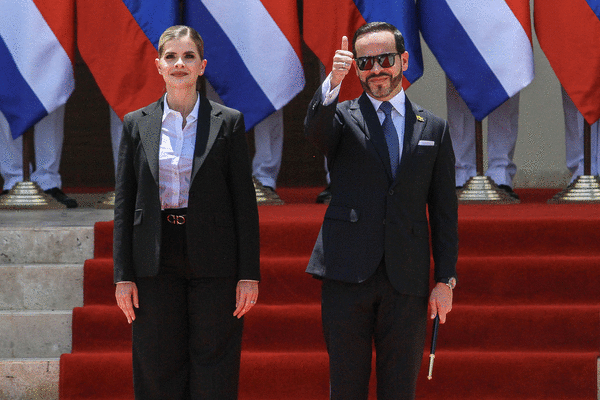
Colombia’s new government is opening talks with the International Monetary Fund as it grapples with a fiscal crisis that officials have described as the worst in the nation’s history.
President Abelardo de la Espriella, who took office last month, ordered his economic team to begin talks with the Fund, he said in a national address late on Sunday.
“We all know that the fiscal situation is the most critical of our history,” he said. “I have given clear instructions to the Minister of Finance and the entire economic team to take the lead in talks with the IMF, seeking a negotiated solution to the crisis bequeathed to us by the corrupt and irresponsible individuals who preceded us.”
Finance chief Miguel Gómez and his team met with bankers, asset managers and hedge funds in the U.S. this month, as they seek to reassure investors that they’ll do what is needed to curb borrowing. The government argues that much of the deterioration in public finances is due to publishing honest figures, recognizing spending commitments omitted by the previous government in areas including health care, energy and pensions.
“Abelardo probably wants two things: Technical assistance to work out what to cut and how much, and political cover for the adjustment,” said Kieran Curtis, head of EM local currency debt at Aberdeen Group Plc in London. “In my opinion the latter is more important for him.”
The peso was down 0.5% as of 8:40 a.m. Bogota time, in line with emerging-market peers, while Colombia’s dollar bonds edged lower.
Colombia’s local markets came under pressure after the new government unveiled a much wider-than-expected budget gap, putting the deficit among the largest in the country’s recent history. Domestic bonds have lost 2.2% so far this month, paring their year-to-date gains.
The IMF didn’t immediately reply to a written request for comment.
Congressional economic committees this month approved the government’s proposal for a 635 trillion-peso ($191 billion) spending plan in 2027. Gómez has said that the government intends to spend significantly less than this amount, and will impose spending cuts to narrow the deficit without resorting to tax increases.
Without such cuts, the fiscal gap would widen to more than 9% of gross domestic product next year, according to the finance ministry’s projections.
Before taking office, the De la Espriella government said it would seek technical assistance from the IMF and the U.S. Treasury to rein in borrowing.
The government has said it plans to reinstate the fiscal rule, which limits borrowing, in 2028 to help restore investor confidence.
The nation’s credit rating was cut deeper into junk after the government of President Gustavo Petro suspended the rule last year as the deficit blew out.
____
—With assistance from Jorgelina do Rosario and Vinícius Andrade.
©2026 Bloomberg L.P. Visit bloomberg.com. Distributed by Tribune Content Agency, LLC.









Comments