Auto review: 2026 Nissan Frontier Pro-4X offers function over flash
Published in Business News
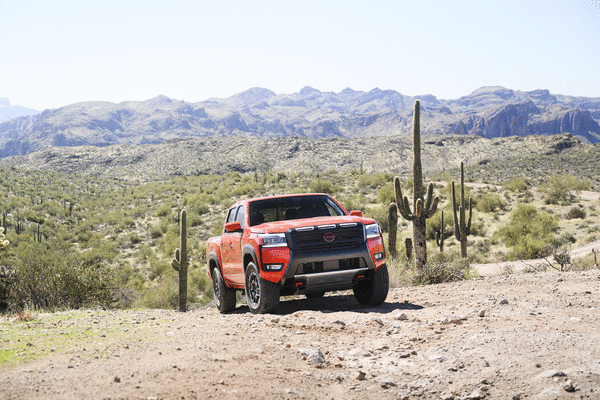
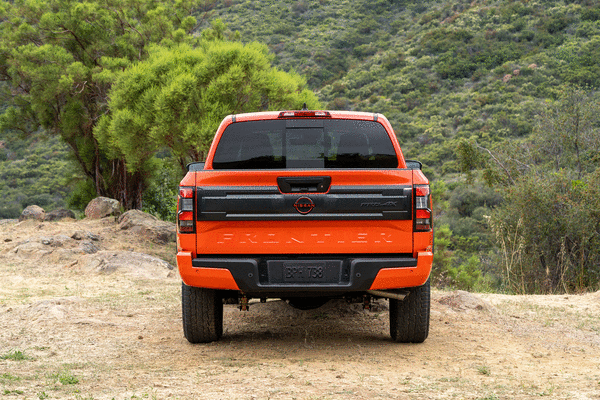
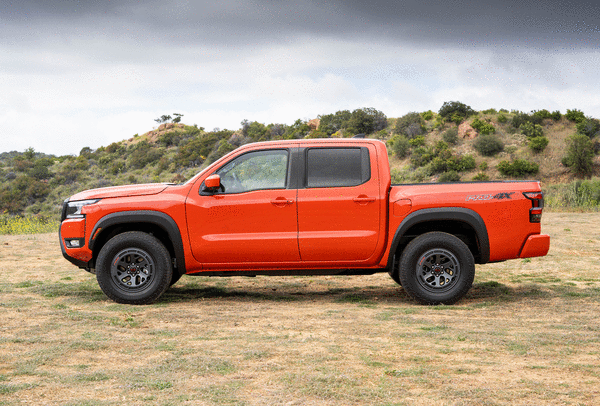

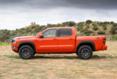
There is an arms race underway in the automotive industry.
Blackened chrome, LED strips, giant grilles, screens the size of suburban kitchen islands, illuminated logos, animated turn signals, ambient lighting in 35 colors and enough electronic wizardry to make the average pickup truck feel less like transportation and more like a Las Vegas casino that has somehow acquired four-wheel drive. Automakers have discovered that Americans apparently want their trucks to simultaneously haul lumber, project personal wealth and provide uninterrupted entertainment.
And then, there’s the 2026 Frontier Pro-4X.
It seems perfectly content to let everybody else compete for attention. It has the demeanor of someone who still carries a pocketknife, uses a flip phone, and has never felt the urge to make a video of his lunch for people he’s never met. And he’s probably happier for it.
The Frontier is a body-on-frame pickup, a phrase that sounds almost quaint now, like “manual transmission” or “checking the oil.” The Frontier belongs to that increasingly unfashionable school of automotive thought in which a truck is supposed to be a machine rather than a declaration of personal branding. It merely sits there square-jawed and slightly suspicious of the proceedings.
Nissan offers the Frontier in a broad assortment of configurations: rear- or four-wheel drive, King Cab or Crew Cab, five- or six-foot beds, and five trim levels. The Frontier received a facelift for 2025, with new bumpers, a revised grille and updated front fascia. The Pro-4X adds the appropriate hardware: chunky all-terrain tires, steel skid plates, front tow hooks and an electronic locking rear differential. This is not the sort of machinery designed to impress somebody standing outside a boutique hotel. It’s designed for when the road stops.
Under the hood is Nissan's 3.8-liter V-6, making 310 horsepower and 281 pound-feet of torque through a nine-speed automatic transmission. The 4x4 test truck gets a two-speed transfer case with four-wheel-drive low, along with Rock, Sand, On-Road, Mud and Hill Descent Control drive modes.
The V-6 is smooth and responsive, and the whole arrangement feels muscular without being exotic. Fuel economy is a solid 18 mpg. Maximum towing capacity is 7,070 pounds, respectable but not a class benchmark. Maximum payload is 1,490 pounds; the test truck's rating was 1,220 pounds.
So much for the numbers. What matters is how the thing behaves when you actually drive it. This is where the Frontier commits what has become an almost radical act in modern automobile design. It communicates. You feel the road. You hear the engine. You know when the suspension is working. You know you are driving a machine with actual mechanical components underneath you rather than inhabiting a soundproofed electronic pod that has been programmed to create the illusion of automotive involvement.
The steering is precise, although at parking-lot speeds it develops the approximate muscular resistance of a piece of farm equipment. Parallel parking becomes an opportunity for personal growth. By the third attempt, you may begin wondering whether Nissan should have included a rowing machine in the options list. The brakes, thankfully, are excellent.
The ride is compliant enough for off-road work but hardly plush. Road noise arrives without an appointment. Engine noise is similarly uninterested in being filtered into tasteful background ambiance.
Inside, the Frontier continues the theme. The materials are basic and durable. The controls are where you expect them to be and there are actual knobs and buttons. You turn a knob and something happens. You push a button and something else happens. No menu. No submenu. You do not need to take your eyes off the road to locate an icon that looks vaguely like a snowflake but might, for all you know, activate the rear differential.
The infotainment system is available with either an 8-inch touchscreen or a 12.3-inch display for media, navigation and connectivity. Wireless Apple CarPlay and Android Auto are standard, along with multiple charging ports. A subscription-based Wi-Fi hotspot and wireless smartphone charging are available. If you insist on turning your pickup into a rolling concert hall, a nine-speaker Fender audio system can be ordered.
The front seats are roomy, and higher trims for 2026 add two-way power lumbar adjustment. Up front, the Frontier is comfortable and straightforward. The back seat is another matter. It’s upright. Headroom is scarce. Taller passengers will discover that Nissan's definition of rear-seat comfort is apparently based on the dimensions of a moderately hungry house cat. Nissan has made a choice: driver and cargo take precedence over rear-seat pampering. If your primary concern is transporting four adults in first-class comfort across three states, there are other vehicles. If your concern is moving something heavy from here to there, the Frontier is considerably more interested.
Fair enough. Somebody has to tell the truth.
You don't buy the Frontier Pro-4X because you want strangers to know you’ve become successful. It carries things. It tows things. It has four-wheel drive, low range, an electronic locking rear differential, skid plates and tow hooks. It has the mechanical equipment necessary to go places where the pavement has given up and gone home. You buy it because you need a truck.
And in an automotive world increasingly embarrassed by that remarkably uncomplicated idea, there is something almost subversive about a machine that simply refuses to be embarrassed.
2026 Nissan Frontier Pro-4X Crew Cab SWB
Base price: $41,870
Engine: 3.8-liter V-6
Horsepower/Torque: 310/281 pound-feet
EPA rating (combined city/highway): 18 mpg
Fuel required: Regular
Length/Width/Height: 210/75/73 inches
Ground clearance: 9.5 inches
Payload: 1,220 pounds
Cargo capacity: 40 cubic feet
Towing capacity: 7,070 pounds
©2026 Tribune Content Agency, LLC










Comments