More fallout from California's tire regulation
Published in Business News
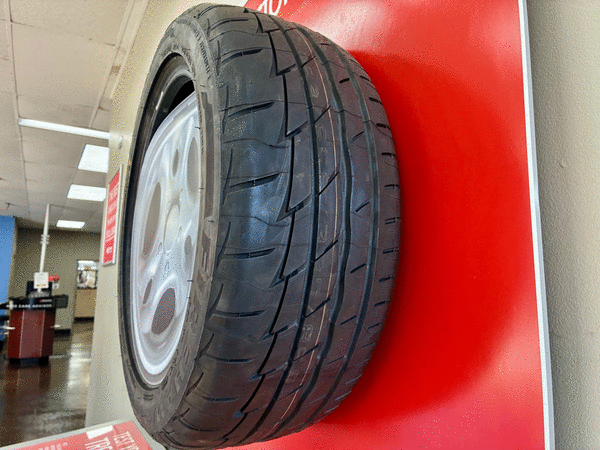
Executives with Dunlop and Falken tires on Monday critiqued a first-of-its-kind standard the California Energy Commission adopted last week for replacement tires on passenger vehicles and light-duty trucks that goes into effect across the state in three years.
While the companies said they will work with the state, an official for the two tiremakers described the regulation as “harsh” and the chief executive at Dunlop said consumers should expect the costs of implementation will be passed onto California drivers.
“You will not have as many manufacturers, importers, distributors selling as many products,” said Darren Thomas, CEO and president of Dunlop Tires North America, during a video briefing. “When the supply goes down and the demand stays stable, prices go up. So will prices increase? You bet they’ll increase. By what percentage? I don’t know — 15 to 20% is probably a realistic number.”
However, the commission predicts the new regulations will eventually save drivers in the Golden State billions of dollars in fuel costs and reduce carbon dioxide emissions.
Tires on new cars and trucks typically give drivers better fuel mileage. But replacement tires tend to be less efficient, and drivers lose mileage — and in the case of electric vehicles, lose range.
The new standards aim to make sure replacement tires are as at least as energy efficient as tires on brand new cars, SUVs, pickup trucks and EVs. Though the tires are more expensive, the energy commission estimates the regulation will end up saving California drivers nearly $1 billion per year in gasoline and electricity costs.
Plus, the commission says the standards will reduce carbon dioxide emissions by 2 million metric tons per year — the equivalent of taking approximately 400,000 gasoline-powered cars off California roads.
The new standards passed on a 5-0 vote of the energy commission, also known as the CEC.
The first phase of the regulations starts in 2029. The incremental cost at first, the CEC says, will come to $1.50 per tire. In phase 2 of the program, which runs from 2033 and beyond, the incremental cost will increase to $6.50 per tire.
A typical driver of an internal combustion engine vehicle with efficient tires will save $179 in gasoline over the life of a set of tires, the CEC says. That’s based on a gas price of $4.60 per gallon. As of Monday, the average price for a gallon of regular in San Diego stood at $5.73.
“The likelihood that a gallon of gas is going to cost $4.60 in 2029 is pretty near nil, so drivers stand to save a lot more money,” CEC commissioner Nancy Skinner said prior to the vote.
The commission conducted laboratory tests, with its analysis showing the standards will result in no “adverse tradeoffs” with regard to replacement tire lifespan, safety or other characteristics.
“The benefits (of the regulation) are undeniable,” CEC vice chair Siva Gunda said.
Michelin came out in support of the efficiency goals, with the company joining Bridgestone in calling the targets technically feasible.
But Goodyear, Yokohama and the California Tire Dealers Association sent a letter to the commission in April, predicting that the rule will end up being more costly than the CEC is anticipating. Some manufacturers complain that 70% of current tire inventory would not meet the 2033 standards required in the second phase of the regulation.
On Monday, Dunlop and Falken executives also questioned the projected savings, with Thomas adding that under-inflated tires result in a greater loss in mileage than the new rule seeks to address.
“So essentially, we’re solving a very simple problem, which is, ‘Let’s gain better fuel efficiency,’ in very complicated measures that are going to cost the consumer money,” he said.
When asked if Dunlop and Falken will pursue legal action to block the rule, Thomas said, “it’s unlikely that we’re going to try to go up and battle against California Legislature … We will try to expose the issues and see if we can participate and help guide the conversation for the best possible outcome.”
Dunlop and Falken are owned by Sumitomo Rubber Industries of Japan.
Since the California auto market is so large, there’s speculation that in the wake of the CEC regulation, manufacturers may consider making a California-only tire.
“I certainly hope not,” said Rick Brennan, executive director marketing at Falken, “but it depends on what the rest of the nation does. If this catches on with different states or it becomes a federal mandate, then it would change that picture.”
Asked to respond to the comments by Falken and Dunlop, a spokesperson for the CEC said the cost estimates “are based on best-in-class data” from the U.S. Environmental Protection Agency and the National Highway Traffic Safety Administration, adding there are already tires on the market that meet Phase 2 standards, “including popular and affordable tires priced under $100 per tire.”
The regulation comes as the California Legislature winds down its annual session.
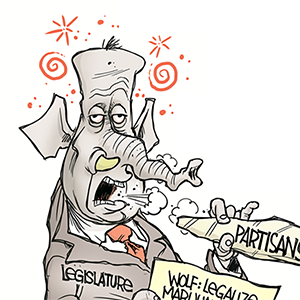
At a news conference Monday, 10 Assembly Republicans called on the Legislature to pause five bills until an independent analysis determines how much they could cost Californians.
“Too often, Sacramento is part of the problem,” said Assemblymember Tri Ta, R-Westminster. “We’ve seen it with the new tire regulation … These costs do not disappear, they get passed on to the consumer.”
The framework for the tire rule dates back to Assembly Bill 844. Passed in 2003, it directed the CEC to adopt a replacement tire efficiency program. It sat idle until commission staff in November 2020 instituted an informational proceeding to obtain data, get comments from stakeholders and make recommendations.
©2026 The San Diego Union-Tribune. Visit sandiegouniontribune.com. Distributed by Tribune Content Agency, LLC.









Comments