US, Canada dig in on tariff negotiations as deal hopes fade
Published in Business News
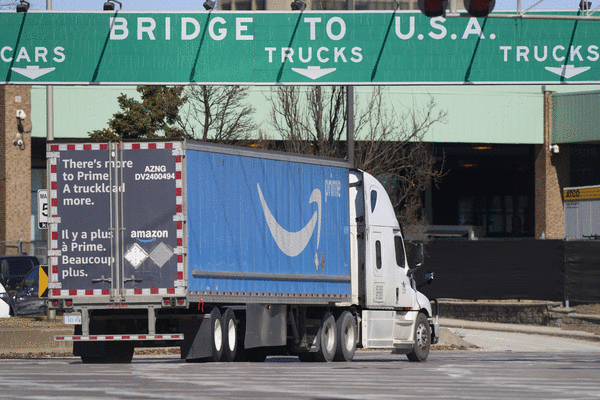
President Donald Trump’s administration is downplaying expectations for a last-minute deal with Canada to avert fresh tariffs set to take effect Wednesday, people familiar with the matter said.
The U.S. has signaled privately that the chances of a deal on Tuesday are a coin flip or worse, said the people, who spoke on condition of anonymity to describe confidential discussions. The two sides face a midnight deadline before 50% tariffs on billions of dollars worth of Canadian goods would kick in.
It’s not clear whether those signals represent the true state of negotiations or an attempt to increase leverage. Trump — who routinely makes last-minute demands from trading partners — is scheduled to speak again with Prime Minister Mark Carney on Tuesday, some of the people said. The two also held a phone call on Monday.
The U.S. provided what they described as their best offer to Canada, one of the people said. A Carney-Trump call would be a last-ditch effort to reach an agreement, and even that is considered a long shot by U.S. officials, the person said.
The White House, the office of U.S. Trade Representative Jamieson Greer and Carney’s office did not immediately respond to requests for comment.
Should the tariffs go into place, it would mark the latest blow to the relationship between the two longtime allies, which has been tense since Trump returned to office last year. The U.S. president began his second term by imposing tariffs on Canada and Mexico and has suggested he’d rather toss out the North American trade agreement he negotiated during his first presidency.
The trade actions have spurred widespread resentment of the U.S. in Canada, with provincial governments pulling American-made alcohol from retail stores and many Canadians canceling or avoiding U.S. trips.
The threat of tariffs under the never-before-used Section 338 of the Tariff Act of 1930 amounted to an attempt to ramp up pressure on Canada, in the midst of a review of the continental trade pact known as the U.S.-Mexico-Canada Agreement.
Carney has said he’ll keep all options on the table to respond to any new U.S. levies, including trade retaliation. Canadian negotiators have warned their U.S. counterparts that implementing the Section 338 tariffs would provoke a public reaction in Canada and effectively end Carney’s ability to negotiate on concessions.
The treatment of the auto sector has been a major sticking point in talks.
It’s possible the U.S. could delay the duties to allow more time for talks, though some people familiar with the matter said that appears unlikely.
The two countries have seen sharp reversals and 11th hour swings in their trade actions throughout Trump’s second term. In February 2025, Trump delayed a plan to hit imports from Canada and Mexico with 25% tariffs, only to impose a watered-down version the following month.
Canada punched back with retaliatory counter-tariffs, but Carney removed many of them several months later.
Canada is seeking a deferral of the proposed Section 338 tariffs and relief from existing ones on sectors such as autos and steel. The U.S. wants Canada to end its alcohol boycotts and drop other retaliatory measures.
(With assistance from Brian Platt.)
©2026 Bloomberg L.P. Visit bloomberg.com. Distributed by Tribune Content Agency, LLC.







Comments