US student loan defaults rise to 9.2 million amid crackdown
Published in Business News
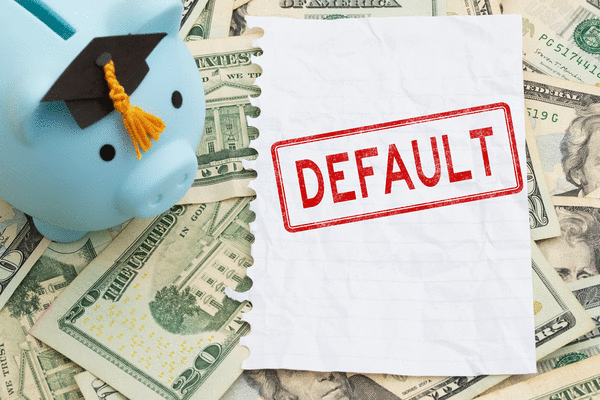
The number of student loan borrowers in default soared to a record 9.16 million in April after the government ended a four-year pause on collections that was instituted during the Covid pandemic, according to the latest data from the U.S. Department of Education.
The figure, announced by the department on Thursday, is an increase from 7.7 million people in default in December and 6 million reported for August last year. That means about 20% of the 43 million Americans with federal student debt are more than a year behind on their payments. In addition, about 3 million people are at least 90 days behind on payments.
The jump in defaults comes as borrowers brace for the July 1 implementation of two new repayment programs set to replace Biden-era plans that came with more forgiving rates, like the SAVE program, whose more than 7 million enrollees will have 90 days to choose a new plan or be re-assigned involuntarily. So far, only 400,000 borrowers in SAVE have transferred to another plan.
More defaults could also mean more headaches for the Treasury Department, which began assuming responsibility for the $1.7 trillion student loan portfolio earlier this year.
In an effort to incentivize repayment and enrollment in the new plans, the Education Department also announced Thursday that it is temporarily lowering interest rates further for borrowers who sign up for autopay when enrolling in the new repayment programs by July 1.
Currently borrowers in autopay are eligible for a reduction of 0.25 percentage points; for the next two years the department will reduce it by 1 percentage point. Only 40% of borrowers are currently enrolled in autopay, according to the department, down from 80% in 2019.
“We expect this temporary incentive to drive up repayment rates and significantly improve the overall health of the federal student loan portfolio,” said Under Secretary of Education Nicholas Kent, the top federal official overseeing higher education.
The rate reduction is estimated to cost about $6 billion, Kent said.
The Trump administration has cracked down on borrowers over the past year, resuming collections and reinstating credit score penalties for delinquency. Plans to garnish defaulted borrowers’ wages were halted early this year, but officials say they’ll revisit the proposal after the new repayment plans are implemented this summer.
Borrower whiplash
Many borrowers have struggled to adapt. Some are prioritizing other loans like mortgages and car payments amid escalating affordability concerns. And confusion over changes to repayment options, first under President Joe Biden and now President Donald Trump, have caused a kind of whiplash as borrowers see their bills suddenly spike.
Betsy Mayotte, founder of The Institute of Student Loan Advisors, said she expects delinquency and default rates to continue rising throughout the year. Her organization, which offers free advice on repayment to struggling borrowers, is fielding up to 100 email requests a day — more than double what they received last year.
Mayotte is especially concerned about those with Parent PLUS loans, a previously-unlimited borrowing program for parents paying their children’s college tuition, who will be rendered largely ineligible for income-driven repayment under the Trump administration’s new rules. And for those on Biden-era plans ending July 1, the clock is running out to get the best rates under Trump.
“For a lot of the people affected, the change in payment amount is enormous,” she said. “They can’t afford it, and don’t know what they’re going to do.”
©2026 Bloomberg L.P. Visit bloomberg.com. Distributed by Tribune Content Agency, LLC.









Comments