Business
/ArcaMax

Anthropic's IPO sets up defining moment for Wall Street and AI boom
Anthropic PBC’s initial public offering is laying bare the stark extremes of the multi-trillion-dollar AI boom business model: astonishing growth paired with uncertainty about demand and the spending required to continue developing the technology. The startup, which publicly filed IPO paperwork on Monday, is poised to be the first major U.S. ...Read more
Memory chip giants worth $2 trillion face test to prove AI isn't a bubble
From South Korea to Japan and China, the world’s biggest memory chipmakers will this week seek to quell fears that AI spending is outpacing future demand. How they handle back-to-back earnings disclosures and investors’ questions will help determine the trajectory for markets and shed light on the broader outlook for the artificial ...Read more
Skydance offers voluntary buyouts to some employees
Skydance Corp. is offering some employees a one-time voluntary buyout, a move that comes nearly three weeks after Paramount Skydance closed its $111 billion acquisition of Warner Bros. Discovery.
The David Ellison-led entertainment giant, which took the Skydance name when the deal closed Oct. 6, sent a memo Monday to employees, noting that the ...Read more

Trump-tied companies ready defenses with GOP midterm hopes slipping away
Companies with ties to President Donald Trump and his family are staffing up with lawyers and lobbyists, as Democrats threaten sweeping probes if they flip either chamber of Congress in the midterm elections.
With polls and prediction markets favoring a change in power, firms with connections to the Trumps — from cryptocurrency businesses, to...Read more
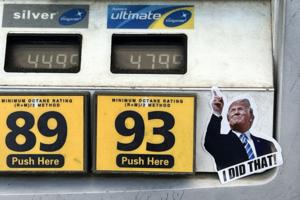
Gasoline prices under Trump surpass Biden-era average
The average price Americans are paying for gasoline under President Donald Trump has overtaken the average during the Biden administration, underscoring the political pressure on Republicans ahead of the midterm elections.
Trump had pledged to lower gasoline prices to below $2 a gallon, but almost two years into his presidency the fuel’s ...Read more

EQT to buy Range Resources in all-stock Appalachian blockbuster deal
In a deal that would combine the first company to pioneer the Marcellus Shale and the one that turned it into an industrial operation, EQT Corp. announced it intends to buy Range Resources Corp. in an all-stock deal that would value the combined company at $50 billion.
The two Appalachian operators announced their boards of directors ...Read more

Microsoft offers buyouts to 60,000 workers as it looks to trim costs
Microsoft is offering buyouts to 60,000 employees — roughly a quarter of its global workforce — as the company looks to slash costs while investing heavily in artificial intelligence.
The tech giant based in Redmond, Wash., has offices throughout the world, including in California. Microsoft didn't indicate how many California employees ...Read more

LA mayor's race: Bass and Raman skirmish over treatment of small business. The San Fernando Valley is a battleground
LOS ANGELES — The landmark Casa Vega Mexican restaurant in Sherman Oaks was honored in May with a sign proclaiming its corner of Ventura Boulevard as "Casa Vega Square."
L.A. Mayor Karen Bass was there, and so was City Council member Monica Rodriguez, whose district is on the other side of the San Fernando Valley. The event was perhaps more ...Read more

Microsoft offers mass buyouts for roughly a quarter of its workforce
Microsoft is offering buyouts to about 60,000 employees, or roughly a quarter of its workforce, as the company tries to control its head count while avoiding layoffs.
The Redmond, Washington-based tech giant announced Monday morning that eligible employees at the vice president level and below in the U.S., Canada, India and the United Kingdom ...Read more

Anthropic filing reveals concerns over data center pushback
Anthropic PBC says it expects to face heightened scrutiny of how it tackles environmental and social tensions associated with the build-out of AI infrastructure.
The company, which publicly filed for an initial public offering on Monday, said it’s aware its efforts to secure power may face regulatory hurdles if there’s a perception its ...Read more

Apple's foldable iPhone Duo draws early complaints of the screen cracking
The iPhone Duo, one of Apple Inc.’s biggest new products in years, is drawing a growing number of complaints from customers who say the foldable display cracked after just hours or days of use.
In these cases, customers reported hearing a crunching sound when unfolding the phone, followed by a large crack forming along the center crease. Some...Read more

NBA reaches deal with prediction markets Kalshi and Polymarket
The National Basketball Association reached a deal with Kalshi and Polymarket that designates the platforms as the league’s preferred prediction market exchanges, in addition to announcing an information sharing agreement with the U.S. Commodity Futures Trading Commission.
The NBA said Monday that it would license official data to the top ...Read more

Pricey cookie vendor closes dozens of locations nationwide
Crumbl, the high-end dessert chain serving up oversized cookies, has closed a swath of stores nationwide including seven in California.
Two of the shuttered cookie shops are in Southern California, in Westlake Village and Mira Mesa in San Diego.
The other closed California locations are in Paso Robles, Pismo Beach, Hanford, Ladera Ranch and ...Read more

Kalshi courts Wall Street in bid to be the 'inflation exchange'
Kalshi Inc. is opening up a new frontier in its rivalry with traditional financial exchanges by pitching the world’s largest banks and hedge funds on a futures market tied to U.S. inflation.
The New York-based firm, best known for its prediction markets, is targeting a December launch for exchange-traded futures contracts tracking both the ...Read more

Verizon wants to hang up on landlines, but some customers aren't so sure
Steve Bradley’s mustard-yellow rotary telephone is about 50 years old. But it still works — and, sometimes, much better than his cellphone.
Though most of Scandia, Minnesota, is connected to high-speed fiber-optic cables, Bradley and his neighbors living in the St. Croix River Valley still rely on old-school copper landlines to make calls ...Read more
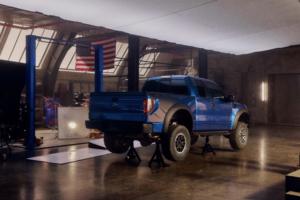
Ford underscores off-road bet with Raptor TV ad
Ford Motor Co. revealed on Friday, Oct. 23 its first major TV commercial highlighting its Raptor high-performance, off-road trim as the Dearborn automaker bets on the high-margin segment to drive sales, profits and consumer enthusiasm.
The 90-second spot will debut on Apple TV this weekend during the Austin Grand Prix and also appear on ABC ...Read more

Auto review: 2026 Chevrolet Silverado High Country is the last of a vintage, and worth savoring
Chevrolet is preparing to release a new Silverado 1500 pickup for 2027, but it will have to be pretty good to surpass the current vintage of its High Country luxury trim. Equal parts farmhand, family cradle and luxury limo, the big pickup seemingly does it all. Even as the big truck will be redesigned for 2027, it’s a vintage worth savoring.
...Read more

Auto review: 2027 Lexus NX smells a little like luxury
The 2027 Lexus NX is bringing a whole new meaning to new car smell.
Lexus has fitted its second-best selling model with something called Sensory Concierge, a system that coordinates lighting, sound, climate control, seat temperature and fragrance in an effort to improve your emotional well-being. Similar systems are available from Lincoln and ...Read more

Auto review: 2026 GMC Hummer EV 3X is big, bold and ready for fun
As brands continue to cycle nameplates from deep in their archives, General Motors is no different. Known for its exceptional truck offerings, GMC brings forward a riff on the venerable Hummer with a new twist. This week, it’s the all-electric 2026 GMC Hummer Pickup.
Powered by a 24-module battery pack, which offers up to 380 mile range with ...Read more

Expedia, Visa, and IBM have hired Mike Davis to train their sales agents. He's not ready to do the job himself
Meet Mike Davis.
He’s middle-aged, has jet-black hair, and technically works at Expedia Group. “He’s kind of a legend at our company,” said Beth Potter, Expedia’s senior manager of field enablement.
But Mike Davis isn’t a person. He’s an AI agent built by Seismic, a San Diego company that recently showcased him along with a ...Read more
Popular Stories
- Pricey cookie vendor closes dozens of locations nationwide
- NBA reaches deal with prediction markets Kalshi and Polymarket
- Microsoft offers mass buyouts for roughly a quarter of its workforce
- Anthropic filing reveals concerns over data center pushback
- EQT to buy Range Resources in all-stock Appalachian blockbuster deal
Related Channels

Bob Goldman
By Bob Goldman

Jill On Money
By Jill Schlesinger
Succeeding in Your Business
By Cliff Ennico

Terry Savage
By Terry Savage
Comics