GameStop makes $56 billion bid for eBay, four times its size
Published in Business News
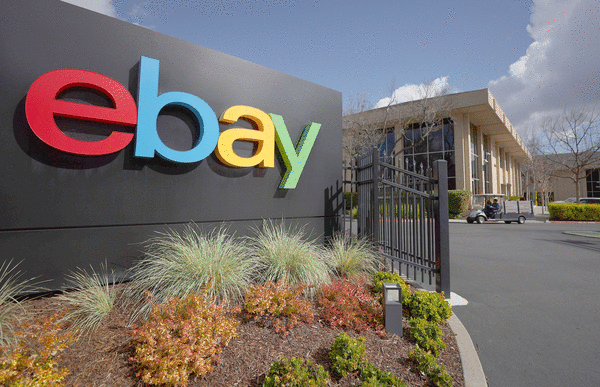
GameStop Corp. is trying to buy eBay Inc. for about $56 billion in cash and stock, a bold attempt by Ryan Cohen to take over a storied e-commerce name several times larger.
The gaming retail chain has offered $125 per share in cash and stock for the online marketplace, or about a 20% premium to its Friday close. GameStop, which built a roughly 5% stake in eBay, has secured an initial, non-binding “highly confident letter” from TD Bank to provide about $20 billion of debt financing for the deal. In a memo to investors, Cohen’s company pledged to find some $2 billion of annual savings within 12 months of closing.
EBay said Monday that it would review the offer “with a focus on the value to be delivered to eBay shareholders, including the value of the GameStop stock consideration and the ability of GameStop to deliver a binding, actionable proposal.”
Shares of the shopping platform gained as much as 7% in New York on Monday, the most since July 2025. They were up 5.4% at 10:44 a.m. New York time at $109.69 — still substantially below the value of the offer, signaling that investors see hurdles to completing a deal. GameStop was down about 5.2%.
The takeover bid follows the surprising ascent of GameStop, a chain of video game outlets that shrank its brick-and-mortar footprint after gamers increasingly bought software in digital stores. In 2021, it became the center of a retail-investor frenzy. Michael Burry, the Scion Asset Management head who rose to prominence after a winning wager against mortgages ahead of the 2008 financial crisis, helped fuel GameStop’s rally by taking a bullish stance on the firm around 2019.
Burry said on Monday that GameStop’s takeover attempt makes perfect sense to him. “Never confuse debt for creativity,” he said in a Substack post. He pointed to synergies between the two companies and said they’d form a “collectibles giant.”
Cohen is proposing to take over a company roughly four times larger than the retail chain he operates. GameStop had a market value of $12 billion as of Friday. EBay was much bigger at around $46 billion, though the game retailer has about $9 billion in cash. The takeover offer is split evenly between cash and GameStop common stock.
Both companies have struggled to adapt to changing consumer preferences. GameStop has shut stores and emphasized collectible toys and trading cards as more video games get purchased online. EBay too has been pushing collectibles and used goods on its own marketplace, creating a business overlap.
About 136 million shoppers globally made purchases on EBay in the 12-month period ending March 31. Shoppers spend about $80 billion annually on the marketplace.
“EBAY itself is in the midst of a turnaround — one that is going well,” Bernstein analysts wrote. “But to the extent there are any challenges or volatility from categories like Collectibles, this could put further strain on the math. We see real challenges to structuring this deal.”
GameStop’s Cohen earlier told the Wall Street Journal he’s prepared for a proxy fight and will take the offer to shareholders if necessary.
“EBay should be worth — and will be worth — a lot more money,” he told the newspaper. “I’m thinking about turning eBay into something worth hundreds of billions of dollars.”
Cohen has set ambitious goals for himself. In January, the company unveiled a compensation package that would reward him with options on over 171 million shares if he lifted GameStop’s market value to $100 billion. In Sunday’s statement, Cohen said he would take over a combined entity but get paid solely based on the performance of that firm.
In a CNBC interview on Monday, Cohen said he was seeking to “build something much larger” and noted that his compensation package is “aligned” with GameStop’s shareholders. “I don’t benefit unless shareholders benefit,” he said.
“Though the companies overlap in collectibles and resale, we see low probability of a deal,” Bloomberg Intelligence analysts Poonam Goyal and Sydney Goodman said in a note on Friday. “Any credible offer would require substantial dilution and introduce meaningful execution risk.”
(With assistance from Kevin Whitelaw and Se Young Lee.)
©2026 Bloomberg L.P. Visit bloomberg.com. Distributed by Tribune Content Agency, LLC.









Comments