Tariff refunds are coming, but who will benefit?
Published in Business News
Seattle-based importers hit by unprecedented tariffs may see some relief soon — but it is unlikely to trickle down to small businesses and consumers.
U.S. Customs and Border Protection launched a portal Monday to refund tariffs set by President Donald Trump last April directly to the businesses that paid them. The move comes after the U.S. Supreme Court struck down the tariffs in February, ruling that Trump could not use a rarely invoked act to impose tariffs without congressional approval.
After refund requests are approved, it could take 60 to 90 days to return the money to the importer, according to the agency.
U.S. businesses have paid around $166 billion in duties related to Trump’s “Liberation Day tariffs,” according to court documents. The sweeping, double-digit duties on nearly all imported goods sent shock waves through the U.S. economy.
Practically every business, from pizzerias to furniture stores, saw their suppliers raise prices, and many had to raise their own or sacrifice some profitability to absorb the higher costs without alienating customers.
However, those small businesses and consumers who bore the brunt of higher prices are unlikely to benefit from the refunds, said Brian Kelly, a Seattle University associate economics professor.
Only importers that directly paid the tariffs are eligible for a refund, and those importers don’t have to share the money with anyone else — even if they raised prices to offset the tariffs.
As a result, consumers are unlikely to see lower prices, said Kelly, who studies trade policy.
“If you are a steakhouse and you have suffered higher costs for imported beef, and then your suppliers are saying, ‘Well, yeah, they’re paying our tariffs back, but we aren’t going to be refunding you any of that,’ would you then lower prices for your customers? Probably not,” he said.
The disconnect has sparked consumer concerns that importers stand to make money off the refund process.
But at least one popular importer has indicated its intention to pass the tariff refunds along to consumers — at least in the form of lower prices.
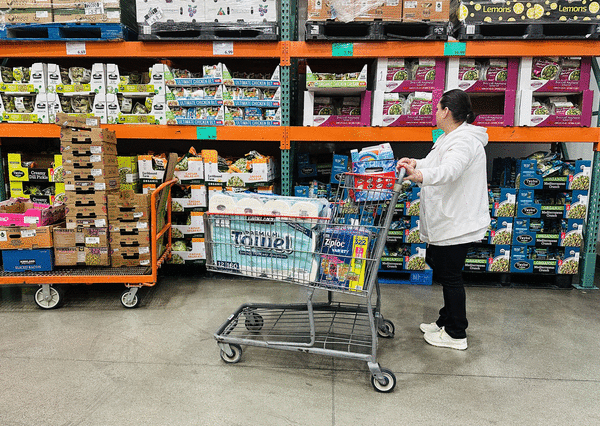
Costco imports goods and pays tariffs directly, making it eligible for a refund.
It was one of thousands of businesses that sued the Trump administration in an effort to receive refunded tariff payments.
After the Supreme Court decision, Costco CEO Ron Vachris addressed the topic of tariff refunds in a March earnings call.
“Our commitment will be to find the best way to return this value to our members through lower prices and better values,” he said. “We’ll be transparent in how we plan to do this if and when we receive any refunds.”
He asserted that the company didn’t pass the full costs of tariffs on to customers in many cases, and it’s difficult to track the full impact of changing tariff rates on individual items.
However, seven Costco members — including four from Washington — sued the warehouse chain earlier this month in an effort to receive their own refunds. The attorneys, who seek class-action status for the case, argued Costco “stands to recover the same tariff payments twice” if it receives tariff refunds.
Costco did not immediately respond to requests for comment Monday.
©2026 The Seattle Times. Visit seattletimes.com. Distributed by Tribune Content Agency, LLC.







Comments