Venezuela's oil reopening draws cautious optimism from US investors
Published in Business News
Since the United States announced the opening of Venezuela’s oil sector to U.S. companies, foreign investors have maintained “cautious optimism” about investing in the country, where clear rules remain absent and political uncertainty persists, experts said.
A recent reform of the Hydrocarbons Law and broad investment opportunities across multiple sectors are not sufficient guarantees for foreign capital, which is also waiting for signs of a political transition, the restoration of institutions, elections and greater security.
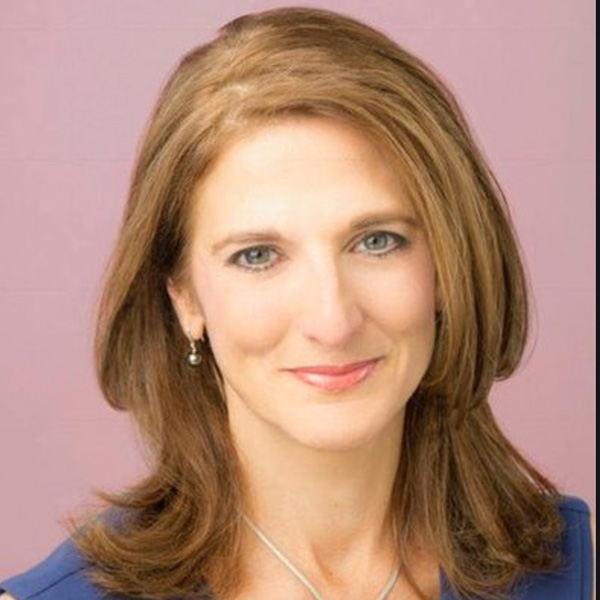
“I think there are good signs to be optimistic, although still with caution: there is an opening in relations between the U.S. and Venezuela, particularly in the oil sector, and that is very important for U.S. companies,” said Amanda Mattingly, director of ACM Global Intelligence.
Mattingly analyzed opportunities for foreign investment, along with other experts, at the forum “Venezuela Perspectives 2026,” organized by the Venezuelan-American Chamber of Commerce (VACC), based in Miami, on Tuesday, Feb. 10.
She said the South American country has enormous potential, with the largest proven oil reserves in the world, and noted that it once produced 3.5 million barrels per day, meaning it could return to that level — or even surpass it.
But U.S. companies need to proceed cautiously because the country remains “fragile” from the standpoint of democratic transition, she warned. Investors still have many questions and want to know more about that transition, especially after the U.S. “removed Nicolás Maduro from power but left the rest of the government in place, including Delcy Rodríguez, as well as Diosdado Cabello and Vladimir Padrino López.”
Mattingly said it was positive that the National Assembly, with a pro-government majority, quickly reformed the Hydrocarbons Law, but it has yet to present a roadmap for elections, which raises serious concerns.
“Venezuela lacks the legitimacy needed to guarantee security for the private sector and to build an economically sustainable and prosperous future (…) U.S. investors want clear signs of a democratic transition and the rebuilding of institutions,” she said.
Positive impact for service companies
Horacio Medina, president of the ad hoc board of state-owned Petróleos de Venezuela, S.A. (PDVSA), said the approval of the Hydrocarbons Law reform will be positive for Venezuelans and for small entrepreneurs working in the services sector, particularly in economically depressed areas.
The positive impact would be felt along the Eastern Shore of Lake Maracaibo, in northwestern Venezuela, and in the Guanipa Mesa region in the country’s northeast, where large companies are unlikely to operate but service companies will. Firms already operating in the country are expected to benefit because the required investments are relatively small, Medina emphasized.
However, he does not believe there will be an immediate impact on the country’s macroeconomy. Still, he said it is necessary to move forward and that Venezuelans are prepared across many sectors — especially energy — to implement plans quickly and move in the right direction.
“It is necessary to move forward, but there is a risk. From a political standpoint, as people who have lived underground begin to surface, they may believe everything is improving. And since Delcy Rodríguez and Jorge Rodríguez are promoting their own electoral campaign, that could pose a political risk,” he said.
Medina added that the law and recent steps are moving in the right direction. “Not enough — they will not solve the problem, and they create a risk that could resemble a form of appeasement.”
Moderate optimism driven by oil sector reforms
Alejandro Grisanti, director of Ecoanalítica, said he remains cautiously optimistic due to important changes such as the Hydrocarbons Law, which closely resembles frameworks already in place in other oil-producing countries.
“Although there are many signs of uncertainty, we are recommending that our clients assume a political transition and a shift in the economic model will take place. That recommendation is tied to markets that understand that entering during periods of greater uncertainty allows them to acquire assets at lower prices,” he said.
Ecoanalítica projects 15% growth for the Venezuelan economy in 2026 — the highest in 15 years — and, according to a survey conducted by the firm, 92% of companies expect a positive or very positive outlook compared with October 2025.
A ten-point plan for the transition
Laura Cristina Dib, director for Venezuela at the Washington Office on Latin America (WOLA), discussed a ten-point plan for the transition — a process she said cannot yet be fully addressed just one month after Nicolás Maduro left power.
She stressed that long-term investment is not possible without clear rules and expressed concern about a reshuffling of the chavista regime through ministerial changes that do not signal a reopening to democracy.
She pointed to ongoing warning signs, including more than 400 political prisoners who have not been released and the fact that those who have been freed remain under precautionary measures.
Dib said civil society must participate in the transition process, U.S. support must be bipartisan and international backing must be multilateral.
WOLA, together with civil society organizations, developed a ten-point set of demands to help guide a democratic transition — not as a full reinstitutionalization agenda, but as a starting point, she said.
Among the demands are the immediate release of political prisoners, the repeal of laws used to persecute dissent, the dismantling of the repressive apparatus, recognition of nongovernmental organizations and full access for international bodies such as the Inter-American Commission on Human Rights (IACHR).
For his part, VACC president Leonardo Trechi emphasized the importance of freedom of expression, saying there can be no democracy without free media or without Venezuelans having access to truthful, high-quality information.
“We can talk about economic recovery, about returning to the country, about building a democracy, but there can
©2026 Miami Herald. Visit at miamiherald.com. Distributed by Tribune Content Agency, LLC.





Comments