Business
/ArcaMax
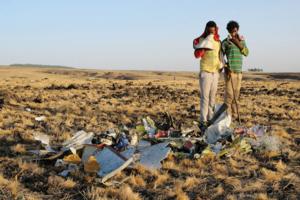
Appeals court affirms decision to drop criminal charge against Boeing
An appeals court has upheld the decision to drop a criminal charge filed against Boeing after two fatal 737 Max crashes.
A group of families who lost loved ones in the deadly crashes had asked the appeals court to reverse the November decision from a federal judge in Texas, which allowed Boeing and the Department of Justice to move forward with...Read more
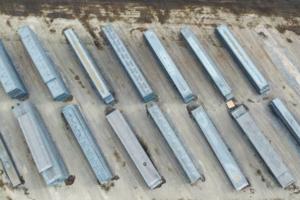
US set to roll out tiered tariffs on steel, aluminum imports
The Trump administration is preparing to outline a tiered system for its broad tariffs on steel and aluminum products in an attempt to simplify a process that has dogged American companies for months.
The US will maintain 50% tariffs on a large number of derivative products in which the duty will be calculated by the value of the actual ...Read more

Ram boosts Stellantis sales in first quarter
U.S. sales of Jeeps, Rams, Dodges and other Stellantis NV brands altogether grew 4% year-over-year in the first three months of 2026, the transatlantic automaker said on Wednesday.
The struggling automaker has found hints of a turnaround in the United States under new leadership, positioning it for growth in 2026 after overall sales last year ...Read more

Gas prices not shifting auto sales yet, but prolonged Iran war could
The shock of high gas prices has not dampened U.S. vehicle sales — yet.
While vehicle buying so far this year has been slower compared to an unexpectedly good start to 2025, industry analysts say it will take months of high fuel prices before U.S. consumers ditch popular pickups and SUVs and begin buying smaller, more fuel-efficient or ...Read more

Costco sued over Trump tariff refunds
A proposed class-action lawsuit against Costco is seeking to secure refunds for customers who helped pay tariffs on imported products.
Seven Costco members — including four from Washington — sued the Issaquah-based big-box warehouse club chain Friday in the U.S. District Court of the Western District of Washington.
The lawsuit targets ...Read more

Oracle lays off thousands in latest sign of tough times for tech industry
Software giant Oracle on Tuesday started laying off workers as it looks to rein in costs and double down on artificial intelligence.
On LinkedIn, Oracle employees, including software engineers, account executives and program managers, shared publicly that they were affected by a mass layoff at the company and were looking for new jobs.
Oracle ...Read more

This Californian shoe company was once worth billions. It just sold for $39 million
Allbirds, an eco-friendly shoe company that won over Silicon Valley, was sold a fraction of the $4 billion it was once worth.
The shoe brand said this week that it is selling all of its assets to American Exchange Group, a brand management company, for $39 million. The company, which makes shoes from wool and eucalyptus, attracted young Bay ...Read more

US companies add 62,000 jobs, led by health care, ADP says
U.S. companies added more jobs than expected last month, suggesting the labor market may be stabilizing.
Private-sector payrolls increased by 62,000 in March after a similar advance in the prior month, according to ADP Research data out Wednesday. The median estimate in a Bloomberg survey of economists called for a 40,000 advance.
The advance ...Read more

DOGE backlash has arrived at Elon Musk's Seattle-area SpaceX outpost
Anti-Elon Musk protests have led consumers to boycott Tesla, unsettling the company and its share price. Could public sentiment have a similar effect on Musk's privately owned space ventures?
A group of protesters from Seattle's Eastside believes it can.
That group — organized through the national grassroots movement Indivisible — has ...Read more

GM reports nearly 10% drop in sales compared to same time last year
General Motors Co. on Wednesday reported it sold nearly 10% fewer vehicles in the past three months compared to the same time last year, when sales boomed ahead of anticipated tariffs from President Donald Trump.
Spokesperson Jeff Bennett in an email said GM "expects a similar decline for the industry" and noted that "year-over-year comparisons...Read more
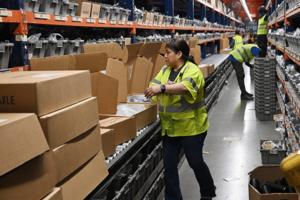
Auto parts retailer Detroit Axle braced for tariff Armageddon, but it didn't come
FERNDALE, Michigan — Nearing a year ago, the automotive aftermarket parts retailer Detroit Axle filed a notice with the state that the family-owned company would lay off more than 100 employees at its headquarters and warehouse here in response to increased tariffs.
The company braced for "Armageddon," said Mike Musheinesh, CEO of the ...Read more
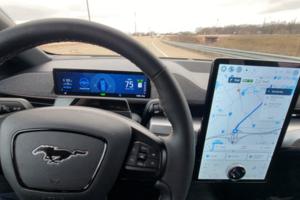
Safety board recommends changes to Ford BlueCruise after fatal crashes
The National Transportation Safety Board on Wednesday recommended changes to Ford Motor Co.'s hands-free BlueCruise automated driving system and stronger federal requirements on such technology in response to two fatal crashes.
The recommendations come amid increased scrutiny of software-controlled driving technologies, including federal ...Read more
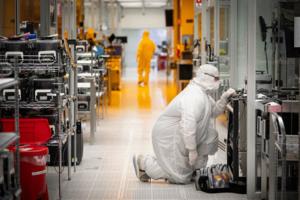
SkyWater CEO says US chip manufacturing poised to grow even faster
The case for domestic manufacturing of semiconductors “has never been stronger,” which means SkyWater Technology will continue to grow, the company’s CEO said.
Tom Sonderman said he outlined his case in an open letter in mid-March to reassure SkyWater’s employees and stakeholders as the company continues to negotiate a $1.8 billion deal...Read more

Why Disney still needs Epic Games
LOS ANGELES — It was just two years ago that Walt Disney Co. placed a massive bet on Epic Games.
At the time, the Burbank media giant announced a “games and entertainment universe” with the “Fortnite” developer to expand the reach of Disney’s franchises, particularly among the young people who play the online game. Disney also made ...Read more

An AI agent leaked Instagram and Facebook user data. This San Diego startup is building the fix
You didn’t press send. You didn’t authorize the wire transfer. You didn’t even know it happened. An AI agent did it for you.
They work autonomously by reading files, analyzing photos and sourcing your personal data. But once they’re running, they can multiply and access things they were never meant to, without you even knowing.
...Read more

Mining boosters see a golden opportunity for Minnesota's Iron Range, if it doesn't slip away
NASHWAUK, Minnesota – Colossal rust-red barn walls rise out of the gravel and pine forest in this northern Minnesota town. A welder’s torch spits blue sparks.
After more than two decades of sometimes dramatic stops and detours, Mesabi Metallics iron ore mine this summer will be the first to open in Minnesota in 50 years — a $2.4 billion ...Read more

Tech review: These two gadgets are all about compatibility
Smart home equipment can work with various home automation ecosystems.
What does that mean?
There are plenty of devices, like smart deadbolts, cameras, light bulbs and smart plugs, and a host of other gadgets, but unless you’re buying them from the same company, getting them to work together used to be a hassle.
Then some larger players, ...Read more

Iran war threatens to wreck Trump dream of lower interest rates
Treasury Secretary Scott Bessent’s benchmark financial asset — 10-year U.S. Treasuries — are poised to mark their biggest monthly tumble since Donald Trump returned to the White House, casting a shadow over the economic outlook as the administration struggles to contain an energy crisis.
While Bessent has assured that the global oil ...Read more

First tariffs, now Iran war causing financial woes for Minnesota farmers
Adding war in the Middle East to an ongoing trade war equates to the math not working for farmers.
President Donald Trump’s tariffs have deterred China from buying vast amounts of U.S.-grown grains and soy as well as forced the Eastern power to instead purchase from Brazil. All this while the price of grains has fallen in recent years, and ...Read more

Cost of fed oversight of UAW skyrockets as union moves from scandal
Federal oversight of the United Auto Workers has cost the union more than $25.3 million, according to an annual report released Tuesday that illustrates rising costs amid multiple investigations into President Shawn Fain and his team.
The union's annual LM-2 Labor Department filing provided an updated cost of a federal watchdog, lawyer Neil ...Read more
Popular Stories
- SkyWater CEO says US chip manufacturing poised to grow even faster
- How the landmark verdict against Meta and YouTube could hit their businesses
- This Californian shoe company was once worth billions. It just sold for $39 million
- Mining boosters see a golden opportunity for Minnesota's Iron Range, if it doesn't slip away
- An AI agent leaked Instagram and Facebook user data. This San Diego startup is building the fix
Related Channels

Bob Goldman
By Bob Goldman

Jill On Money
By Jill Schlesinger
Succeeding in Your Business
By Cliff Ennico

Terry Savage
By Terry Savage
Comics